BRB 2006 Is Calling: Twenty Years of HPV Vaccination |
|
|
This issue of our newsletter takes you BRB to 2006, when the U.S. Food and Drug Administration (FDA) licensed the first HPV vaccine, marking a transformative moment in cancer prevention. We reflect on the decades of discovery leading to this milestone, from HeLa cells to virus-like particle technology and groundbreaking clinical trials that made preventing HPV cancers possible.
Twenty years later, HPV vaccination remains a safe, effective, and powerful tool to prevent multiple cancers. We celebrate progress, including expanded protection with Gardasil 9, while recognizing the ongoing need to improve vaccination coverage and equity, particularly in rural and underserved communities.
This issue highlights upcoming opportunities to engage, including our webinar on the 20-year anniversary of HPV vaccination in the U.S., as well as practical, evidence-based strategies to strengthen provider recommendations through approaches like the Announcement Approach Training and motivational interviewing. We feature community-driven efforts across rural communities, the Southeast, Memphis, and beyond, emphasizing partnership, innovation, and implementation. In recognition of National Cancer Survivor Month, we also honor the voices and experiences of survivors, whose stories reinforce the urgency of prevention.
Just like the songs on your 2006 playlist, HPV vaccination is not new; it is a proven intervention we must continue to champion for future generations.
Check out this month’s Path to Prevention newsletter for more updates and opportunities on HPV cancer prevention.
If you have information to share in upcoming newsletters, please email us at PreventHPV@stjude.org.
HPV vaccination is cancer prevention.
|
|
|
|
|
|
BRB HPV vax
don't forget to get your HPV vaccine
|
|
|
|
|
Updates on the Current Vaccination Landscape: A Look Back at the Vaccination Landscape Since 2006 |
|
|
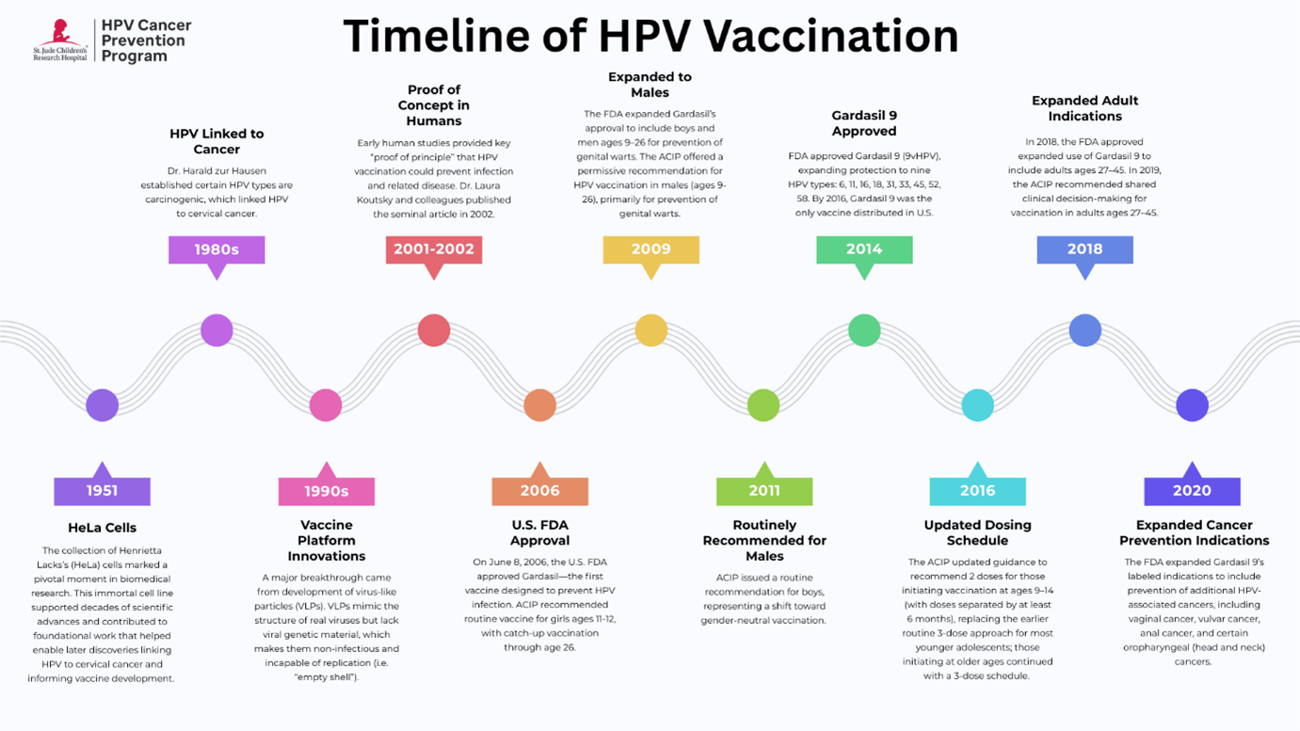
The approval of the HPV vaccine by the U.S. Food and Drug Administration (FDA) in June 2006 was the culmination of many decades of scientific discovery, collaboration, and innovation. The modern story begins in 1951 with the development of cells taken from Henrietta Lacks known as HeLa cells, which became a cornerstone of modern biomedical research and enabled advances that would later support cancer biology and vaccine development. In the 1980s, a major breakthrough occurred when Dr. Harald zur Hausen and others established that certain types of HPV cause cervical cancer. This breakthrough shifted scientific understanding and opened the door to prevention rather than just treatment.
Building on this knowledge, the 1990s brought a critical technological advance with the development of virus-like particles (VLPs). These particles mimic the outer shell of HPV but are non-infectious, allowing the immune system to recognize and fight the virus safely. This innovation formed the foundation of HPV vaccine design. Researchers across institutions refined this approach, demonstrating in laboratory and early animal studies that VLP-based vaccines could generate strong protective immune responses.
By the early 2000s, large clinical trials confirmed that HPV vaccination could prevent infection and precancerous lesions in humans. These trials provided clear “proof of concept” that a vaccine could stop cancer before it starts. These findings represented a paradigm shift in cancer prevention. On June 8, 2006, this decades-long scientific effort culminated in the U.S. FDA approval of Gardasil, the first vaccine designed to prevent HPV infections linked to cervical cancer and other diseases. This milestone marked the beginning of a new era in which cancer prevention could be achieved through HPV vaccination with profound implications for public health in the U.S. and around the world.
A timeline of HPV vaccination provides key highlights of advances in scientific innovation and implementation activities in the U.S.
|
 |
|
|
|
|
|
|
|
Webinar: Celebrate 20 years of HPV vaccination in the U.S. |
|
|
Join us on June 12 to celebrate 20 years of HPV
vaccination in the U.S.
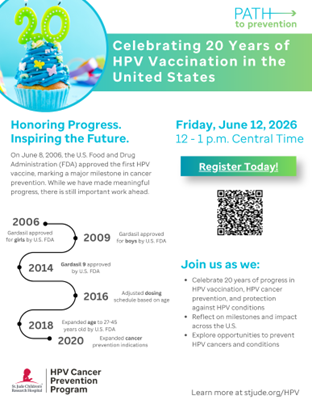
The U.S. Food and Drug Administration (FDA) first approved an HPV vaccine (Gardasil) in June 2006. Since late 2016, Gardasil 9 has been the only HPV vaccine available in the United States. Originally approved to prevent cervical cancer and genital warts, in 2020, the FDA expanded this to include the prevention of vaginal, vulvar, anal, and certain oropharyngeal (head and neck) cancers.
While we have made progress, and we should celebrate this progress, we also have more work to do. This webinar will look back and importantly look forward to new opportunities to prevent HPV cancers and other conditions caused by HPV.
Join us on June 12 from noon to 1:00 p.m. Central Time to honor progress and inspire the future. The webinar will feature a discussion with Tamika Felder, Cervivor, Aimée Kreimer, PhD, National Cancer Institute, Rebecca Perkins, MD, MSc, Tufts University School of Medicine, Kevin Ault, MD, Western Michigan University, and Eric Adjei Boakye, PhD, Henry Ford Health and moderated by Heather Brandt, PhD, St. Jude Children’s Research Hospital.
The webinar will be recorded and shared with all registrants when available.
|
 |
|
|
Celebrating 20 Years of HPV Vaccination in the United States
Honoring Progress. Inspiring the Future.
June 12
Noon to 1:00 p.m. Central Time
|
| Register Here
|
|
|
|
|
|
Things Newer than HPV Vaccination: NOW That’s What I Call Music! Vol. 22 |
|
|
HPV vaccination may feel new to some, but it actually
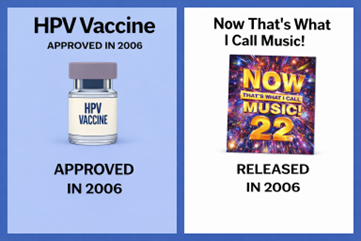
predates many moments we now think of as defining everyday life. This includes the songs on NOW That’s What I Call Music! Vol. 22, released just after the vaccine’s FDA approval in 2006. While Rihanna’s “SOS” was topping the charts and Sean Paul was turning up the “Temperature,” HPV vaccination was quietly launching a revolution in cancer prevention.
Two decades later, we are still “Ridin’” forward on that progress, even as public awareness sometimes lags “Over My Head.” The truth is that HPV vaccination has never had a “Bad Day.” HPV vaccination has consistently proven to be safe, effective, and lifesaving. As communities continue to “Check on It” and strengthen vaccination efforts, we build confidence and momentum to “Move Along” toward cancer elimination.
Like the songs that still spark nostalgia today, HPV vaccination has stood the test of time. It is more than a throwback; it is a lasting public health achievement that continues “Savin’ Me” and countless others by preventing cancers before they start.
|
|
|
|
|
|
|
|
June is National Cancer Survivors Month |
|
|
June is National Cancer Survivors Month, which is a time to honor people living with, through, and beyond HPV – and all types of – cancers. This recognition allows us to recognize the strength of survivors, caregivers, and communities who support them. This June also marks 20 years since HPV vaccination has been available in the U.S. Although an important milestone, marking progress towards cancer prevention, we highlight an important acknowledgment that HPV vaccination became available too late to offer protection to some people who had already been or would later be impacted by HPV cancer. Even still, the powerful perspective that survivorship offers reinforces the connection between survivorship and prevention. As we celebrate HPV cancer survivors, we reaffirm our commitment to reducing HPV cancers by supporting survivors and protecting future generations through on-time HPV vaccination.
|
 |
|
|
|
|
|
Improving Rural HPV Vaccination Coverage |
|
|
Advancing HPV Vaccination in Rural Communities: Equipping Providers to Improve HPV Vaccination Uptake
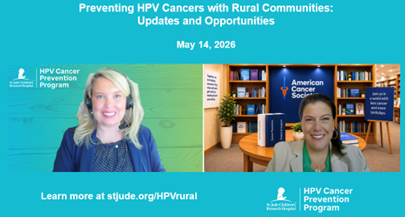
The May 14 rural quarterly meeting highlighted Part 2 of the Improving HPV Vaccination in Rural Communities Communication Series, a partnership series from the St. Jude HPV Cancer Prevention Program, the American Cancer Society (ACS), and the ACS National HPV Vaccination Roundtable. Designed to emphasize the importance of a strong provider recommendation for HPV
vaccination uptake, the series featured two complementary evidence-based strategies to strengthen provider communication: the Announcement Approach and motivational interviewing (MI).
In Part 2 of the series, Jocelyn Phillips of ACS shared how MI can strengthen HPV vaccination conversations after an initial recommendation for HPV vaccination. Building on Part 1’s introduction to the Announcement Approach, hosted by ACS, this session emphasized the importance of starting with a strong, cancer prevention–focused recommendation and using MI to navigate hesitancy with empathy and confidence.
Participants explored practical techniques such as open-ended questions, affirmations, reflective listening, and summarizing to build trust, address concerns, and support shared decision-making. The discussion reinforced that trust and relationship-building are central to improving vaccine uptake, especially in rural communities.
Together, this two-part series provided a practical, evidence-based communication toolkit pairing the efficiency of the Announcement Approach with the flexibility of motivational interviewing to help rural providers manage real-world conversations from vaccination recommendation through vaccination series completion. The meeting concluded with a call to action to integrate these combined strategies into day-to-day practice to strengthen HPV vaccination efforts and advance cancer prevention in rural communities.
|
 |
|
|
|
Catch up on what you missed by accessing the session recordings and materials.
|
|
|
Part 1: Foundations of the Announcement Approach
|
|
Part 2: Improving HPV Vaccination Communication and Uptake in Rural Settings through Motivational Interviewing
|
|
|
|
|
|
|
National Rural Health Association 49th Annual Rural Health Conference
The National Rural Health Association’s (NRHA) 49th Annual Rural Health Conference was held May 19–22 in San Diego, California. The conference brought together the largest gathering of rural health professionals in the country and featured more than 80 sessions on innovative, practical strategies to improve rural health care access and outcomes.
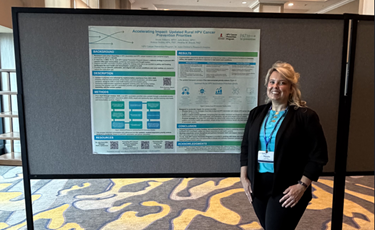
Nicole Williams, MPH, program coordinator represented the St. Jude HPV Cancer Prevention Program with a poster presentation, Accelerating Impact: Updated Rural HPV Cancer Prevention Priorities, highlighting the recent revision of the program’s national rural HPV vaccination priorities. By showcasing this work at the national rural health conference, we aimed to underscore the critical importance of elevating rural HPV vaccination as a national priority and advance coordinated, evidence-based efforts to reduce rural disparities and prevent HPV cancers.
|
 |
|
|
To learn more about the St. Jude HPV Cancer Prevention Program’s efforts to improve rural HPV cancer prevention, visit the website or sign up to receive the latest information on our rural HPV vaccination coverage efforts. Read the latest rural quarterly
communication from May here.
|
|
|
|
|
Wide Open Spaces:
Supporting HPV Vaccination
with Rural Communities |
|
|
Leveraging Dental Providers in Rural Areas for HPV Vaccination at Age Nine: An HPV Toolkit for Rural Dental Offices |
Rural communities experience higher rates of HPV cancers and lower HPV vaccination coverage, driven by unique barriers like increased vaccine hesitancy and an increased value of personal choice in decision-making. Dental providers are well-positioned to support HPV vaccination efforts by educating patients and recommending the vaccine starting at age 9 and to provide HPV vaccination in some states. To support this role, fellows from the American Cancer Society National HPV Vaccination Roundtable Emerging Leaders Fellowship developed a practical toolkit tailored for rural dental settings. The toolkit includes ready-to-use
resources such as patient reminders, communication scripts, and educational materials designed to integrate easily into practice workflows and promote HPV vaccination as cancer prevention, starting at age 9. Read more about the Dental HPV Resources: A Toolkit for Rural Dental Offices and sign up here to be notified when it becomes available.
|
| Full Article
|
About the Authors:
Heather Owens, PhD, MPH, is an Assistant Professor at the West Virginia University (WVU) School of Pharmacy and WVU Cancer Institute and 2025 fellow with the American Cancer Society National HPV Vaccination Roundtable Emerging Leaders Fellowship. She received her PhD in Public Health from the University of South Florida and completed a postdoctoral fellowship in the T32 Behavioral Oncology Training Program at Moffitt Cancer Center. Her research focuses on the development of interventions to increase HPV vaccine and cervical cancer screening utilization in rural communities.
Nicole Rhodes, CHES, is an MPH student at Oregon State University and 2025 fellow with the American Cancer Society National HPV Vaccination Roundtable Emerging Leaders Fellowship. Her work includes supporting Washington state with the “HPV at Nine” initiative, creating a dedicated “HPV at Nine” website, and expanding language access to HPV educational materials.
|
|
|
Do you have a story about HPV cancer prevention efforts with rural communities? We invite guest contributors to share information on how they are working to improve HPV vaccination in rural areas through the Wide Open Spaces article series, which is promoted in our monthly Path to Prevention newsletter, featured in our quarterly rural HPV vaccination newsletter, and posted on stjude.org/HPVrural. If you are interested in
contributing to or learning more about our efforts to improve HPV vaccination in rural communities, please email us at PreventHPV@stjude.org.
|
|
|
|
HPV Vaccination Roundtable of the Southeast |
|
|
Join us for the next follow-up meeting on June 18.
Since the 2026 In-Person Annual Meeting on March 9–10, the Southeast Roundtable has continued to build momentum, with members coming together during the April 21 and May 19 post-meeting sessions to nurture and grow the ideas planted during the annual meeting. Through thoughtful collaboration, attendees have carefully refined priority action plans that will guide the Southeast Roundtable’s work over the next several years, turning early concepts into strong, actionable strategies.
As these plans take root, Southeast Roundtable leadership will provide final approval, after which implementation team members will begin advancing these strategic next steps. Members who are not yet part of an implementation team, or who would like to join an additional team, are encouraged to complete the Southeast Roundtable membership form to share their interest and help move these efforts forward. Please feel free to also share this membership form across your network for other interested partners across the region.
The final post-meeting will be held June 18, 11 a.m. - noon Eastern Time / 10 – 11 a.m. Central Time.
Now is the time to dig in. Let’s grow this work together.
|
| Join June 18
|
|
|
Priority action implementation teams continue to progress the existing efforts of the Southeast Roundtable. Access our resources and register for upcoming events here.
|
|
|
Communication: It's Our Way Down South
Access the It’s Our Way Down South Campaign here
Request Campaign Print Materials here
|
|
|
Elimination
Access the Southeast Roundtable Call to Action here
Visit the Southeast Roundtable elimination webpage here.
|
|
|
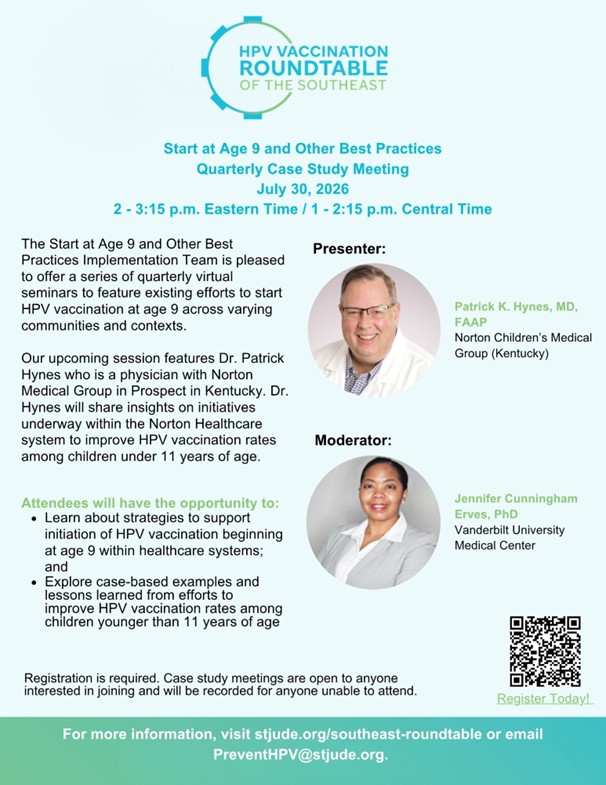
Starting HPV Vaccination at Age 9 and Other Best Practices
Register for the Start at Age 9 and Other Best Practices Quarterly Case Study Meeting on July 30 here
|
|
|
To learn more, visit the HPV Vaccination Roundtable of the Southeast website.
|
| Website
|
|
Join us as a member of the Southeast Roundtable to receive the latest information about the Southeast Roundtable. This also will allow you to access quarterly
communications and other resources.
|
| Membership
|
|
|
|
|
|
Memphis and Shelby County HPV Cancer Prevention Roundtable |
|
|
HPV Champions in Action Challenge
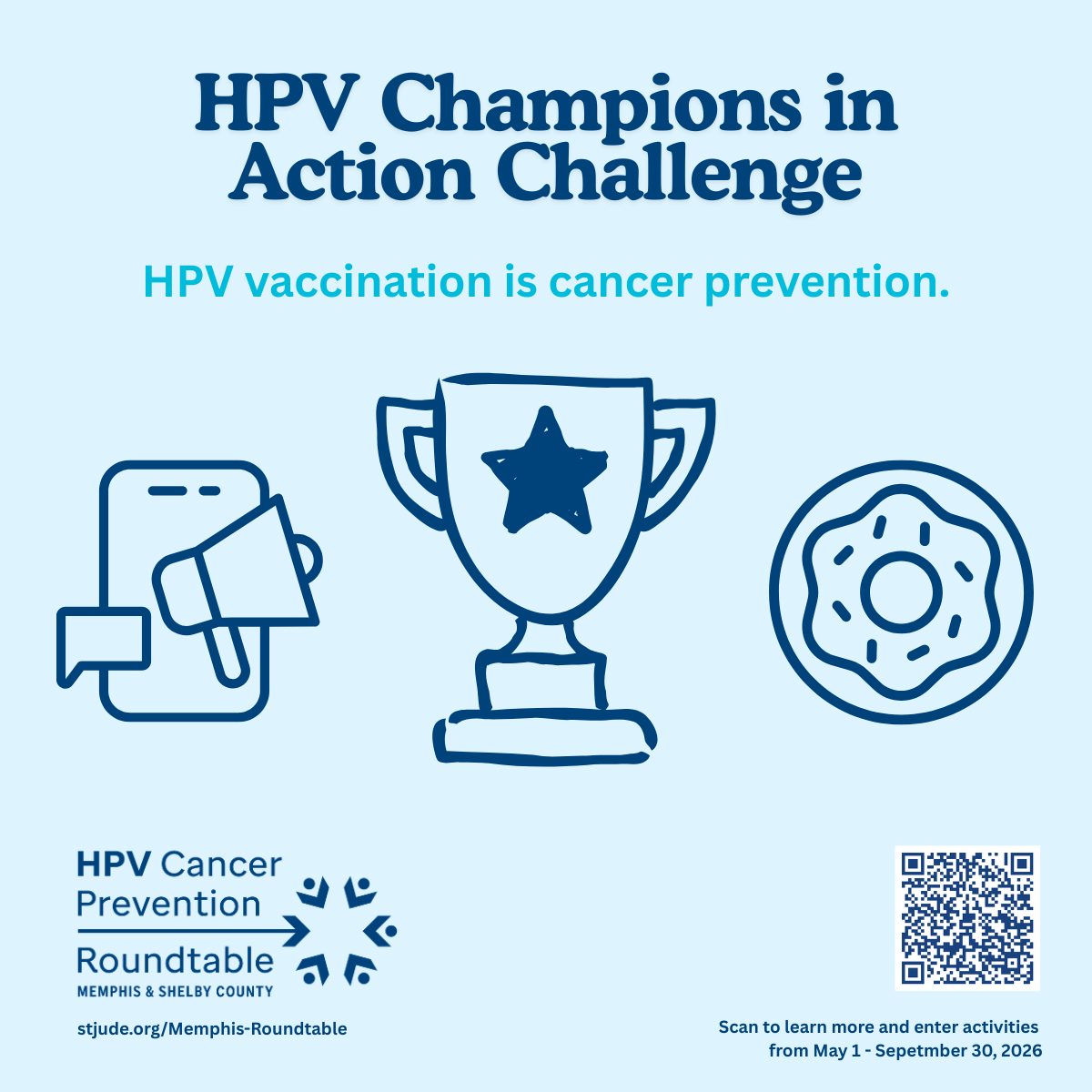
The Memphis Roundtable is excited to announce the HPV Champions in Action Challenge, running from May 1 through September 30. This is commonly referred to as the “back-to-school” time and is when many children receive routinely recommended vaccinations, including HPV vaccination. This friendly challenge invites all community partners, clinical settings, and health care organizations, patient-facing and non-patient-facing alike, to join in and show how HPV cancer prevention is a shared responsibility across roles and settings. This competition will highlight how It’s Our Way in Memphis is not just a phrase, but how we put those words into action.
Getting involved is simple and impactful. Throughout the challenge period, teams and organizations can submit their efforts to highlight how they are supporting HPV cancer prevention in their own way. Each submission helps us spotlight the great work happening across Memphis and Shelby County while building collective momentum toward prevention.
As a bonus, submissions will be entered into a drawing to win donuts for your organization. Selected participants will have the opportunity to be officially recognized as HPV Vaccination Champions.
Whether big or small, your efforts matter. Great work deserves to be celebrated!
Ready to join the fun?
Learn more about what is happening with the Memphis Roundtable. Read the latest Memphis and Shelby County HPV Cancer Prevention Roundtable communication here.
|
|
| Participate
|
|
|
|
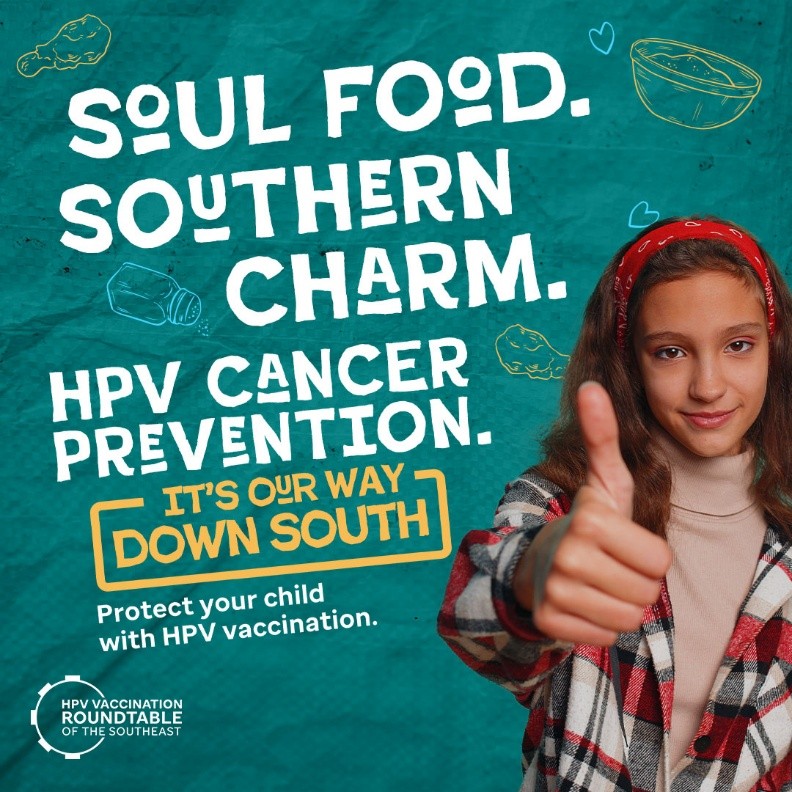
It’s Our Way in Memphis Communication Materials Available
The Memphis Roundtable offers a full collection of co-brandable communication materials through the It’s Our Way in Memphis campaign. This includes postcards, posters, social media graphics, and retractable banners designed to support HPV vaccination outreach across our community. These resources are designed to help elevate your efforts and ensure consistent, community-centered messaging.
If you and your team would like to use or co-brand items from the It’s Our Way in Memphis campaign collection, like the one shown below, or request printed copies, simply click the buttons below to get started. All materials are available at no cost and include customizable, brand-ready designs that make it easy to promote HPV vaccination across Memphis and Shelby County.
|
|
|
|
|
|
|
Survivor Proud: Improving HPV Vaccination Coverage among Childhood Cancer Survivors |
|
|
The HPV Cancer Prevention Program hosted a Lunch and Learn Announcement
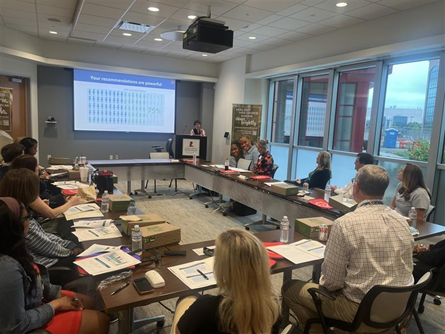
Approach Training (AAT) on April 29 for 12 providers from the After Completion Clinic (ACT) at St. Jude Children’s Research Hospital as part of the Survivor Proud campaign to promote HPV vaccination to childhood cancer survivors. Providers shared a desire for additional tools and strategies to more effectively address parent, caregiver, and patient concerns about HPV vaccination. The AAT is a proven strategy to help providers deliver strong HPV vaccination recommendations and improve vaccine uptake among survivors.
The St. Jude HPV Cancer Prevention Program offers the AAT to internal and external partners. If you are interested in learning more, please email PreventHPV@stjude.org.
|
 |
|
|
|
|
|
Partners on the Path to Prevention |
|
|
Unmuting the Conversation: Susie Sanchez’s Journey of Survival and Advocacy
Susie Sanchez is a devoted wife, mother, grandmother, and seasoned executive assistant. In March 2021, her world was instantly altered when she received a diagnosis that many are too uncomfortable to even say. She learned she had been diagnosed with stage 2 squamous cell carcinoma of the anus. In other words, she was diagnosed with anal cancer.
Her only persistent symptom was an intense ‘booty itch,’ as she characterizes it, localized in the anal area. Susie was initially misdiagnosed with a fissure by her obstetrician-gynecologist. It was not until several months later that she received a correct diagnosis and learned that her cancer was caused by HPV, a common virus that more than 80% of society encounters at some point in their life.
“I’d never had a bad Pap smear. While HPV often remains dormant in the body, for me, it turned into a fight for my life,” said Sanchez.
In sharing her story, she does not sugarcoat that the treatment for anal cancer is “barbaric”. She says it challenges you to your core, altering your body and your perspective forever.
Once she reached the other side and ‘beat the beast,’ a moniker she uses for her cancer, she knew she could not stay silent. She has committed her voice, experience, and journey to advocate for the HPV vaccine. “It’s a vital vaccine for our youth. They don’t want this!”
As we mark 20 years since the HPV vaccine was introduced in the U.S. in 2006, Susie reflects on those early years. She remembers her daughter receiving the HPV vaccine in 2009, an experience that now carries even deeper meaning.
This June also marks a powerful milestone for Susie. On June 24, 2026, she will celebrate five years since her last day of cancer treatment, officially considered out of remission and cancer free! “As a cancer survivor, that five-year mark is huge,” she shares. “It means we no longer have to define ourselves by ‘years in remission’—we can start moving forward.”
Susie’s story has been featured in various magazine articles and video campaigns, and she has courageously shared her story at conferences and Summits to help ensure that no one else will ever endure what she went through.
“Survival has given me a new lens on grace, patience, and gratitude. I am here to unmute the conversation, share my journey, and serve as a living example of the importance of HPV cancer prevention and the power of resilience.”
|
|
|
Learn more about Susie here.
|
|
|
|
|
HPV Cancer Free Georgia: 2026 Spotlight Campaign
HPV Cancer Free Georgia is a statewide initiative working to prevent HPV cancers through vaccination, education, and cross-sector partnership. As part of the Georgia Cancer Control Consortium (GC3), in collaboration with the Georgia Department of Public Health and facilitated by the Georgia Health Policy Center within Georgia State University, the mission is to advance cancer
prevention by improving awareness of HPV vaccination and supporting action at the community and clinical levels.
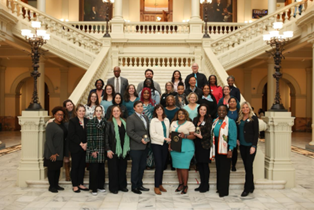
One recent effort especially exciting for HPV Cancer Free Georgia to launch was the 2026 “HPV Awareness Months” campaign. Because HPV causes six cancers, this campaign was designed to sustain attention across the year by highlighting one HPV cancer each month alongside one of Georgia’s 2026 HPV Clinical Champions, beginning in April. These champions were recognized for their measurable success in increasing HPV vaccination coverage in the communities they serve, including rural and underserved areas where access, trust, and consistent engagement matter deeply. The 2026 champions are:
West Atlanta Pediatrics - Douglas County and Paulding County
Berrien County Health Department – Berrien County
Lawrenceville Health Center - Gwinnett, Newton, and Rockdale Counties
Norcross Health Center - Gwinnett, Newton, and Rockdale Counties
Bright Pediatrics - Whitfield, Catoosa, and Murray Counties
This campaign is meant not only to celebrate leadership, but also to keep HPV cancer prevention visible, practical, and local. By sharing champion stories through HPV Cancer Free Georgia communication channels, partners and families are encouraged to see HPV vaccination as cancer prevention. The month-by-month campaign is designed to sustain visibility throughout the spring and summer, when many families are scheduling vaccination visits for the school year.
Georgia has made meaningful progress, with adolescent HPV vaccination coverage above the national average, but more work remains to reach national goals. In that context, this campaign reflects partnership-driven momentum supporting Georgia’s early efforts toward a statewide HPV cancer elimination plan.
|
 |
|
|
|
|
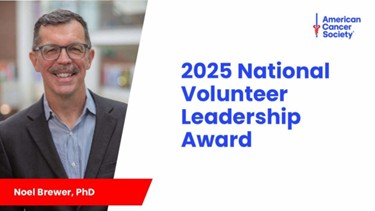
Congratulations Noel Brewer, PhD, American Cancer Society 2025 National Volunteer Leadership Award
Congratulations to Noel Brewer, PhD, of the University of North Carolina Chapel Hill Gillings School of Global Public Health. Dr. Brewer is one of two recipients of the American Cancer Society’s (ACS) 2025 National Volunteer Leadership Award, the ACS’s highest honor for volunteers. He received the award at the 2026 Volunteer Leadership Summit in Houston on April 20 in recognition of his outstanding leadership and long-standing service.
As inaugural chair of the ACS National HPV Vaccination Roundtable, Dr. Brewer helped build the Roundtable into a nationally recognized leader in cancer prevention. For more than a decade, he has brought partners together, guided its growth, and supported major efforts to increase HPV vaccination coverage, including the Getting Back on Track initiative.
He is also a globally recognized researcher and implementation science leader whose work has helped shape how providers talk about HPV vaccination, including the widely used Announcement Approach. With more than 330 publications, his contributions have had a lasting impact on HPV cancer prevention.
Dr. Brewer’s leadership, research, and generosity continue to strengthen HPV cancer prevention efforts across the country.
|
 |
|
|
|
|
|
Arkansas HPV Elimination Summit to Advance Cancer Prevention Efforts, June 4
The Arkansas HPV Elimination Summit is scheduled for June 4 at the Arkansas Pharmacists Association bringing together public health leaders, health care providers, researchers, and community partners to strengthen efforts to prevent HPV cancers across Arkansas. The summit will focus on increasing HPV vaccination rates, expanding equitable access to cervical cancer screening and early detection services, and improving systems of care to ensure timely treatment and follow-up. Through collaboration and shared strategies, participants will work toward accelerating progress in HPV cancer prevention and elimination.
|
|
|
|
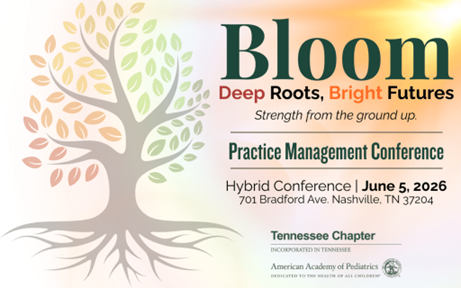
Tennessee Chapter of the American Academy of Pediatrics Pediatric Practice Management Conference, June 5
Registration for the 25th Annual Pediatric Practice Management Conference is now open. This year’s hybrid event will take place on June 5 and will bring together physicians, practice managers, and practice staff to connect, collaborate, and strengthen pediatric practices. Participants will have the opportunity to engage with a professional network of colleagues, discuss key management challenges, share experiences, and build skills to enhance practice operations. The in-person conference will be held at the Tennessee Medical Association building in Nashville,
Tennessee, with a live-stream option available for those attending virtually making the event accessible to participants across the state.
|
|
|
ACCESS: North America Initiative Hosts HPV Cancer
Elimination Webinar Series, June 17
The International Gynecologic Cancer Society (IGCS) ACCESS: North America initiative aims to advance cervical cancer elimination by addressing persistent access inequities and translating clinical evidence into actionable policy. As part of this effort, IGCS is hosting a three-part webinar series, Building Resilient Systems Towards Cervical Cancer Elimination, focused on
Canada, the United States, and the Caribbean. Serving as a precursor to an in-person workshop at the 2026 IGCS Annual Meeting in Montreal, the series provides a systems-level perspective on progress toward the World Health Organization’s elimination targets.
Each webinar addresses a core pillar of elimination: treatment, screening, and HPV vaccination. Sessions highlight evidence-based strategies, policy and program innovations, and approaches to advancing equitable access. Topics include timely diagnosis and patient-centered care, HPV-based screening and self-collection, and improving vaccination coverage beyond school-based programs.
Together, the series emphasizes the importance of coordinated, equitable, and resilient health systems to achieve cervical cancer elimination.
|
|
|
Webinar 1: Elimination and Treatment, June 17, 12-1:30 p.m. Central Time
|
|
|
Webinar 2: Screening, July 8, 12-1 p.m. Central Time
|
|
Webinar 3: HPV Vaccination, July 15, 12-1 p.m. Central Time
|
|
|
|
|
 |
ACS and ACS National HPV Vaccination Roundtable Promising Practices, June 18
The ACS and the ACS National HPV Vaccination Roundtable invite health care professionals to a dynamic, multi-session webinar series to highlight and discuss the latest evidence-based practices to improve HPV vaccination (among adolescents aged 9–13) and cervical cancer elimination efforts nationwide. Each session brings together experts and innovators to share evidence, strategies, and real-world successes. The next session will be on June 18 from 1:00-2:00 p.m. Central Time.
June 18: Partnering for HPV Vaccination Progress
August 20: Provider Education for On-Time HPV Vaccination
October 15: Provider & Team Champions for HPV Vaccination
December 10: Cervical Cancer Elimination
|
| Register Here
|
|
Tennessee Chapter of the American Academy of Pediatrics Practice Management Power Hour Lunch – Memphis, July 10
The Tennessee Chapter of the American Academy of Pediatrics (TNAAP) will host a Practice Management Power Hour Luncheon on July 10 in Memphis at Owen Brennan’s Restaurant. This luncheon is designed specifically for practice managers and clinic leaders—an important audience for advancing HPV vaccination quality improvement efforts. Register here.
|
|
|
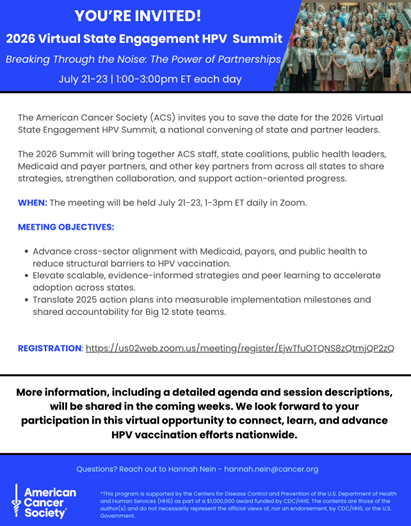
2026 American Cancer Society Virtual State Engagement HPV Summit,
July 21-23
Register for the 2026 Virtual State Engagement HPV Summit organized by ACS on July 21-23 from 12:00-2:00 p.m. Central Time daily. The summit will bring together ACS staff, state coalitions, public health leaders, Medicaid and payer partners, and other key partners from across all states to share strategies, strengthen collaboration, and support action‑oriented progress.
|
| Register Here
|
|
|
Save the Date: 2026 Tennessee State Pediatric Conference, August 15
The Tennessee State Pediatric Conference (TSPC) is the annual meeting of the Tennessee Chapter of the American Academy of Pediatrics (TNAAP), bringing together pediatricians, physician assistants, nurse practitioners, nurses, residents, and students from across the state. This dynamic conference offers education, encouragement, and empowerment in pediatric medicine, along with valuable opportunities to connect with exhibitors and take practical insights back to your practice.
This year’s conference will take place on August 15 at the Franklin Marriott Cool Springs in Franklin, Tennessee. With the theme Kicking Off Healthy Futures: Scoring Big for Kids’ Health, the event promises an engaging and impactful experience.
Registration details will be released soon.
|
|
|
|
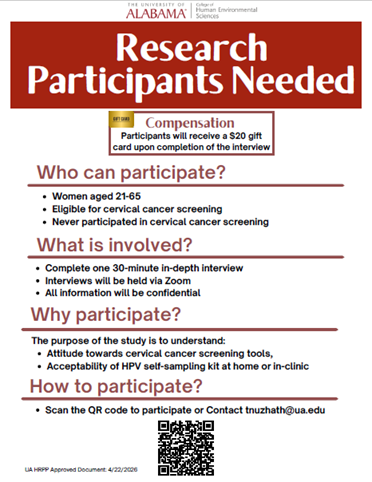
University of Alabama: Research Participants Needed
The University of Alabama is conducting a research study and is seeking women ages 21–65 to participate in a one-time interview about cervical cancer screening and HPV self-sampling. Eligible participants must be eligible for cervical cancer screening and have never participated in cervical cancer screening. The purpose of the study is to better understand attitudes toward cervical cancer screening methods and the acceptability of HPV self-sampling, either at home or in a clinic setting. Participants will complete a confidential 30-minute interview via Zoom and will receive a $20 gift card upon completion. Interested individuals can participate by scanning the study QR code or contacting tnuzhath@ua.edu for more information.
|
|
|
|
|
National Adult and Influenza Immunization Summit (NAIIS) 2026
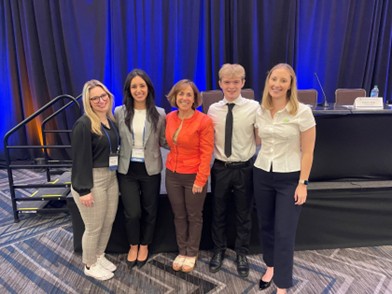
As health care providers, public health professionals, and communities continue to navigate evolving challenges around vaccine confidence, rebuilding trust with younger generations has never been more important. On May 20, Madeline McNee, MPH, program coordinator represented the St. Jude HPV Cancer Prevention Program at the 2026 NAIIS on the first ever full plenary session devoted to an open dialogue about engaging young people in immunization and preventive care.
Judy Klein, President of Unity Consortium, opened the session by sharing relevant data, trends and insights on who is influencing and trusted by young adults when it comes to their health and vaccination decisions. A group of young leaders, including Alexandra Garcia, Madeline McNee, Madisen Stearns, and Zach Lang shared their lived experiences, perspectives on vaccine influences and decision-making, insights on navigating misinformation, and recommendations for engaging young people on their health decisions.
|
 |
|
|
Arkansas Immunization Action Coalition 2026 HPV Summit
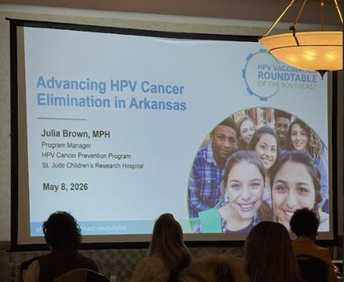
The Arkansas Immunization Action Coalition (ImmunizeAR) hosted the 2026 HPV Summit in North Little Rock on May 8. The annual convening provided an important opportunity to highlight ongoing efforts across the state to improve immunization rates through workgroups focused on several priority areas, including childhood immunizations, adult immunizations, RSV vaccination, and HPV prevention. Julia Brown, MPH, program manager, represented the St. Jude HPV Cancer Prevention Program and presented about Southeast Roundtable’s HPV elimination efforts and shared updates about advancing HPV cancer elimination in Arkansas. During the summit, an interest list was also initiated, resulting in 10 additional individuals excited to support upcoming HPV elimination
planning meetings.
|
 |
|
|
Recording Available: Western Regional Summit on HPV Prevention and Progress
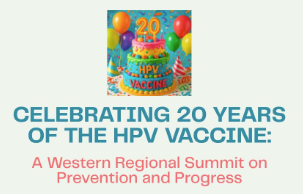
On May 20, a coalition of western states hosted the “Western Regional Summit on HPV Prevention and Progress.” The two-hour summit brought together public health professionals, health care providers, pharmacists, health plans, universities, and associations to reflect on two decades of progress and discuss the future of HPV prevention. It featured expert speakers, questions and answers, and networking opportunities. The recording is available on Immunize Colorado’s website..
|
 |
| Recording
|
|
|
|
|
Welcome Student Intern Aniya Bonds
|
|
|
Aniya Bonds is a Master of Public Health Student at the University of Memphis, concentrating in Social and Behavioral Sciences. She is deeply passionate about advancing health equity and improving outcomes in underserved communities.
Aniya’s experience spans maternal and child health, sexual health, community outreach, program evaluation, and public health education. She has worked with organizations, including the Shelby County Health Department in Memphis and The Wellness Plan Medical Centers in Detroit, Michigan, where she contributed to initiatives focused on preventive care, patient education, and reducing health disparities among marginalized populations. She has also supported efforts in reproductive health education, postpartum care, and community-based public health interventions.
In addition, Aniya served as a Tigers Vax Now Ambassador during the program’s launch at the University of Memphis in partnership with St. Jude Children’s Research Hospital. In this role, she promoted vaccine awareness and led community engagement efforts across campus. She also has extensive experience in sexual health education, providing outreach on HIV prevention, HPV awareness, and broader reproductive health topics.
Committed to community-engaged public health practice, Aniya is particularly interested in implementation science, reproductive health, and addressing systemic barriers to care. Through her work, she strives to bridge the gap between research, education, and community-based action to improve population health outcomes.
|
 |
|
|
|
|
Team Question: What were you doing in 2006?
|
|
|
In 2006, the world was marked by rapid technological change, cultural milestones, and meaningful progress
in public health. In the U.S., ongoing conflicts in Iraq and Afghanistan influenced national dialogue, while emerging platforms like Facebook and Twitter began reshaping communication (bye bye, Myspace). Pop culture buzzed with major moments, including Disney’s acquisition of Pixar, signaling a new era in animated filmmaking. In sports, Kobe Bryant delivered one of the most iconic performances in NBA history, scoring an astonishing 81 points in a single game for the Los Angeles Lakers against the Toronto Raptors. Amid these headlines, a transformative breakthrough occurred in cancer prevention: the U.S. FDA approval of the first HPV vaccine, Gardasil, on June 8, offered unprecedented potential to prevent multiple HPV-related cancers. To celebrate the 20-year anniversary of HPV vaccination. The St. Jude HPV Cancer Prevention Program team members share a memory and maybe a photo from 2006.
|
|
|
“One of my favorite memories from 2006 was watching the St. Louis Cardinals win the World Series; the energy around that moment was unforgettable! Twenty years later, I’m celebrating that 2006 also marked another historic
victory, the introduction of the HPV vaccine, a true gamechanger in cancer prevention!’” – Nicole Williams, program coordinator
“I honestly don’t remember much from 2006. Based on my calculations, I would have been heading into my last year of middle school, which was 8th grade. I’m assuming it was a pretty good time.” – Akeria Taylor, program coordinator
“In 2006, I was celebrating my Super Sweet 16! One of my favorite memories from this year was being surprised with my first car for my 16th birthday. While I was in the gym at cheerleading practice one afternoon, my mom drove up honking the horn and singing “Happy Birthday” with balloons—a sweet memory I will forever cherish.” – Samantha Wells, program coordinator
|
|
|
“I don't remember much from 2006 because I was only three years old at the time. However, one thing I do remember is that I really wanted to be a model. My mom was incredibly supportive and even enrolled me in a competition. This photo was taken
while I was at the competition, practicing and preparing for my moment on stage!” - Aniya Bonds, student intern
|
|
|
“In 2006, I moved to Memphis to begin my career at St. Jude, excited for the opportunities ahead. This
photo was taken at a celebratory event where family and friends wished me well as I started this new chapter in my life and career.”– Andrea Stubbs, director
|
|
|
“The summer of 2006, I was getting ready for my senior year. One of my favorite memories from that time was taking my senior portraits. I can’t believe it’s been 20 years already.” – Portia Knowlton, program coordinator
|
|
|
“In 2006, I was in my high school. I had moved from my hometown, Dang, Nepal to Kathmandu, the capital
city of Nepal (about 450 km from Kathmandu to Dang, ~12-hour journey). At that time, for better educational opportunities, we had to move to the city after completing grade 10. I joined Kathmandu University for my high school studies and started living in a hostel. It was the first time I had been away from my family, which was a significant transition. During that time, HPV vaccine was not available in Nepal. Recently, the Government of Nepal launched a nationwide HPV vaccination campaign for adolescent girls with support from international organizations. It is meaningful to reflect on how much progress has been made in 20 years in the field of HPV vaccination and HPV cancer prevention worldwide.” – Pragya Gautam Poudel, postdoctoral fellow
|
|
|
“It’s difficult for me to remember what happened in 2006, but I believe this was the year I started dance classes for jazz and ballet, which I’m sure was a very exciting time for me!” – Keimirra Lewis, student intern
|
|
|
“In 2006, I was six years old and entering my ‘big sister era.’ She is my bestie for life!” –
Maddy McNee, program coordinator
|
|
|
“This blurry photo was taken on my digital camera when I was 13, the same day or the day after I had my braces removed (hence the huge smile). This was also my first Facebook profile picture posted in December 2006. If you have questions about this
photo, please message me on Myspace.” – Julia Brown, program manager
|
|
|
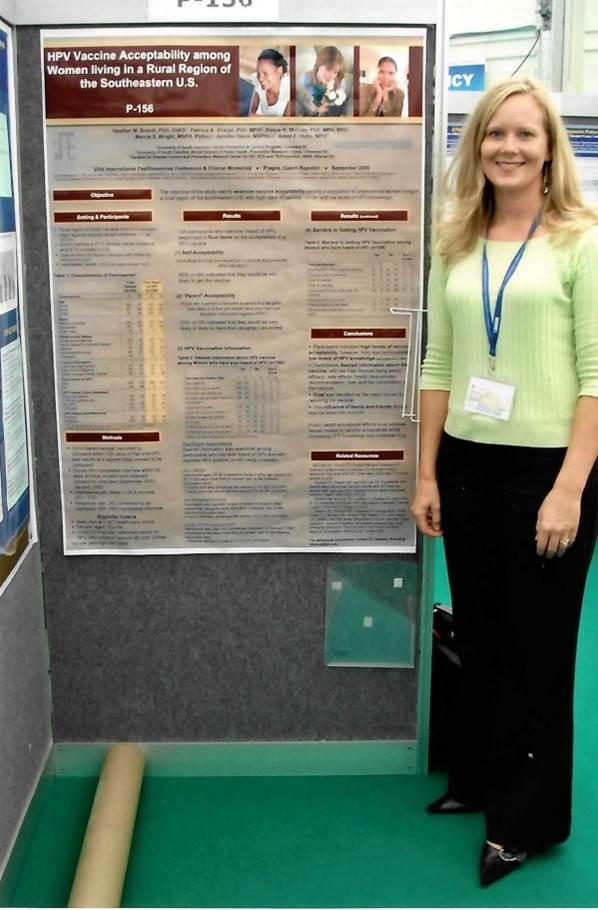
“I have been studying HPV and cervical cancer for more than 30 years. In 2006, I was focused on
understanding how to implement HPV vaccination in the U.S., among a population which knew little about HPV and even less about its link to cervical and other types of cancer. This photo is of me presenting this research at the 23rd International Papillomavirus Conference in September 2006 in Prague, Czech Republic.” – Heather Brandt, senior director
|
|
|
|
|
|
Get Free St. Jude HPV Education Materials |
|
|
The St. Jude HPV Cancer Prevention
Program has created a series of HPV fact sheets that emphasize basic information about HPV vaccination and include action steps to prevent HPV cancers.
|
Four versions of the fact sheets target various audiences:
- General public
- Parents
- Health care providers
- Cancer patients and families
- College students
- Faith community
|
Select the versions in English or Spanish most appropriate for those you serve. Download the fact sheets or email PreventHPV@stjude.org to have copies mailed to you.
|
| Find Materials
|
|
|
|
|
|
About the HPV Cancer Prevention Program |
|
|
St. Jude Children's Research Hospital
is leading the way the world understands, treats and cures childhood cancer and other life-threatening diseases. That’s why St. Jude is raising awareness on vaccination for human papillomavirus (HPV), which can prevent six types of cancer caused by the virus. As the only NCI-designated Comprehensive Cancer Center dedicated solely to children, St. Jude has an important role and responsibility in increasing the number of children who benefit from the HPV vaccination and reducing their risk of preventable cancers later in life.
On-time HPV vaccination provides safe, effective, and long-lasting protection against the most common types of HPV linked to cancers. HPV vaccination is routinely recommended at age 11 or 12 years and may be started at age 9. HPV vaccination is recommended for everyone ages 9-26. It’s not too late to catch up on HPV vaccination. People ages 27-45 are also strongly encouraged to talk with a health care provider to see if HPV vaccination is right for them.
HPV vaccination has been routinely recommended by health care professionals in the U.S. since 2006. Most children can receive an HPV vaccination at no cost, and it can be administered safely along with other routine vaccinations. With more than 500 million doses administered worldwide, HPV vaccinations are preventing new cases of cancer every day.
It’s not too late to help protect your child against HPV cancers later in life - learn more at stjude.org/PreventHPV and ask your doctor about HPV vaccination today. Email PreventHPV@stjude.org with any questions.
|
|
|
 |
|
|
|
|