Summertime Means Back-to-School Time |
|
|
Summer is a season of community events, family gatherings, and opportunities to promote healthy
habits that last a lifetime. It is also an important time to prepare for the busy back-to-school season during which many children receive recommended vaccinations, including HPV vaccination. Across the country, partners are using summer outreach, health fairs, and community-based activities to advance HPV cancer prevention and connect families with trusted information and resources.
In this month’s Path to Prevention newsletter, we highlight back-to-school HPV vaccination resources for health care providers and families, updates on efforts to improve HPV vaccination coverage in rural communities, and activities from partners working toward HPV cancer elimination. We also share reflections on the current vaccination landscape, recognize the contributions of cancer survivors and community partners, and provide opportunities to engage in upcoming educational events.
Check out this month’s Path to Prevention newsletter for more updates and opportunities on HPV cancer prevention.
Thank you for your continued commitment to creating a future free of HPV cancers. Together, we can help ensure that every child has the opportunity to benefit from on-time HPV vaccination and lifelong cancer prevention.
August is National Immunization Awareness Month. If you have information to share in upcoming newsletters, please email us at PreventHPV@stjude.org.
HPV vaccination is cancer prevention.
|
|
|
|
|
|
|
|
Updates on the Current Vaccination Landscape |
|
|
HPV vaccination continues to be one of the most successful cancer prevention interventions in
public health. As families prepare to send children back to school, understanding the current vaccination landscape can prepare us for these important HPV cancer prevention conversations.
Additional evidence demonstrates substantial declines in HPV infections, precancers, and cervical cancer, with a recent study from England reporting a 100% reduction in cervical cancer mortality among women ages 20–24 who were vaccinated at ages 12–13. At the same time, modeling studies suggest that many high-income countries could eliminate cervical cancer within the coming
decades if high HPV vaccination coverage and cervical cancer screening levels are sustained. With good news, there are challenges. Concerns have also emerged regarding changes in the federal vaccine policy environment and the potential for increased political influence on vaccine decision-making.
Vaccine hesitancy is influenced by a complex combination of knowledge, social influences, trust, cultural beliefs, and access barriers rather than information alone. A recent article synthesized global qualitative evidence to explain persistent HPV vaccine hesitancy despite its strong cancer prevention potential. Drawing on 71 studies, the authors identified eight interconnected drivers shaping caregivers’ and adolescents’ vaccination decisions, including knowledge gaps, perceived risks, prior vaccine experiences, family dynamics, social influences, cultural
beliefs, trust in institutions, and access barriers. Hesitancy was shown to reflect complex social, political, and moral contexts rather than simple information deficits. Recent KFF data further highlighted the importance of trusted health care providers, showing that individuals without a trusted provider are more likely to believe vaccine misinformation.
In a series of stories, 20 Years of HPV Vaccine Success, CIDRAP News examined what we have learned in the 20 years since the first HPV vaccine was approved in the U.S., the cancer cases that might have been prevented by HPV vaccines, and how vaccine hesitancy threatens to undo two decades of progress against cervical cancer.
These developments (and more) underscore both the remarkable progress achieved through HPV vaccination and the continued need to strengthen provider communication, build trust, counter misinformation, and ensure equitable access to vaccination and screening services as countries work toward the elimination of HPV cancers.
Choosing HPV Vaccination is Patriotic: Preventing Cancer is an Investment in America’s Future
HPV vaccination represents a powerful opportunity to prevent cancer and strengthen the nation’s future and is an investment that aligns with long-standing American traditions of civic duty and patriotism. From George Washington’s 1777 decision to inoculate troops against smallpox to modern vaccination campaigns, the United States has repeatedly framed disease prevention as essential to national strength, security, and prosperity. Washington understood that protecting soldiers from disease was critical to winning the Revolutionary War; similarly, preventing HPV-related cancers protects today’s population, workforce, and health care system.
Throughout U.S. history, vaccination efforts have been linked to good citizenship and collective responsibility. Early public health campaigns emphasized protecting the republic, while World War I and II messaging underscored that “healthy troops win wars,” reinforcing the idea that disease control is integral to national defense. During the polio era, vaccination symbolized American scientific leadership and unity, demonstrating that coordinated public action could overcome major health threats. More recently, COVID-19 vaccination campaigns have highlighted themes of restoring freedom, safeguarding the economy, and protecting what makes the country strong.
HPV vaccination builds on this legacy by preventing multiple cancers before they develop, reducing future health care costs, and preserving the health of coming generations. Framing HPV vaccination as a patriotic act emphasizes that protecting adolescents today safeguards America’s future tomorrow. Just as past generations contributed to national resilience through vaccination, increasing HPV vaccine uptake reflects a shared commitment to collective well-being, scientific progress, and a healthier, stronger nation.
|
| We the People Vax
|
 |
|
|
|
|
|
|
|
Things Newer than HPV Vaccination: WAYMO |
|
|
When you think of cutting-edge technology, you may think of self-driving cars. Tested in multiple markets across the United States, it is hard to
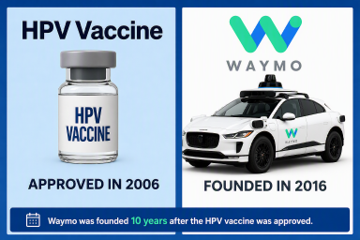
believe that the technology is not exactly “new.” Research on self-driving cars began as early as 2009 with Google’s Self Driving Car Project. Several years later in 2016, WAYMO, an autonomous vehicle company known for recently launched robotaxis (next stop Orbit City), was founded.
In recent years, the technology has gained attention, and some passengers are open to the idea of it while others are still unsure. On one hand, it meets an important need, but for some, the benefits may not be worth the risks. WAYMO safety impact data boasts more than 90% fewer serious injury or worse crashes than human drivers, but trust, as an important factor, may keep potential passengers from buying in.
A common hesitancy of the HPV vaccine is that it is still a “new” vaccine. But, if self-driving car technology is no longer new, the HPV vaccine, which received FDA approval 10 years earlier than Waymo in 2006 and is supported by many more years of research, definitely is not new.
HPV vaccination prevents 90% of HPV cancers and was widely available and offering life-saving protection before self-driving cars were even a thought (or at least still just a futuristic dream reserved for the Jetsons).
Whether you would hop in a self-driving car or would prefer the old-fashioned way, set your destination to HPV vaccination.
|
 |
|
|
|
|
|
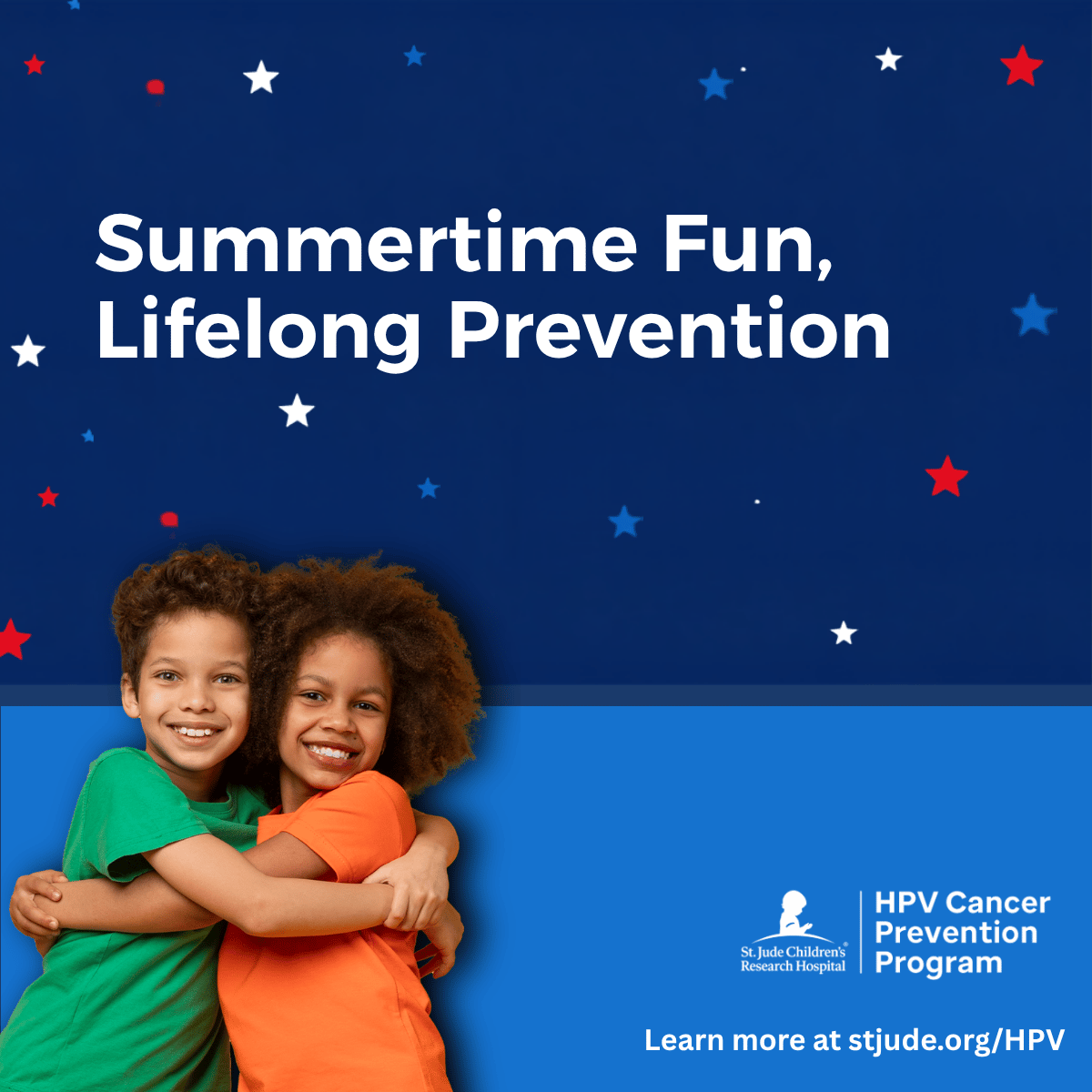
Summertime Fun, Lifelong Protection |
|
|
Summer is a season for outdoor adventures, family gatherings, and community
celebrations. As we celebrate America's 250th anniversary this year, it also is a timely reminder that the healthy choices we encourage today can also help build a healthier future for the next generation.
The St. Jude HPV Cancer Prevention Program knows cancer prevention in adulthood begins in childhood. The Summer months provide many opportunities for partners to reinforce evidence-based prevention messages within their communities. Whether supporting schools, health care providers, or community organizations, consider highlighting simple actions that can have a strong and lasting impact:
Sun safety: Promote sun safety by wearing sunscreen (SPF 30 or higher), protective clothing, hats, and seeking shade during peak sunlight hours.
Healthy eating and active living: Promote healthy eating and physical activity through summer meals, outdoor recreation, and active family events that help establish lifelong healthy habits.
Avoid tobacco: Promote tobacco-free environments by reinforcing the importance of avoiding smoking, vaping, and secondhand smoke exposure.
HPV vaccination: Promote on-time HPV vaccination, starting at age 9, to help prevent more than 90% of HPV-related cancers.
As communities continue to gather for the summer festivals, health fairs, and patriotic celebrations, these events can offer valuable opportunities to incorporate cancer prevention messaging and outreach efforts. Together, we can help ensure that every child has the best opportunity to grow healthier and simultaneously reduce their risk of cancer later in life.
|
 |
|
|
|
|
|
|
|
Back-to-School Season Is the Perfect Time to Catch Up on HPV
Vaccination
Families are preparing for a new school year. This is a great time to make sure children and teens are up to date on recommended vaccinations, including HPV vaccination. Summer often provides more flexibility for scheduling preventive health visits before the busy school year begins.
According to the Unity Consortium's Mid-Year Check-In: Why Summer Is the Best Time to Catch Up on Vaccines resource, summer checkups create an ideal opportunity for parents to review their child's immunization status, ask questions, and receive any routine vaccines that may be due before school activities and schedules become more demanding.
HPV vaccination is routinely recommended for adolescents and helps protect against six types of HPV cancers. Receiving the vaccine on time provides the strongest protection.
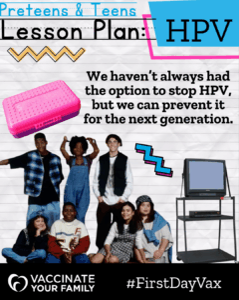
Families looking for back-to-school vaccination information can also explore the First Day Vax campaign from Vaccinate Your Family, which provides educational tools, conversation tips, and resources to help parents stay on track with recommended vaccinations before the first day of school.
As you connect with families throughout the back-to-school season, consider sharing these trusted resources to help raise awareness and support on-time HPV vaccination.
|
 |
| First Day Vax Campaign
|
Back-to-School Protection: How Providers Can Boost HPV Vaccination for a Healthy Start
As the back-to-school season approaches, this is a time to prepare children for success. Parents, caregivers, educators, and health care professionals play roles in supporting students. Health care providers have a unique opportunity to support families by protecting children from HPV cancers through on-time HPV vaccination. A strong, confident health care provider’s recommendation is a key factor in a parent’s decision, reducing missed opportunities and increasing protection.
The St. Jude HPV Cancer Prevention Program supports providers with resources to boost vaccination rates. A key tool is the Announcement Approach Training (AAT), developed by researchers at the University of North Carolina at Chapel Hill. The AAT supports providers by building and practicing skills to confidently recommend HPV vaccination, using a presumptive approach, and address parent concerns, using research-tested messages.
Additionally, the ACS National HPV Vaccination Roundtable offers key resources for health care providers and professionals. Providers are encouraged to use and share the National Roundtable’s resources such as articles, toolkits, videos, social media content, and calls to action help providers promote HPV vaccination starting at age 9.
By using these resources and delivering strong recommendations, providers help ensure children start school healthy, protected, and ready to succeed.
|
|
|
|
|
|
|
|
Improving Rural HPV Vaccination Coverage |
|
|
Back-to-School Momentum: Advancing HPV Vaccination with Rural
Communities
Rural communities have an important opportunity to protect children by making every health care visit or outreach activity count as back-to-school season approaches. This month’s Wide Open Spaces article reinforces that even small shifts in communication, like using the Announcement Approach, can make a meaningful difference in improving HPV vaccination uptake and advancing HPV cancer prevention in rural communities.
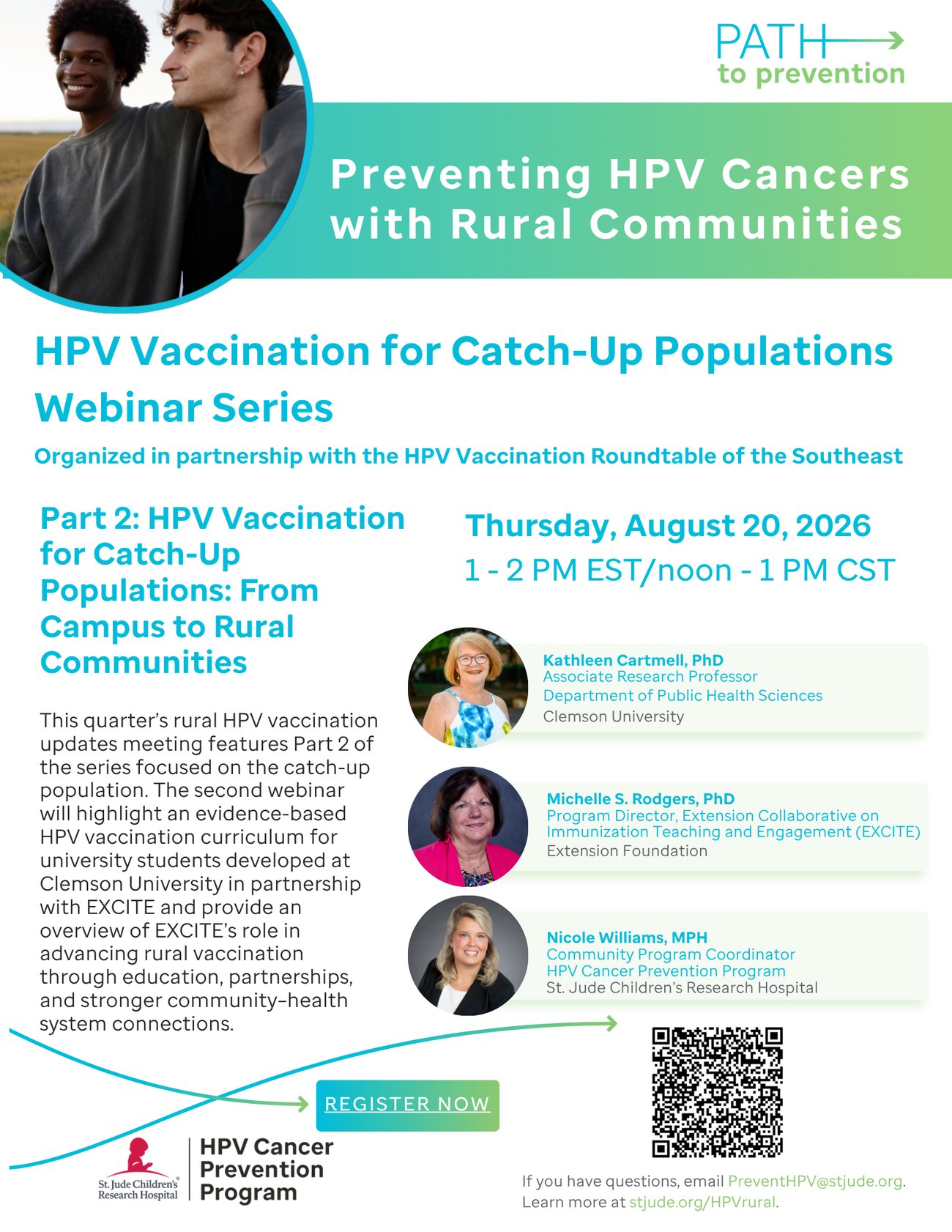
Looking ahead, we invite you to join us on August 20 from noon to 1:00 p.m. Central Time for the Preventing HPV Cancers with Rural Communities: Updates and Opportunities Rural Quarterly Meeting, which will feature Part 2 of the HPV Vaccination for Catch-Up Populations webinar series. While back-to-school vaccination efforts often center on younger populations, this two-part series expands the conversation to young adults by exploring strategies to improve HPV vaccine uptake among adults ages 18–26.
During Part 2, Kathleen Cartmell, MPH, PhD, will present on implementation of an HPV vaccination campaign at Clemson University to increase awareness about HPV vaccination and support students in navigating to the Student Health Center pharmacy to access vaccination. The project has been selected as a national curriculum offering by the Extension Foundation’s Extension Collaborative on Immunization Teaching and Engagement (EXCITE), a national initiative focused on helping rural communities make informed vaccination decisions.
Michelle Rodgers, Program Director for EXCITE, will also join to provide an overview of the EXCITE initiative and discuss how it equips Extension professionals with tools, resources, and partnership opportunities to incorporate HPV vaccination education into existing rural health efforts.
|
|
|
|
|
|
To learn more about the St. Jude HPV Cancer Prevention Program’s efforts to improve rural HPV cancer prevention, visit the website or sign up to receive the latest information on our rural HPV vaccination coverage efforts. Read the latest rural
quarterly communication from May here.
|
|
|
|
|
|
|
Wide Open Spaces:
Supporting HPV Vaccination
with Rural Communities |
|
|
Closing the HPV Vaccination Gap One Visit at a Time |
Health care providers and professionals have a critical opportunity to improve HPV vaccination rates, especially in rural communities, where coverage remains lower than in urban areas. This is particularly true during the back-to-school time period. Family Nurse Practitioner, Maureen Boardman, DNP, FNP-C, FAANP, shares her journey in HPV cancer prevention and highlights the Announcement Approach, an evidence-based strategy that strengthens one of the most powerful drivers of vaccination: a
clear, confident provider recommendation. Through real-world experience, training, and collaboration with national partners, she demonstrates how making HPV vaccination a routine part of care can turn everyday visits into meaningful moments of cancer prevention. The St. Jude HPV Cancer Prevention Program team offers Announcement Approach Trainings in-person and virtually. Email PreventHPV@stjude.org to inquire.
|
| Full Article
|
About the Author:
Maureen Boardman has been a family nurse practitioner for 35 years. She recently completed a DNP degree at the University of New Hampshire. She has been employed for the last 21 years at Little Rivers Health Care, a rural federally qualified health center in northeastern Vermont where she is Director of Clinical Quality and Research. She also teaches at Dartmouth Geisel School of Medicine where she is a Clinical Assistant Professor of Community and Family Medicine and is the Clinical Research Director of the Northern New England Practice & Community Based Research Network (NNE PCBRN). At the NNE PCBRN she engages in a variety of research projects related to primary care and community-based research. She served on an Agency for Healthcare Research
Technical Expert Panel on Primary Care. She was one of 20 nurses chosen from across the country to serve on the National Nurse Vaccine Confidence Project, a national cooperative agreement funded by the Centers for Disease Control and Prevention (CDC) to build vaccine confidence among nursing providers, non-clinical health center staff and patient communities. Maureen has been a Primary investigator or Co-PI on two NIH grants exploring vaccine issues including the expanded age range for the HPV vaccine and rural COVID-19 vaccine hesitancy in Northern New England. She is a Dartmouth, Geisel School of Medicine Master Educator and is a Fellow in the American Association of Nurse Practitioners.
|
|
|
Do you have a story about HPV cancer prevention efforts with rural communities? We invite guest contributors to share information on how they are working to improve HPV vaccination in rural areas through the Wide Open Spaces article series, which is promoted in our monthly Path to Prevention newsletter, featured in our quarterly rural HPV vaccination newsletter, and posted on stjude.org/HPVrural. If you are interested in contributing to or learning more about
our efforts to improve HPV vaccination in rural communities, please email us at PreventHPV@stjude.org.
|
|
|
|
|
|
HPV Vaccination Roundtable of the Southeast |
|
|
|
As a follow-up to the 2026 In-Person Annual Meeting on March 9-10, the Southeast Roundtable hosted a series of post-meetings on April 21, May 19, and June 18. The post-meeting series offered an opportunity for all Southeast Roundtable members to continue building out and refining the Southeast Roundtable’s priorities to guide future work. Attendees reviewed the updated priority action plans for 2026-2028, identified potential barriers for implementation, prioritized next steps, and connected with members of their respective states and jurisdictions to align local priorities with the regional efforts of the Southeast Roundtable.
Please refer to the meeting recordings below for further details. Full meeting summaries and updated action plans will be posted to the Southeast Roundtable webpage in the future.
|
|
|
|
|
Priority action implementation teams continue to progress the existing efforts of the Southeast Roundtable. Access our resources and register for upcoming events here.
|
|
|
Communication: It's Our Way Down South
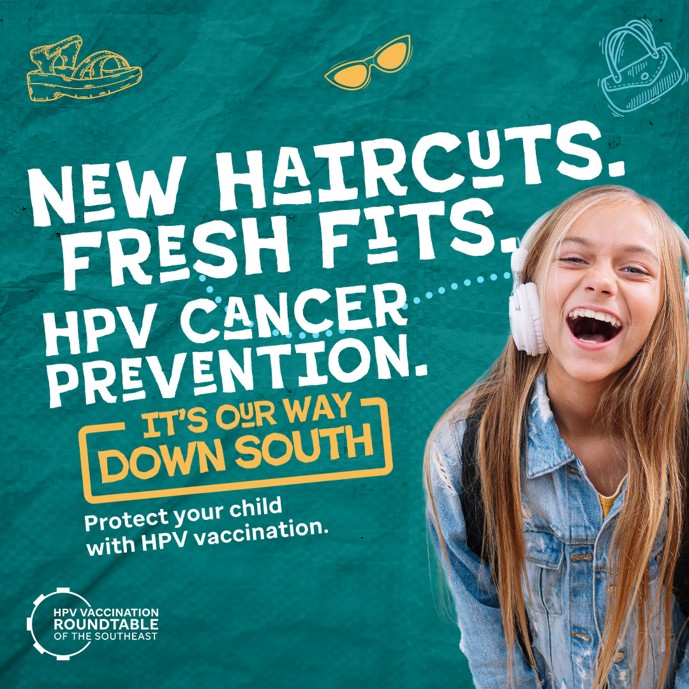
With well-child checkups and immunizations top of mind for parents and caregivers, back-to-school season is an important time to take action towards preventing HPV cancers through vaccination. The It’s Our Way Down South communication campaign includes back-to-school specific social posts and postcards to support your communication and outreach efforts. With specific back-to-school taglines and imagery, these campaign materials are the perfect eye-catching touch for back-to-school events, provider offices, waiting rooms, and more. Also check out the Campaign User Guide, available when completing the campaign user request form, for ready to use captions and a sample 8-week posting schedule.
Access the It’s Our Way Down South Campaign here
Request Campaign Print Materials here
|
|
|
Coming soon: Catch-up population materials! Join us on August 13 from noon to 1:00 p.m. Central Time for the release of the materials as part of "Owning Prevention: HPV Vaccination for Catch-up Populations."
|
| Register Here
|
|
|
Elimination
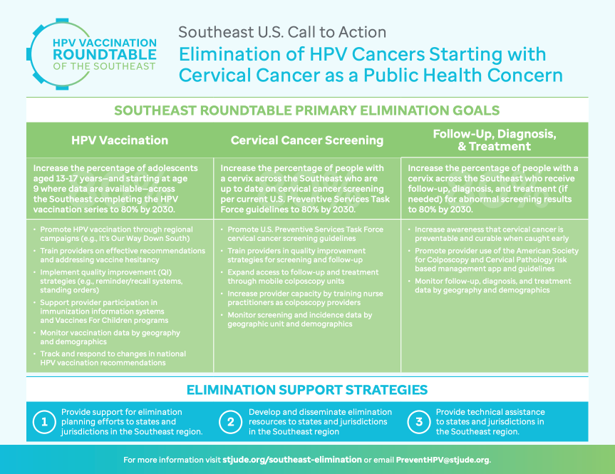
Access the Southeast Roundtable Call to Action here
Visit the Southeast Roundtable elimination webpage here.
|
|
|
Starting HPV Vaccination at Age 9 and Other Best Practices
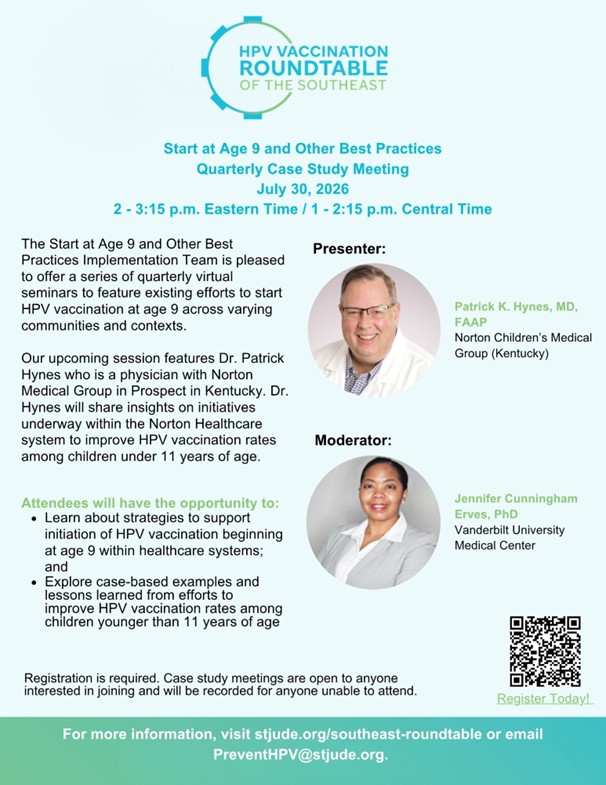
Register for the Start at Age 9 and Other Best Practices Quarterly Case Study Meeting on July 30 here.
|
|
|
To learn more, visit the HPV Vaccination Roundtable of the Southeast
website.
|
| Website
|
|
Join us as a member of the Southeast Roundtable to receive the latest information about the Southeast Roundtable. This also will allow you to access quarterly communications and other resources.
|
| Membership
|
|
|
|
|
|
Memphis and Shelby County HPV Cancer Prevention Roundtable |
|
|
HPV Champions in Action Challenge
The Memphis Roundtable's HPV Champions in Action Challenge is underway through September 30. During the busy back-to-school season, we are encouraging organizations across Memphis and Shelby County to showcase how they are supporting HPV cancer prevention and helping protect future generations.
Open to community partners within clinical settings and health care organizations, this challenge highlights that HPV cancer prevention is a shared responsibility. Whether through education, community outreach, vaccination promotion, staff engagement, or awareness activities, every effort makes a difference.
Participants can submit examples of how they are advancing HPV cancer prevention within their organization or community. These submissions help spotlight the outstanding work taking place across Memphis and Shelby County and demonstrate what It's Our Way in Memphis looks like in action.
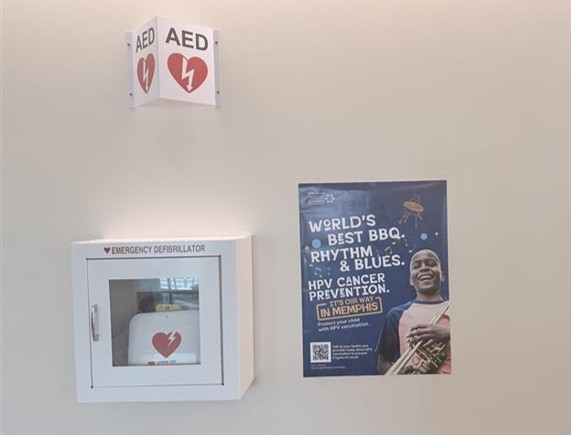
From education and awareness to vaccination promotion and community outreach, there are many ways to champion HPV cancer prevention. The example below shows how putting It's Our Way in Memphis into action can look in a clinical setting.
Submissions will be entered into a drawing to win donuts for their organization, and selected participants will be recognized as HPV Vaccination Champions.
Learn more about what is happening with the Memphis Roundtable. Read the latest Memphis and Shelby County HPV Cancer Prevention Roundtable communication here.
|
 |
| Participate
|
|
|
|
It’s Our Way in Memphis Communication Materials Available
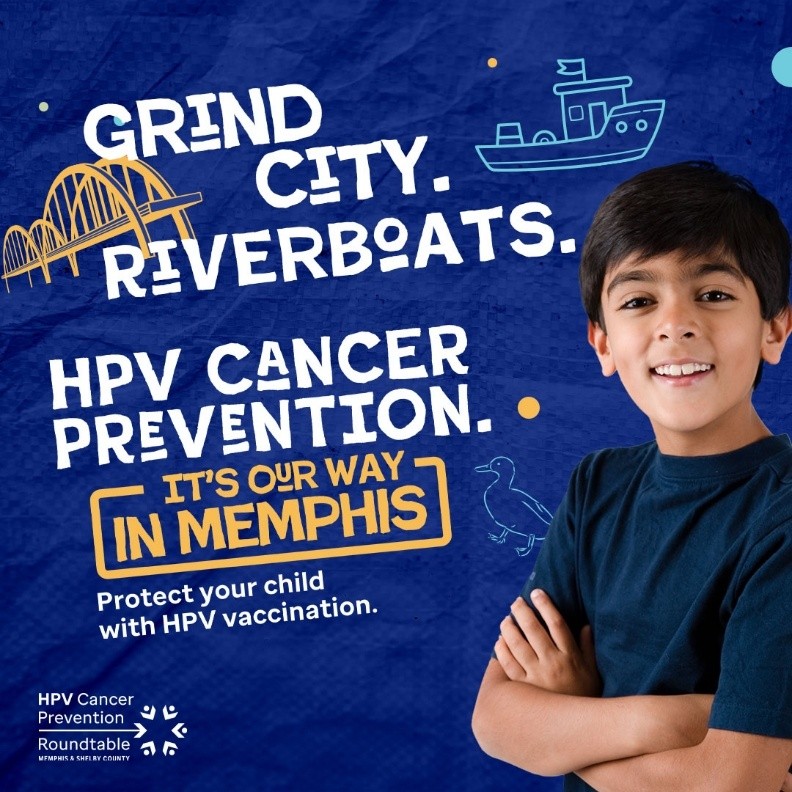
The Memphis Roundtable offers a full collection of co-brandable communication materials through the It’s Our Way in Memphis campaign. This includes postcards, posters, social media graphics, and retractable banners designed to support HPV vaccination outreach across our community. These resources are designed to help elevate your efforts and ensure consistent, community-centered messaging.
If you and your team would like to use or co-brand items from the It’s Our Way in Memphis campaign collection, like the one shown below, or request printed copies, simply click the buttons below to get started. All materials are available at no cost and include customizable, brand-ready designs that make it easy to promote HPV vaccination across Memphis and Shelby County.
|
 |
|
|
|
|
|
|
Survivor Proud: Improving HPV Vaccination Coverage among Childhood Cancer Survivors |
|
|
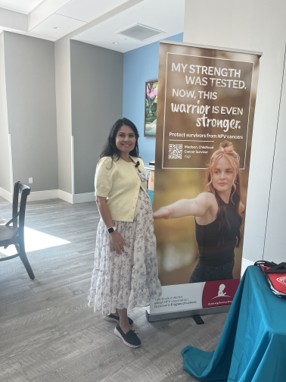
The St. Jude HPV Cancer Prevention Program partnered with Domino's Village, which is one of the St. Jude patient and family housing facilities, in June to host a Family Dinner and Movie Night as part of the Survivor Proud campaign. While families enjoyed dinner, nachos, and a screening of Zootopia, they also learned about the importance of HPV vaccination for childhood cancer survivors. The event provided a fun, family-friendly opportunity to share evidence-based information about cancer prevention and encourage conversations about protecting survivors from HPV cancers through vaccination.
The evening provided an opportunity for meaningful conversations with parents and caregivers about HPV vaccination. One of the most impactful moments came when several parents shared that they believed that HPV vaccination was only recommended for girls. Learning that vaccination is equally important for all children – boys and girls - encouraged many families to also vaccinate their sons.
By combining fun and education, Survivor Proud continues to empower families with knowledge to help prevent HPV cancers. The event celebrated the resilience of childhood cancer survivors while reinforcing St. Jude's commitment to supporting survivors beyond treatment and promoting lifelong health.
|
 |
|
|
|
|
|
Partners on the Path to Prevention |
|
|
ACS Lived Experiences Ambassadors Panel
One of the most memorable moments of the ACS National HPV Vaccination Roundtable and ACS National Roundtable on Cervical Cancer Annual Meeting in June was a panel featuring survivors and caregivers moderated by Nicole Stout, DPT, CLT-LANA, FAPTA, Senior Director of Survivorship and Wellness at the American Cancer Society.
Attendees had the privilege of hearing honest and deeply moving stories from cervical cancer survivor Arlene Simpson, head and neck cancer survivor Chris Nolan, anal cancer survivor Susie Sanchez, and caregivers Heather Birks and Richie Simpson. Together, they shared the realities of navigating diagnosis, treatment, survivorship, and caregiving, offering perspectives that were validating, eye-opening, and profoundly inspiring.
Their willingness to openly discuss both the triumphs and the challenges of their journeys reminded us that behind every statistic is a person, a family, and a community. Their stories highlighted the importance of compassionate, patient-centered care, timely access to screening and treatment, and strong support systems throughout the cancer continuum.
We are deeply grateful to these ACS Lived Experience Ambassadors for their bravery, vulnerability, and generosity in sharing their experiences. Their voices reinforced why our collective work to prevent HPV cancers and improve outcomes for patients and caregivers is so important and continues to inspire action toward a future free of HPV cancers.
|
 |
|
|
|
|
The Power of Partnership: Preparing Future Providers for HPV Cancer Prevention
In 2027, the New England Rural Health Association (NERHA) will celebrate its thirtieth anniversary of improving health and wellness across the region’s rural communities. With over 6,300 voting and associate members, NERHA represents rural hospitals, clinics, and other rural providers and professionals caring for rural populations throughout the six New England states of Connecticut, Massachusetts, Maine, New Hampshire, Rhode Island, and Vermont. Because strengthening the rural health workforce is one of its core strategic pillars, NERHA works closely with students
and faculty. A key highlight is the annual Rural Health Student Summit, a day of rural health care immersion for more than 125 students from 20 universities across New England.
The back-to-school season serves as an important reminder of the role health care providers play in ensuring children and adolescents receive recommended vaccines. To help prepare the next generation of providers for those conversations, NERHA partnered with the St. Jude HPV Cancer Prevention Program during the 2025 Rural Health Student Summit to offer students pursuing careers in medicine, nursing, and physician assistant studies training in the Announcement Approach, an evidence-based strategy shown to increase HPV vaccination uptake.
A serendipitous connection at the 2025 Rural Health and Cancer Conference sparked a partnership between NERHA, the St. Jude HPV Cancer Prevention Program, and the Advancing Research in Immunization Services (ARISe) Center for Rural Vaccination at UMass Chan Medical School. Through early discussions, the organizations recognized a shared commitment to strengthening cancer prevention efforts in rural communities and saw the Rural Health Student Summit as an ideal opportunity to reach the next generation of health care providers. The initiative demonstrates the power of
partnerships to translate research into practice and expand access to proven HPV cancer prevention strategies for rural communities across New England and beyond.
Register for the 2026 Rural Health Student Summit taking place on September 12 at Dartmouth Hitchcock Medical Center in Lebanon, New Hampshire.
|
 |
|
|
|
|
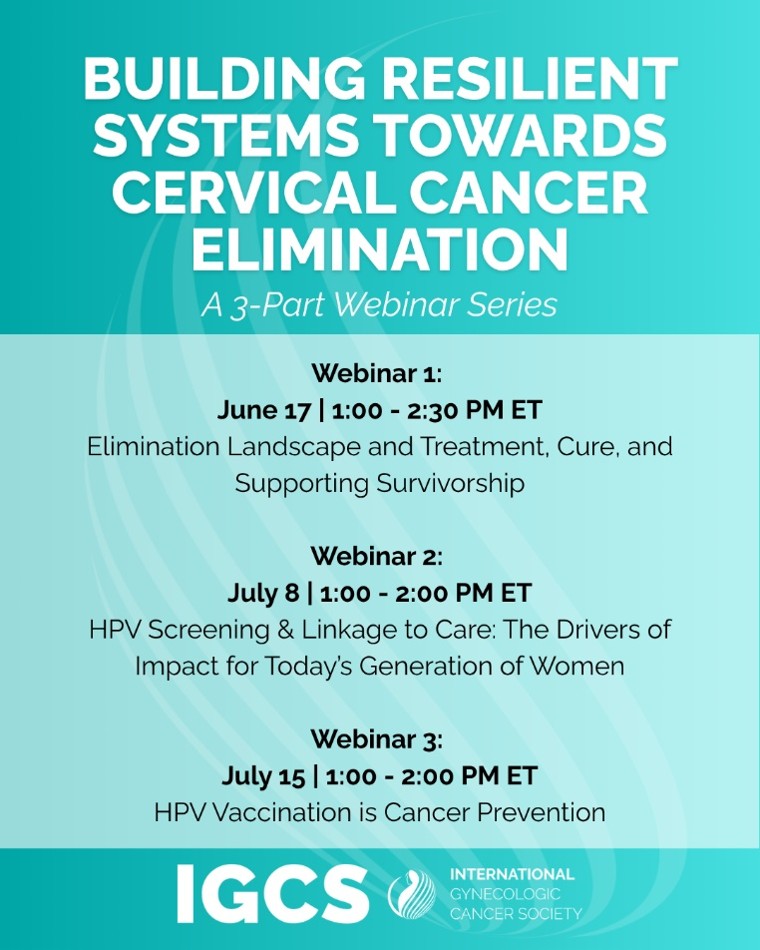
ACCESS: North America Initiative Hosts HPV Cancer Elimination Webinar Series, July 8 and 15
The International Gynecologic Cancer Society (IGCS) ACCESS: North America initiative is hosting a three-part webinar series, Building Resilient Systems Toward Cervical Cancer Elimination, focused on Canada, the United States, and the Caribbean. The series explores three critical pillars of elimination: treatment, screening, and HPV vaccination, while highlighting strategies
to improve equitable access and strengthen health systems.
The first webinar, Elimination Landscape and Treatment, Cure, and Supporting Survivorship, attracted 483 registrants and 230 attendees. Speakers emphasized that cervical cancer elimination is achievable when countries invest across all three pillars of prevention and care. Discussion highlighted successful approaches from Australia and Canada, the importance of survivor voices, and the need for multidisciplinary care, patient navigation, timely treatment, and survivorship support. Presenters also addressed persistent disparities driven by social determinants of health and unequal access to care.
The conversation continues with two upcoming webinars. On July 8, experts will focus on HPV-based screening, including self-collection and strategies to improve screening participation and follow-up. On July 15, the series will conclude with a discussion of HPV vaccination policies, programs, and innovations designed to increase coverage and accelerate progress toward the World Health Organization’s cervical cancer elimination goals. These sessions offer valuable opportunities to learn from regional and global leaders working to eliminate cervical cancer.
|
|
|
Watch Recording of Webinar 1: Overview of Elimination and Treatment
|
|
|
Webinar 2: Screening, July 8, 12-1 p.m. Central Time
|
|
Webinar 3: HPV Vaccination, July 15, 12-1 p.m. Central Time
|
|
|
|
|
|
|
|
|
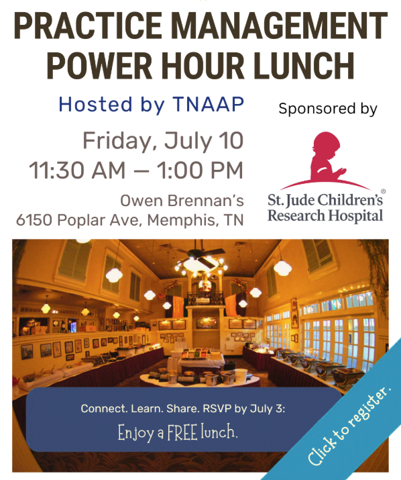
Tennessee Chapter of the American Academy of Pediatrics Practice Management Power Hour Lunch –
Memphis, July 10
The Tennessee Chapter of the American Academy of Pediatrics (TNAAP) will host a Practice Management Power Hour Luncheon on July 10 in Memphis at Owen Brennan’s Restaurant. This luncheon is designed specifically for practice managers and clinic leaders—an important audience for advancing HPV vaccination quality improvement efforts.
|
| Register Here
|
|
|
|
|
WHO to Launch New Guidance on HPV-Based Cervical Cancer Screening, July 13
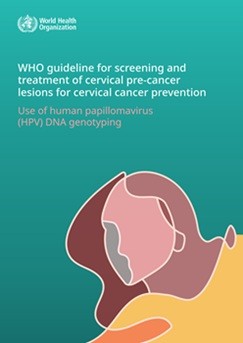
The World Health Organization (WHO) will launch its new Evidence-Informed Guidance for the Implementation of HPV-Based Cervical Cancer Screening Programmes on July 13 through two virtual webinars designed to accommodate participants across time zones. The guidance highlights the critical role of implementation science in supporting the adoption, scale-up, and sustainability of HPV-based cervical cancer screening programs. Drawing on experiences from program managers and implementers worldwide, it provides practical strategies to improve screening uptake, strengthen follow-up and treatment, and increase retention across the continuum of care. The webinars will also feature real-world examples from countries across the six WHO regions working toward the
global cervical cancer elimination target of 70% screening coverage with a high-performance test. Registration is required.
|
 |
|
|
|
|
|
|
Reframing HPV Vaccination: The Role of Male Vaccination in Advancing Female Vaccine Uptake, July 20
Join Global Action on Men's Health and NOMAN is an Island: Race to End HPV on July 20 at 8:00 a.m. Central Time as they highlight the role of male HPV vaccination in advancing female vaccine uptake through a timely discussion on global HPV prevention efforts. This discussion will explore how gender-neutral HPV vaccination programs can strengthen public health messaging, promote
health equity, and increase vaccination rates among both boys and girls. Speakers will share evidence and insights from Tanzania and Cameroon, examining community perspectives on male HPV vaccination, approaches to communicating with parents, and health care workers’ experiences implementing universal HPV vaccination programs. Participants will gain a broader understanding of how vaccinating boys can contribute to improved HPV vaccine acceptance and uptake among girls, supporting global efforts to prevent HPV cancers.
|
| Register Here
|
|
|
|
|
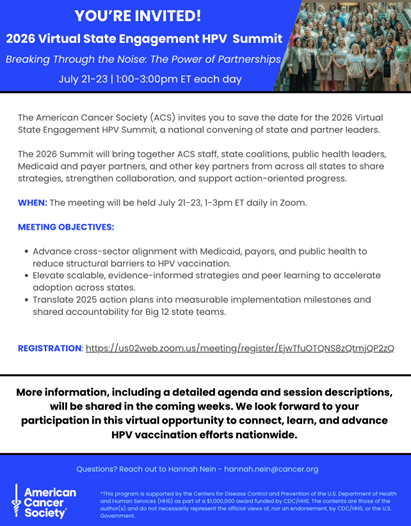
2026 American Cancer Society Virtual State Engagement HPV Summit, July 21-23
Register for the 2026 Virtual State Engagement HPV Summit organized by ACS on July 21-23 from 12:00-2:00 p.m. Central Time daily. The summit will bring together ACS staff, state coalitions, public health leaders, Medicaid and payer partners, and other key partners from across all states to share strategies, strengthen collaboration, and support action‑oriented progress.
|
| Register Here
|
|
|
|
|
|
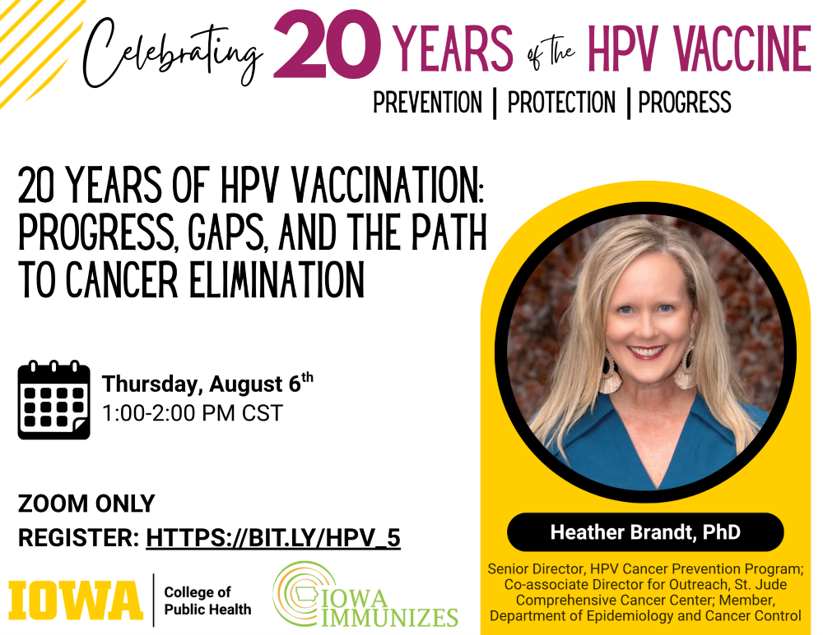
20 Years of HPV Vaccination: Progress, Gaps, and the Path to Cancer Elimination, August 6
Join the Iowa College of Public Health and Iowa Immunizes on August 6 from 1:00-2:00 p.m. Central Time for the fifth webinar in their series focused on progress made with HPV vaccination and the path to cancer elimination. This session, 20 Years of HPV Vaccination: Progress, Gaps, and the Path to Cancer Elimination, celebrates 20 years of cancer prevention, protection and progress made possible by the HPV vaccine and will feature Heather Brandt, PhD, Senior Director of the HPV Cancer Prevention Program at St. Jude Children's Research Hospital.
|
| Register Here
|
|
|
|
|
2026 Tennessee State Pediatric Conference, August 15
The Tennessee State Pediatric Conference (TSPC) is the annual meeting of the Tennessee Chapter of the American Academy of Pediatrics (TNAAP), bringing together pediatricians, physician assistants, nurse practitioners, nurses, residents, and students from across the state. This dynamic conference offers education, encouragement, and empowerment in pediatric medicine, along with valuable opportunities to connect with exhibitors and take practical insights back to your practice.
This year’s conference will take place on August 15 at the Franklin Marriott Cool Springs in Franklin, Tennessee. With the theme Kicking Off Healthy Futures: Scoring Big for Kids’ Health, the event promises an engaging and impactful experience.
|
| Register Here
|
|
|
|
|
|
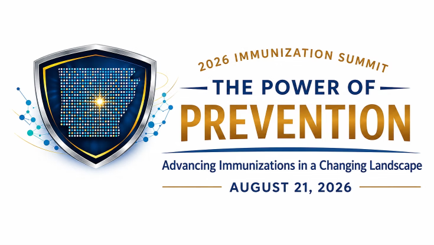
Celebrating 10 Years of the Immunize Arkansas Immunization Summit, August 21
On August 21, vaccination leaders, health care providers, public health professionals, and community partners from across Arkansas and the surrounding region will gather at the Wyndham Hotel in North Little Rock for the 2026 Immunize Arkansas Immunization Summit , this year's event marks a decade of bringing together dedicated professionals committed to strengthening vaccination efforts and improving public health.
The annual summit provides an opportunity to share the latest evidence-based practices, discuss emerging vaccination challenges, and collaborate on strategies to increase vaccine confidence and access. Attendees will engage in educational sessions designed to support healthcare professionals in delivering high-quality vaccination services while building partnerships that strengthen statewide prevention efforts.
|
|
|
|
|
St. Jude Celebrates 20 years of HPV vaccination in the U.S.
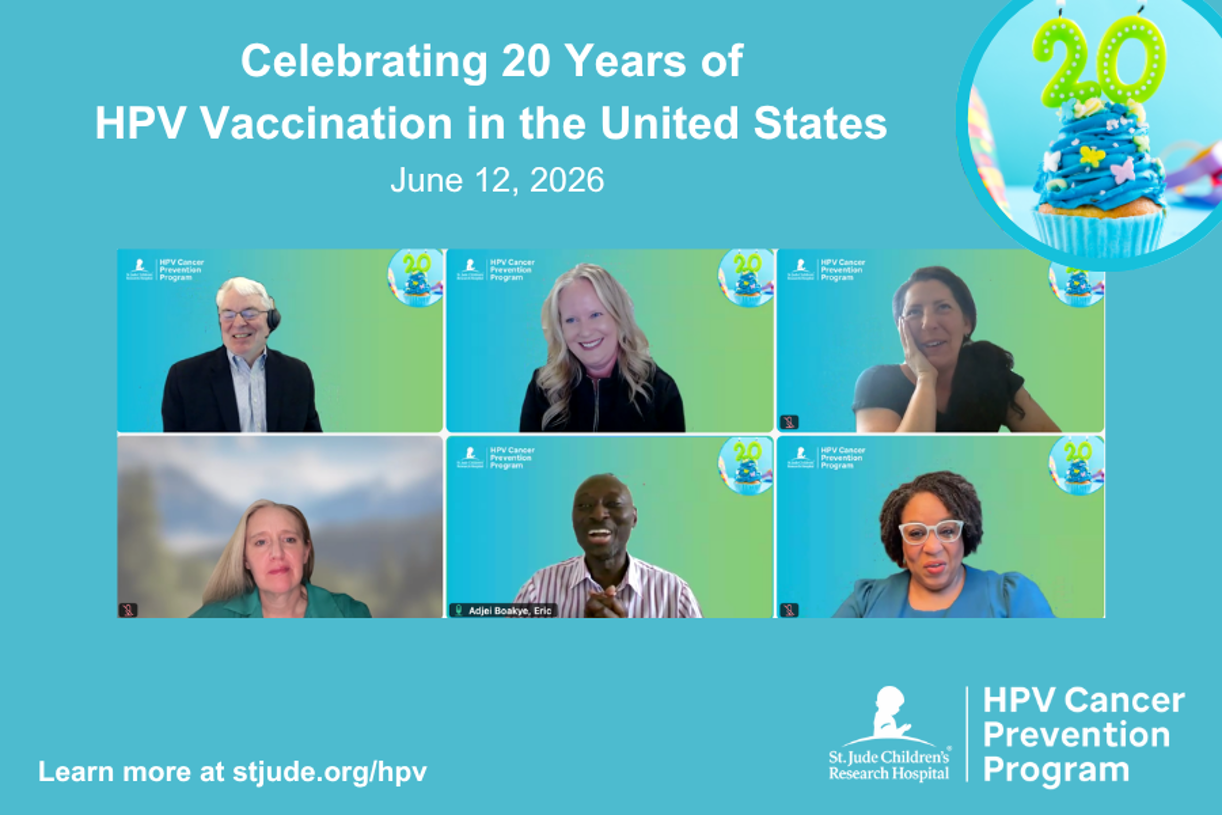
On June 12, 149 participants joined the St. Jude HPV Cancer Prevention team virtually to celebrate 20 years of HPV vaccination in the United States and reflect on the remarkable progress made in HPV cancer prevention since the first HPV vaccine was approved in 2006.
Moderated by Heather Brandt, PhD of St. Jude Children's Research Hospital, the webinar brought together a distinguished panel of experts and advocates, including Tamika Felder of Cervivor Inc.; Aimée Kreimer, PhD of the National Cancer Institute; Rebecca Perkins, MD, MSc of Tufts University School of Medicine; Kevin Ault, MD of Western Michigan University; and Eric Adjei Boakye, PhD of Henry Ford Health.
The discussion was both informative and inspiring, as panelists shared a blend of professional expertise, research insights, clinical experiences, and personal perspectives. Together, they reflected on the impact of HPV vaccination over the past two decades, highlighted the progress achieved in preventing HPV cancers, and emphasized the opportunities that lie ahead to increase vaccination coverage and reduce the burden of preventable cancers.
A recurring theme throughout the conversation was the power of collaboration, education, and advocacy in advancing HPV cancer prevention. Panelists reminded attendees that while there is much to celebrate, there is still important work ahead to ensure everyone everywhere will benefit from the protection HPV vaccination provides.
The conversation does not end here. Access the webinar recording here as an opportunity to revisit the insights and inspiration shared by our panelists.
|
|
| Watch Recording
|
|
|
|
|
A Dose of Optimism: HPV Vaccine 20 Year Anniversary Episode
In a special episode marking the 20th anniversary of HPV vaccination in the U.S., A Dose of Optimism hosted by Omkar Kulkarni brought together experts in research, clinical care, policy, and advocacy to reflect on the vaccine’s impact and future opportunities. Guests discussed the strong evidence supporting HPV vaccination safety and effectiveness, persistent myths and misinformation, and the importance of framing HPV vaccination as cancer prevention. The conversation highlighted lessons learned over two decades, strategies to increase vaccine confidence, and the critical role of trusted health care providers, community partnerships, and policy efforts in improving vaccination coverage. Despite significant progress, speakers emphasized that
continued action is needed to ensure more adolescents benefit from this powerful tool to prevent HPV cancers.
|
 |
| Listen Here
|
|
|
|
|
ACS National HPV Vaccination Roundtable and ACS National Roundtable on Cervical Cancer Annual Meeting
Nearly 200 organizations gathered in Dallas, Texas on June 9-10 for the ACS National HPV Vaccination Roundtable and ACS National Roundtable on Cervical Cancer Annual Meeting. Fittingly hosted in the heart of Texas, the meeting embraced a fun cowboy and rodeo theme while bringing together partners united in the mission to eliminate HPV cancers, beginning with cervical cancer.
Over two days, national experts shared updates on HPV vaccination trends, health equity, cervical cancer screening (including self-collection), and strategies to improve timely follow-up, treatment, and survivorship support. ACS Lived Experience Ambassadors also shared powerful perspectives that reinforced the importance of patient, survivor, and caregiver experiences and translating evidence into action through collaboration, policy, and implementation science.
Day 1 highlighted the best and most promising practices to improve HPV vaccination, screening, and follow-up care. During the awards ceremony, the St. Jude HPV Cancer Prevention Program was honored with the ACS National HPV Vaccination Roundtable Age 9 Champion Award for its leadership in promoting on-time HPV vaccination beginning at age 9.
Day 2 focused on collaborative planning around four priority areas: increasing HPV vaccination at age 9, expanding timely cervical cancer screening and follow-up, improving detection and care for other HPV cancers, and strengthening access to treatment and survivorship support. Interactive breakout sessions allowed participants to identify gaps, refine strategies, and strengthen partnerships that will continue advancing HPV cancer prevention nationwide.
|
 |
|
|
|
|
Unity Consortium Programming and Resources
The Unity Consortium works to provide action-oriented leadership, innovation, and education on preventive health and immunization for adolescents and young adults with the goal of ensuring that 90% are vaccinated with recommended vaccines.
In June 2026, Unity published two blogs, Creating Safe Spaces for LGBTGIQ+ Young Adults to Navigate Healthcare and Mid-Year Check-In: Why Summer is the Best Time to Catch Up on Vaccines. These blogs highlight how inclusive access to care and prioritizing preventive health, including HPV vaccination, can make a difference in the future of young
adults.
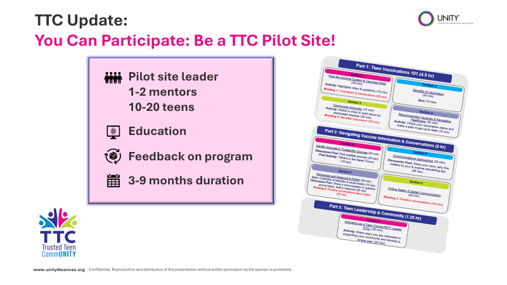
The Consortium has also launched the Trusted Teen CommUNITY (TTC), a new program developed to educate and empower high school students to become informed, trusted voices about vaccines in their communities. A local adult mentor will recruit 8-10 high school students and work with them to learn and share accurate, science-based vaccine information with peers, families, and community members. Unity has developed an easy-to-use online educational curriculum and supports participants throughout. Time commitment is 1-2 hours per week, and program pacing is flexible.
Access the program information flyer and educational program infographic, and email Kim@unity4teenvax.org with questions or to join their upcoming information session/Q&A on July 9, 2:30-3:30 p.m. Central Time.
|
 |
|
|
|
|
VAX 2 STOP CANCER Welcomes New CEO
VAX 2 STOP CANCER is entering an exciting new chapter with the appointment of William "Loren" Gary as its new Chief Executive Officer. Building on the remarkable foundation established by Founder Emeritus Barbara Schuler, Loren will lead the organization's continued efforts to increase HPV vaccination across Alabama through provider education and strategic collaboration. His vision reflects VAX 2 STOP CANCER's unwavering mission to empower healthcare professionals with the knowledge and tools needed to prevent HPV cancers. Since its founding, VAX 2 STOP CANCER has
trained 632 providers and staff across 136 practices in 42 Alabama counties and continues expanding its reach, particularly in underserved rural communities where HPV vaccination rates remain low. With new leadership and a continued focus on partnerships, VAX 2 STOP CANCER is well positioned to advance its vision of eliminating HPV cancers throughout Alabama.
|
 |
|
|
|
|
Building Momentum Toward HPV Cancer Elimination in Arkansas
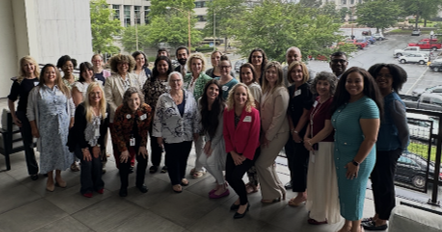
On June 4, partners in Arkansas convened with a shared vision to begin developing the state’s HPV cancer elimination plan, with an initial focus on cervical cancer. This milestone meeting marked the beginning of a collaborative, statewide effort to reduce the burden of HPV cancers through prevention, early detection, and strong partnerships. Throughout the day, attendees exchanged ideas, identified priorities, and explored strategies to strengthen HPV vaccination, screening, treatment, and community engagement across Arkansas. The passion, expertise, and commitment demonstrated by attendees were truly inspiring and highlighted what is possible when organizations unite around a common goal. Together, we are laying the foundation for a comprehensive
elimination plan that will improve health outcomes, reduce cancer disparities, and move Arkansas one step closer to a future free of HPV cancers. We look forward to continuing this important work alongside our dedicated partners across the state.
|
 |
|
|
|
|
Tennessee Chapter of the American Academy of Pediatrics Pediatric Practice Management Conference
On June 5, the Tennessee Chapter of the American Academy of Pediatrics (TNAAP) hosted its Annual Pediatric Practice Management Conference in a hybrid format, bringing together physicians, practice managers, and practice staff from across Tennessee to collaborate, share best practices, and strengthen pediatric practice operations.
Akeria Taylor, program coordinator of the St. Jude HPV Cancer Prevention Program, presented on the use of the Announcement Approach in clinical settings and how this evidence-based communication strategy can improve quality metrics related to HPV vaccination. The presentation highlighted practical strategies for incorporating the Announcement Approach into routine clinical workflows to support increased vaccine confidence and uptake among patients and families.
The session was well attended, with 25 participants attending in-person at in Nashville and 22 participants joining virtually, for a total of 47 attendees. The hybrid format allowed healthcare professionals from across the state to engage in discussions, share experiences, and learn actionable approaches to enhance patient care and practice performance.
The conference provided a valuable opportunity for pediatric healthcare teams to connect with colleagues, address key management challenges, and gain tools to improve clinical and operational outcomes within their practices.
|
 |
|
|
|
|
Community Partnerships Advance HPV Cancer Prevention in South Arkansas
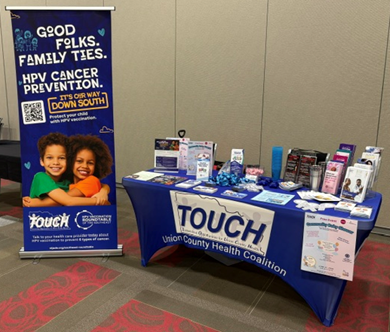
This summer, the TOUCH Union County Health Coalition expanded HPV cancer prevention outreach through two impactful community events in South Arkansas. On June 13, the coalition partnered with Ambetter to host a community health fair featuring approximately 40 vendors. The event provided an opportunity to educate 340 families about HPV vaccination.
The coalition also helped organize a Community Baby Shower, bringing together approximately 25 community partners, including Arkansas Children's, Baptist Health, the Arkansas Department of Health, and other organizations supporting parents and families. Attendees received It's Our Way Down South educational materials alongside valuable maternal and child health resources.
These events created meaningful conversations with parents, grandparents, and caregivers, helping dispel common misconceptions about HPV vaccination while equipping families with trusted information to make informed decisions and prevent future HPV cancers.
|
 |
|
|
|
|
Welcome Student Intern Sarah Edward
|
|
|
Join us in welcoming Sarah Edward as a summer intern with the St. Jude HPV Cancer Prevention Program. Sarah is a Master of Public Health student at Baylor University, concentrating in epidemiology. With degrees in biology and psychology from Dallas Baptist
University, she brings a multidisciplinary lens to public health work and a deep commitment to reducing health disparities across underserved communities.
Sarah has a deep personal passion for women's health, believing that everyone deserves access to quality, compassionate care regardless of their background. This commitment was reflected throughout her experience as a former medical assistant at Women First OBGYN, where she provided hands-on support in patient counseling, reproductive health procedures, and care coordination for a diverse patient population. Sarah’s undergraduate research on gestational diabetes risk factors in South Asian women further underscored her dedication to understanding and addressing the unique health challenges women face across different communities.
Sarah is particularly drawn to the St. Jude HPV Cancer Prevention Program's efforts to prevent HPV cancers with rural communities. She is passionate about the power of community-based outreach and education in driving meaningful prevention efforts and believes that lasting change comes from meeting people where they are and building trust at the grassroots level.
Through her internship at St. Jude, Sarah hopes to contribute to work that bridges the gap between epidemiological research and community-centered action, ultimately helping build a future where equitable access to cancer prevention is a reality for everyone.
|
 |
|
|
|
|
Team Question: What is your dream summer vacation?
|
|
|
Summer is often associated with adventure, exploration, and making memories. If you could spend one week
anywhere—whether for relaxation, learning, or adventure—where would you go and why? Members of the HPV Cancer Prevention Program share their dream summer destination.
|
|
|
“I love traveling and experiencing new places, cultures, and activities, if I could spend one week anywhere, Egypt would be an amazing destination for me. I want Egypt to be my summer trip because it has the perfect mix of relaxation, learning, and
adventure. I would love to visit the pyramids, temples, and museums to learn more about history and culture, while also enjoying things like riding camels, exploring the desert, and snorkeling in the Red Sea.” - Aniya Bonds, student intern
“I’m not very adventurous, but the nerd in me says the ancient Roman city of Pompeii would be the experience I didn’t know I needed.” – Julia Brown, community program manager
“If I could spend one week anywhere this summer, I’d lace up my hiking boots and head straight for the Swiss Alps. There’s something about being surrounded by pine forests and rushing streams that instantly clears my head. I’d spend my days hiking, my evenings in a cozy chalet with good food, and every quiet moment just soaking in how big and beautiful the world is. Honestly, I can’t think of a better reset!” - Sarah Edward, student intern
“I have always wanted to go on a cruise through the Caribbean; however, I have never had the opportunity before. If I had a week during the summer, I would choose to go on a cruise, spend time on the water, enjoy the sunsets, explore different destinations, and experience different cultures. I think this would be a great experience.” – Pragya Gautam Poudel, postdoctoral fellow
“If I could spend one week anywhere this summer, I would honestly choose to stay at home. My ideal week wouldn't be filled with travel or a packed itinerary; it would be spent making memories with my family. I'd love to explore the backyard with my kids, enjoy simple moments together, and get as much rest as possible. Those quiet, unhurried days are what I value most. They help me recharge, strengthen my relationships, and remind me that some of life's greatest adventures happen right at home.” – Portia Knowlton, community program coordinator
“If I had the opportunity to spend a week anywhere, I would choose Santorini, Greece. The beautiful blue waters and peaceful atmosphere make it my dream destination. spending a week relaxing on the beach would be the perfect way to recharge.” – Ursula LeFlore, senior administrative coordinator
“If I had the opportunity, I would like to spend a week traveling to different cities in Japan. I’ve always been interested in the culture from a young age, and I believe they have a lot to offer in terms of their food, landscape, and atmosphere. One city in Japan I think I’d enjoy the most is Tokyo because of its lively atmosphere and exciting attractions.” – Keimirra Lewis, student intern
“I have been traveling from a young age, and love to explore new cities and cultures. My favorite part of traveling is trying new foods! It is too hard to pick just one place, so if I could spend one week somewhere I would love to have a ‘Euro Summer’ and visit Lake Como, Italy and Saint Tropez, France.” – Maddy McNee, community program coordinator
“My dream summer destination is Côte d’Ivoire. I would love to experience its natural beauty, vibrant culture and traditions, and the fascinating history and architecture I've read about all my life. One week wouldn't be nearly enough, but visiting would truly be a dream come true.” – Andrea Stubbs, director
“If I could spend one week anywhere this summer, I would 100% have a Euro summer. I’d love to go to Cannes, France, and spend my days by the coast enjoying the beaches, food, and gorgeous views.” – Akeria Taylor, community program coordinator
“If I could travel anywhere to spend time during the summer, I would visit Barcelona, Spain. Barcelona was the embarkation port of a cruise I went on with family in 2018, and I always wanted to go back and spend more time there exploring the history, culture, and foods.” – Samantha Wells, community program coordinator
“I’d head to East Africa, but a week wouldn’t be nearly long enough! Every trip there leaves me recharged and with a broader perspective on life, happiness, and health.” – Nicole Williams, community program coordinator
“I have been spoiled with many incredible travel adventures for which I am truly grateful. Last summer, I experienced Greece and Turkey. But I think if I could spend summer anywhere, I would choose to spend it where I already spend most of the summer these days – in the Thousand Islands of New York on the beautiful and refreshing St. Lawrence River. I believe there are few places more scenic and pastoral than this part of the United States.” – Heather Brandt, senior director
|
|
|
|
|
|
Get Free St. Jude HPV Education Materials |
|
|
The St. Jude HPV Cancer Prevention Program has created a series of HPV fact sheets that emphasize basic information about HPV vaccination and
include action steps to prevent HPV cancers.
|
Four versions of the fact sheets target various audiences:
- General public
- Parents
- Health care providers
- Cancer patients and families
- College students
- Faith community
|
Select the versions in English or Spanish most appropriate for those you serve. Download the fact sheets or email PreventHPV@stjude.org to have copies mailed to you.
|
| Find Materials
|
|
|
|
|
|
About the HPV Cancer Prevention Program |
|
|
St. Jude Children's Research Hospital is leading the way the world understands, treats and cures childhood cancer and other life-threatening
diseases. That’s why St. Jude is raising awareness on vaccination for human papillomavirus (HPV), which can prevent six types of cancer caused by the virus. As the only NCI-designated Comprehensive Cancer Center dedicated solely to children, St. Jude has an important role and responsibility in increasing the number of children who benefit from the HPV vaccination and reducing their risk of preventable cancers later in life.
On-time HPV vaccination provides safe, effective, and long-lasting protection against the most common types of HPV linked to cancers. HPV vaccination is routinely recommended at age 11 or 12 years and may be started at age 9. HPV vaccination is recommended for everyone ages 9-26. It’s not too late to catch up on HPV vaccination. People ages 27-45 are also strongly encouraged to talk with a health care provider to see if HPV vaccination is right for them.
HPV vaccination has been routinely recommended by health care professionals in the U.S. since 2006. Most children can receive an HPV vaccination at no cost, and it can be administered safely along with other routine vaccinations. With more than 500 million doses administered worldwide, HPV vaccinations are preventing new cases of cancer every day.
It’s not too late to help protect your child against HPV cancers later in life - learn more at stjude.org/PreventHPV and ask your doctor about HPV vaccination today. Email PreventHPV@stjude.org with any questions.
|
|
|
 |
|
|
|
|