Improving Rural HPV Vaccination Coverage |
|
|
|
The St. Jude HPV Cancer Prevention Program is committed to improving HPV vaccination coverage in rural communities across the United States (U.S.). People living in rural communities have higher HPV cancer rates and lower rates of HPV vaccination coverage. We can do something about this. We are pleased to work with many partners across the U.S. to take on this important challenge.
In this quarterly communication, we provide updates, resources, and opportunities for action.
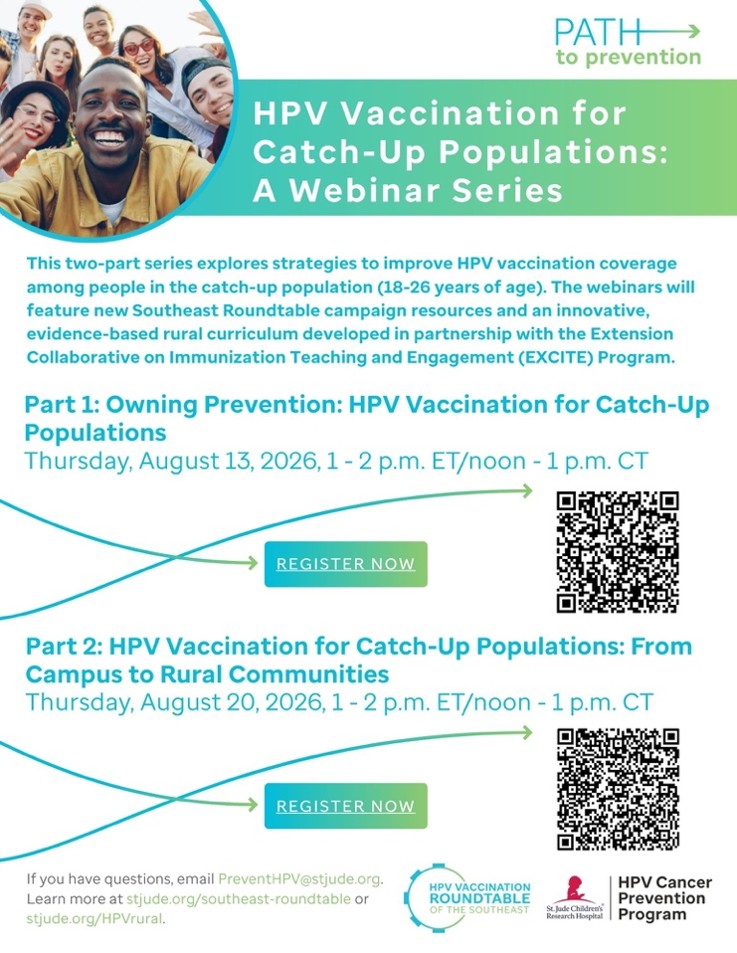
Join us for a two-part webinar series, HPV Vaccination for Catch-up Populations
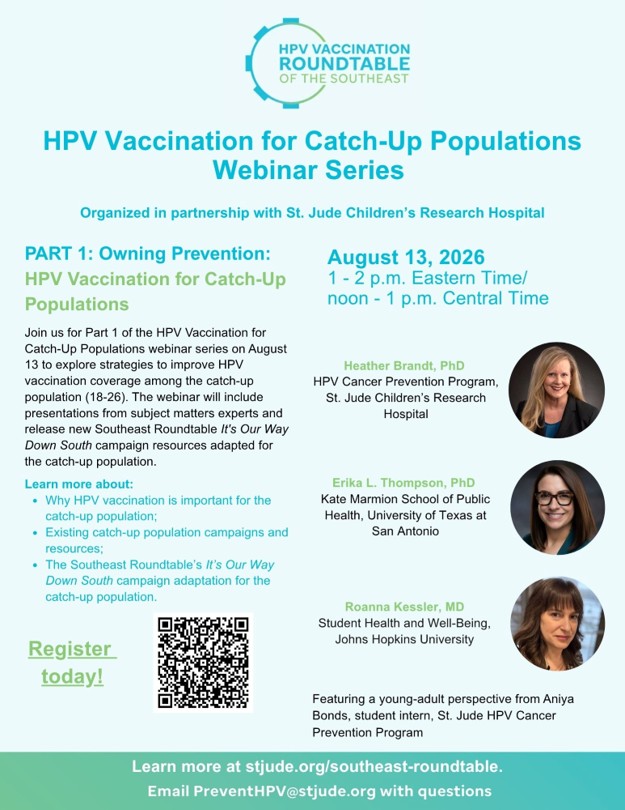
August 13, Part 1: Owning Prevention: HPV Vaccination for Catch-up Populations
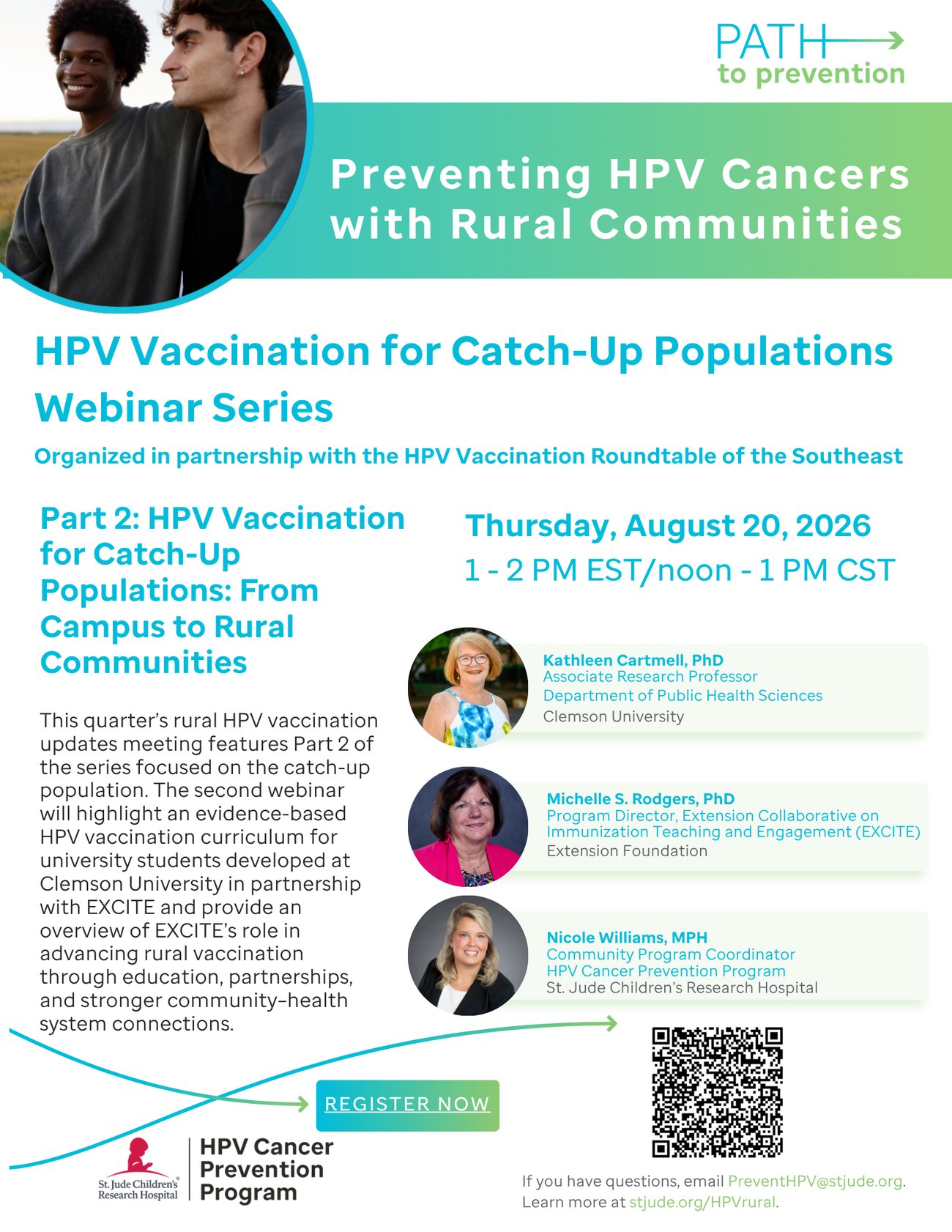
August 20, Part 2: HPV Vaccination for Catch-up Populations: From Campus to Rural Communities |
 |
|
Check out this month’s Wide Open Spaces article about the forthcoming rural HPV data profile, a resource designed to highlight key trends, challenges, and opportunities related to HPV vaccination and cancer prevention in rural America.
Plus, access new trainings and resources, recent publications, and upcoming events.
Tell us what you are working on related to rural HPV cancer prevention.
If you are interested in presenting as part of an upcoming quarterly updates meeting, sharing information in the quarterly communication (sent one week prior to each quarterly meeting), and/or contributing to our monthly Wide Open Spaces article series, we want to showcase your work with rural communities to increase HPV vaccination and prevent HPV cancers. We are all learning from each other to improve protection among people living in rural communities.
Join our efforts to improve rural HPV vaccination coverage.
Visit the Preventing HPV Cancers in Rural Communities website at stjude.org/hpvrural or sign up here to receive the latest information on our rural HPV vaccination coverage efforts. Email PreventHPV@stjude.org with any questions. |
|
|
|
|
|
Rural Resources and Reach: From Our Program to You |
|
|
HPV Vaccination for Catch-up Populations: A Webinar Series |
|
Join us August 13 and August 20 at 1-2 p.m. Eastern Time / noon-1 p.m. Central Time for a two-part webinar series HPV Vaccination for Catch-up Populations. While back-to-school vaccination efforts often center on children for on-time vaccination, this webinar series expands the conversation to include young adults aged 18-26 years who may be starting college or trade school, moving into their own place, and/or starting a new position by exploring strategies to improve HPV vaccine uptake by capitalizing on their empowerment and autonomy.
This quarter’s rural HPV vaccination updates and opportunities meeting will feature Part 2, HPV Vaccination for Catch-Up Populations: From Campus to Rural Communities, of the webinar series. The session will showcase a promising evidence‑based intervention (EBI) from Clemson University and the national Extension Collaborative on Immunization Teaching and Engagement (EXCITE) initiative, which achieved a 273% increase in HPV vaccine administration among Clemson students through provider training, point-of-care vaccination, and targeted outreach. We will also highlight the role of EXCITE in advancing rural vaccination through education, partnerships, and stronger community–health system connections
We hope you will also join us for Part 1, Owning Prevention: HPV Vaccination for Catch-Up Populations, on August 13 to explore additional strategies to improve HPV vaccination uptake in catch-up populations and celebrate with us the launch of new materials for the catch-up population from the HPV Vaccination Roundtable of the Southeast’s It's Our Way Down South campaign. |
|
|
|
Part 1: Owning Prevention: HPV Vaccination for Catch-up Populations
August 13, noon-1:00 p.m. Central Time |
|
|
Part 2: HPV Vaccination for Catch-Up Populations: From Campus to Rural Communities
August 20, noon-1:00 p.m. Central Time |
|
|
|
|
|
|
|
|
Rural Quarterly Updates Meeting Highlights: May 14
|
|
|
|
Advancing HPV Vaccination in Rural Communities: Equipping Providers to Improve HPV Vaccination Uptake
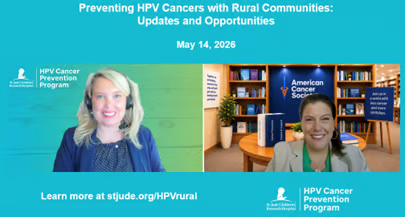
The May 14 rural quarterly meeting highlighted Part 2 of the Improving HPV Vaccination in Rural Communities Communication Series, a partnership series from the St. Jude HPV Cancer Prevention Program, the American Cancer Society (ACS), and the ACS National HPV Vaccination Roundtable. Designed to emphasize the importance of a strong provider recommendation for HPV vaccination uptake, the series featured two complementary evidence-based strategies to strengthen provider communication: the Announcement Approach and motivational interviewing (MI).
In Part 2 of the series, Jocelyn Phillips of ACS shared how MI can strengthen HPV vaccination conversations after an initial recommendation for HPV vaccination. Building on Part 1’s introduction to the Announcement Approach, hosted by ACS, this session emphasized the importance of starting with a strong, cancer prevention–focused recommendation and using MI to navigate hesitancy with empathy and confidence.
Participants explored practical techniques such as open-ended questions, affirmations, reflective listening, and summarizing to build trust, address concerns, and support shared decision-making. The discussion reinforced that trust and relationship-building are central to improving vaccine uptake, especially in rural communities.
Together, this two-part series provided a practical, evidence-based communication toolkit pairing the efficiency of the Announcement Approach with the flexibility of motivational interviewing to help rural providers manage real-world conversations from vaccination recommendation through vaccination series completion. The meeting concluded with a call to action to integrate these combined strategies into day-to-day practice to strengthen HPV vaccination efforts and advance cancer prevention in rural communities. |
|
|
|
|
|
|
|
|
Rural HPV Vaccination Quarterly Updates and Opportunities Meetings |
|
|
|
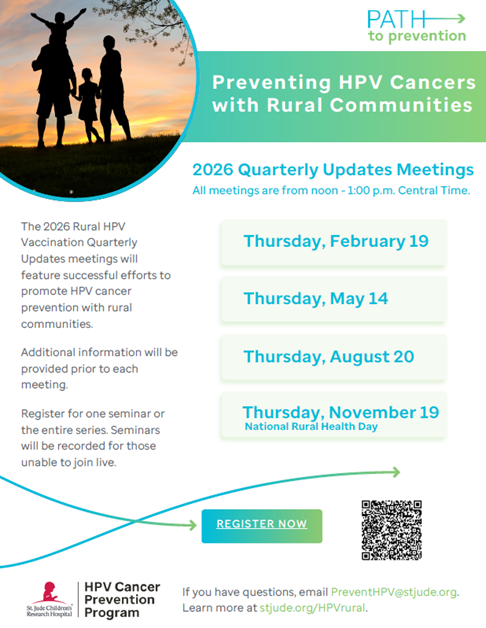
As we wrap up the 2026 Rural HPV Vaccination Quarterly Updates series, join us on November 19, National Rural Health Day, for a special session celebrating progress in rural HPV cancer prevention. We will reflect on key accomplishments from the year, share promising practices and resources, and recognize the partnerships and innovations helping advance HPV vaccination and cancer prevention in rural communities. |
| Register Here |
|
|
|
|
|
|
National Rural Health Association 49th Annual Rural Health Conference |
|
|
|
The National Rural Health Association’s (NRHA) 49th Annual Rural Health Conference was held May 19–22 in San Diego, California. The conference brought together the largest gathering of rural health professionals in the country and featured more than 80 sessions on innovative, practical strategies to improve rural health care access and outcomes.
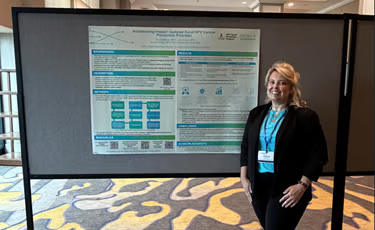
Nicole Williams, MPH, community program coordinator represented the St. Jude HPV Cancer Prevention Program with a poster presentation, Accelerating Impact: Updated Rural HPV Cancer Prevention Priorities, highlighting the recent revision of the program’s national rural HPV vaccination priorities. By showcasing this work at the national rural health conference, we aimed to underscore the critical importance of elevating rural HPV vaccination as a national priority and advance coordinated, evidence-based efforts to reduce differences in HPV cancer outcomes. |
 |
|
|
|
|
|
Strengthening HPV Vaccination Conversations with the Announcement Approach |
|
|
|
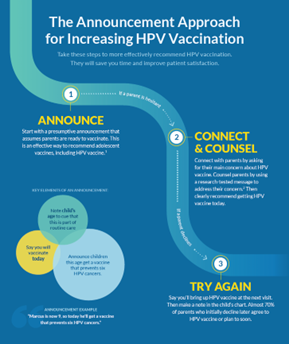
The Announcement Approach Training is a proven, evidence-based intervention that helps health care providers make effective, confident HPV vaccination recommendations to promote on-time HPV vaccination. This training boosts HPV vaccination rates by teaching clinicians to deliver strong, presumptive messages that resonate with parents and respond to questions using research-tested messages and can be tailored for rural providers.
The St. Jude HPV Cancer Prevention Program team is available to help coordinate this impactful training for groups of rural health care providers. If your team is ready to improve communication and protect more patients from HPV cancers, email us at PreventHPV@stjude.org to get started. |
|
|
|
|
|
|
|
Wide Open Spaces Article Series |
|
|
|
Wide Open Spaces is a series of articles included in the St. Jude HPV Cancer Prevention Program’s monthly Path to Prevention newsletter. These articles address ways to improve HPV vaccination with rural communities. Articles are written by guest contributors, who share information on their efforts and success in improving HPV vaccination with rural communities. We invite guest contributors to share information on how they are working to improve HPV vaccination in rural areas.
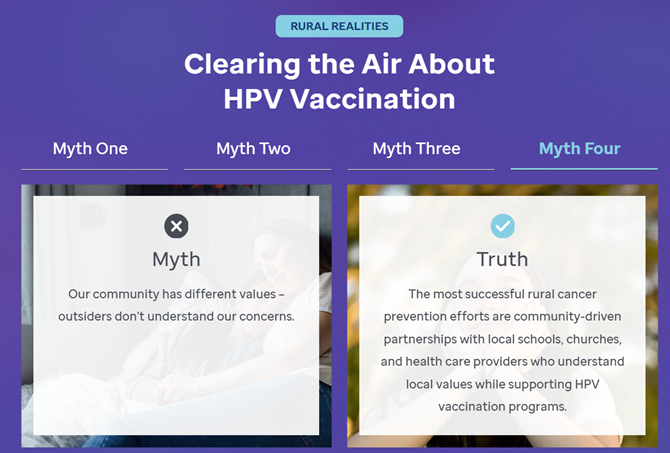
This month, we feature Rural Realities: Understanding and Reducing Differences in HPV Cancer Prevention, an article about the forthcoming rural HPV data profile, a resource designed to highlight key trends, challenges, and opportunities related to HPV vaccination in rural America.
|
| Full Article |
|
|
|
Recent Wide Open Spaces articles include:
Access all Wide Open Spaces articles at stjude.org/hpvrural.
We are looking for authors for Wide Open Spaces articles.
Do you have a story about HPV cancer prevention efforts with rural communities? We invite guest contributors to share information on how they are working to improve HPV vaccination in rural areas through the Wide Open Spaces article series, which is promoted in our monthly Path to Prevention newsletter, featured in our quarterly rural HPV vaccination newsletter, and posted on stjude.org/HPVrural. If you are interested in contributing an article please email us at PreventHPV@stjude.org. |
|
|
|
|
|
National Immunization Awareness Month: Vaccine Resources You Can Trust |
|
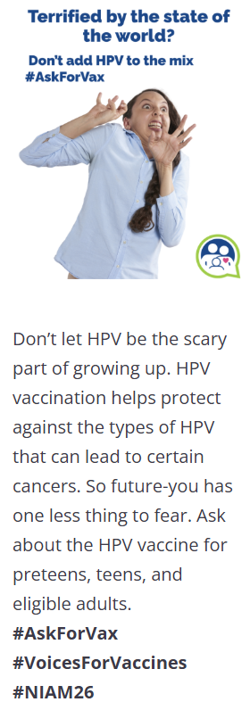
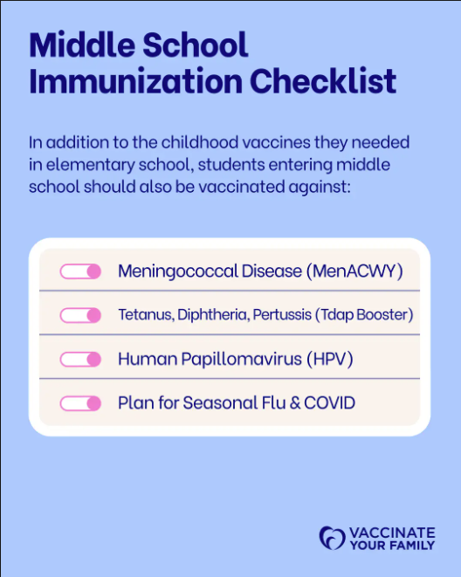
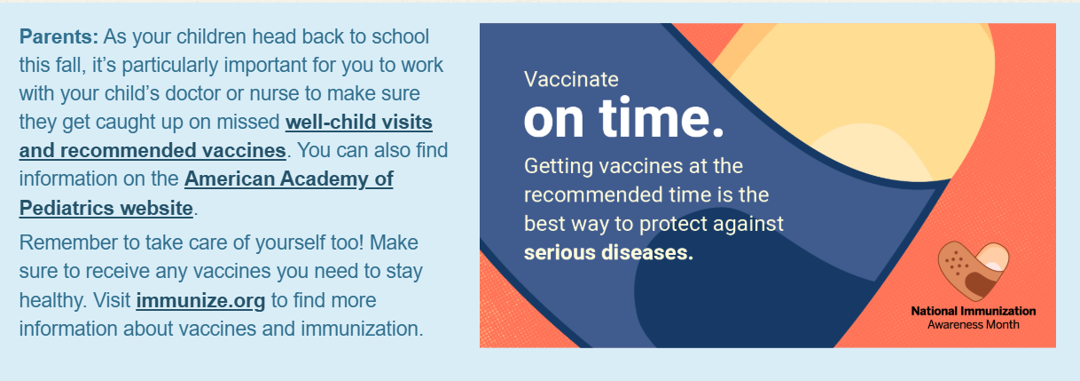
As families prepare for the back-to-school season each August, National Immunization Awareness Month (NIAM) highlights the importance of staying up to date on recommended vaccines across the lifespan. Keeping vaccinations up to date helps protect students, families, and communities, and leading medical and scientific organizations emphasize that vaccines are safe, effective, and backed by decades of research.
Access resources:
|
|
|
|
|
|
|
|
|
|
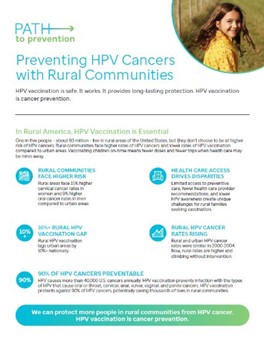
Rural HPV Cancer Prevention Fact Sheet
Our updated Preventing HPV Cancers with Rural Communities fact sheet is designed to better support your rural HPV work and communication efforts. We encourage you to use and share this fact sheet widely—at meetings, in outreach, and with partners who care about rural HPV cancer prevention. |
|
|
|
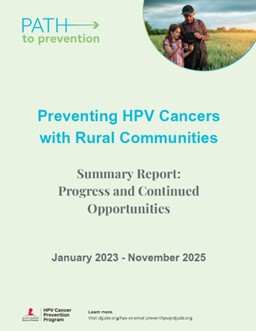
Rural HPV Cancer Prevention Summary Report
The Preventing HPV Cancers with Rural Communities Summary Report: Progress and Continued Opportunities was developed to document the efforts and progress made since the rural HPV initiative launch in January 2023, and was used as a guide to ensure 2025 revisions to the rural HPV vaccination priority actions were grounded in the reality of what has been done, as we reflected on current needs, opportunities, and evidence. |
|
|
|
Rural HPV Cancer Prevention Awareness Campaign
Our national awareness campaign, “The Kids Aren’t Thinking About HPV,” now includes tailored resources for rural communities which reflect the unique challenges and opportunities in rural HPV cancer prevention and are designed to support local outreach, education, and engagement efforts. We invite you to explore the updated materials—including rural-specific messaging and tools. |
|
|
|
|
|
St. Jude Rural HPV Vaccination Resources |
|
|
|
|
|
|
|
|
|
|
Do you have HPV vaccination resources for rural U.S. areas? Share guidelines, research articles, and educational materials on HPV vaccination for health care providers and others living in rural settings. Your insights can enhance HPV prevention efforts in rural communities. To contribute, please send them to PreventHPV@stjude.org. |
|
|
|
|
|
|
|
New Evidence Review Affirms Strong Safety and Effectiveness of HPV Vaccines |
|
|
|
|
|
|
|
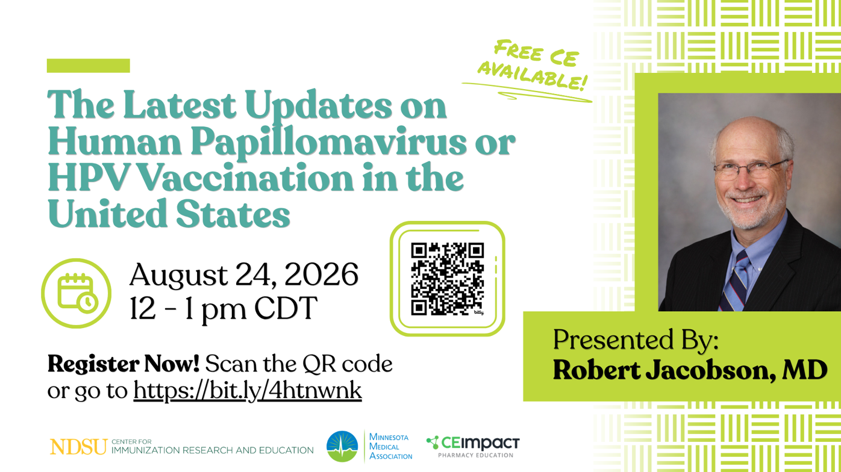
The Latest Updates on Human Papillomavirus (HPV) Vaccination in the United States, August 24
|
|
|
|
Join Robert Jacobson, MD, on August 24 from noon to 1:00 p.m. Central Time for a webinar highlighting the latest evidence on HPV vaccination in the United States. Participants will learn about new research findings, ongoing challenges, and effective strategies to improve vaccine uptake and strengthen provider recommendations. Hosted by North Dakota State University’s Center for Immunization Research and Education (CIRE), this webinar offers free CME and CPE credits. More information can be found here. |
|
|
|
|
|
Four-Part Pediatric Vaccination Video Series |
|
Vaccine accessibility is important for all populations to protect children and families from serious illnesses. To address barriers to vaccination, the Public Health Foundation (PHF), in partnership with the Wellness Equity Alliance (WEA), has developed an educational four-part video series on pediatric vaccination. Health care professionals (HCPs) and community health workers (CHWs) are crucial in communicating with vaccine-hesitant parents and caregivers about pediatric vaccination, especially in rural communities. As trusted community partners, it is essential to equip HCPs and CHWs with resources and tools to effectively engage with individuals from diverse backgrounds in a culturally competent manner while promoting health equity and immunization. This video series is designed to improve pediatric vaccination rates, reduce vaccine hesitancy among parents and caregivers, and promote equitable health care access and workforce development.
This four-part series is available here and includes:
-
Module 1: Communicating about Pediatric Vaccines
-
Module 2: Health Equity in Pediatric Vaccination
-
Module 3: Activating Trusted Partners in Pediatric Vaccination
-
Module 4: Broadening and Optimizing Pediatric Vaccine Access
|
|
|
|
|
|
New ACS CAN Survey Finds More than Half of Cancer Patients and Survivors in Rural Communities Report Difficulty Affording Cancer Care |
|
|
|
A new survey by the American Cancer Society Cancer Action Network (ACS CAN) highlights the challenges rural cancer patients face in accessing screening, finding affordable care, and arranging follow up treatment and that patient navigation services help address barriers to care in rural areas and improve quality of care. The survey was released during ACS CAN’s 15th annual National Policy Forum on the Future of Health Care in Washington, D.C. As part of ACS CAN’s advocacy work to help ensure that everyone has a fair and just opportunity to prevent, detect, treat and survive cancer, this year’s forum focused on the unique challenges faced by cancer patients and survivors in rural communities and explored policy solutions to address those challenges. Additional resources on ACS CAN’s work to reduce the cancer burden in rural communities can be found here.
|
| Read the full Polling Memo |
|
|
|
|
|
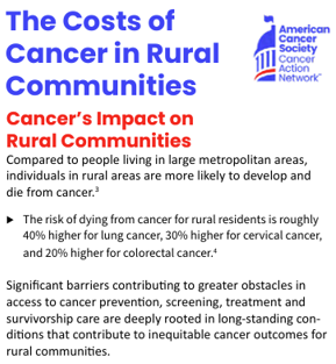
American Cancer Society Cancer Action Network Publishes the Costs of Cancer in Rural Communities |
|
|
|
This fact sheet explores the health and financial impacts cancer has on individuals in rural communities and includes information and data related to health insurance, income levels, and how cost is connected to health care access and deferred treatment. |
|
|
|
|
|
Rural Health Transformation Program Year 1 Awards Resources |
|
|
|
The National Rural Health Association hosts a collection of resources focused on Year 1 of the Rural Health Transformation Program (RHTP) that includes a calendar showing funding deadlines for each state, a map showing state-level progress on RHTP initiatives, and a directory of RHTP state contacts.
If your organization or state’s RHTP‑funded work will include HPV vaccination or HPV cancer prevention, we would love to learn about it and explore ways we can collaborate or support your efforts. Email us at PreventHPV@stjude.org.
View the RHTP Year 1 Awards Resource. |
|
|
|
|
|
|
|
Highlights from Recently Released U.S. Cancer Statistics |
|
|
|
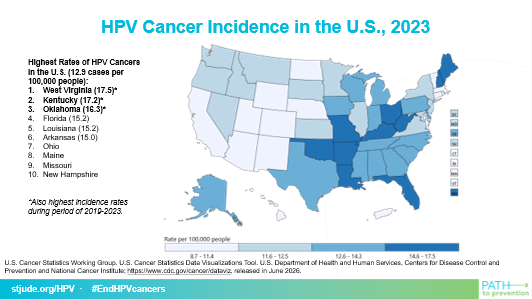
The U.S. Cancer Statistics data for 2023 (and 2019-2023) are now available from the Centers for Disease Control and Prevention. Highlights include age-adjusted data on cancer incidence, and rural-urban comparisons, including rural and urban cancer incidence breakdowns by demographic groups.
Access the Highlights |
 |
|
|
|
|
|
Improving Childhood Immunization Access in Rural Washington Through School-Based Partnerships |
|
Washington State's Northeast Tri County Health District (NETCHD) launched efforts to address low rates of childhood immunization within Ferry, Stevens, and Pen Oreille counties via partnerships with schools, public communication, immunization clinics, and other forms of outreach. The School-based Immunization Liaison Program was developed to help address barriers to immunizations that parents are facing in rural areas. Read more about the program here. |
|
|
|
|
|
AACR Cancer Disparities Progress Report 2026 Examines Disparities in Rural Areas |
|
Released every two years, the report features the latest statistics on both the progress being made against cancer disparities and the continued disproportionate toll that cancer exacts on medically underserved populations, including residents of rural areas. The report explains how the rural-urban gap in cancer incidence and mortality is exacerbated for certain types of cancer. Between 2019 and 2023, incidence rates were higher in rural areas compared with urban areas for lung (37%), cervical (26%), and colorectal (17%) cancers. Residents in rural areas were also more likely to die from these cancers with death rates 27% higher for colorectal cancer, 32% higher for cervical cancer, and 36% higher for lung cancer. Read the full AACR Cancer Disparities Progress Report 2026 for more information about the disparate burden of cancer across population groups in the United States.
AACR will also hold the 19th AACR Conference on The Science of Cancer Health Disparities from October 18 to 21 in Atlanta, Georgia, which will include a special session about the report. The advance registration deadline is September 8. |
 |
|
|
|
|
|
|
|
-
Benavidez GA, Boswell E, Hung P, Owusu-Sekyere E, Crouch E. Identification and characteristics of under-resourced and high-need rural counties [policy brief]. Columbia (SC): Rural & Minority Health Research Center; 2026 Apr. Available here.
-
Brewer NT, Kahn BZ, Kritikos KI, Heisler-MacKinnon JA, Young JD, Gilkey MB. How to make effective HPV vaccine recommendations starting at age 9. Hum Vaccin Immunother. 2023;19(2):2216117. doi:10.1080/21645515.2023.2216117.
-
Escoffery C, Petagna C, Chari R, Hsu E, Kadoo RV, Haardörfer R, et al. Evaluation of a minigrant program for multilevel interventions to promote human papillomavirus vaccination in rural communities in Georgia. Prev Chronic Dis. 2026;23:250328. doi:10.5888/pcd23.250328.
-
Ejezie CL, Zhang C, Messiah SE. State-level differences in human papillomavirus vaccine uptake among 13- to 17-year-old adolescents. JAMA Pediatr. 2026;180(8):901-904. doi:10.1001/jamapediatrics.2026.1338.
|
|
|
|
|
|
Other Happenings in Rural Health |
|
|
|
Save The Date for National Rural Health Day, November 19
Every National Rural Health Day celebration is unique, and that is what makes this movement so meaningful. Our plans are already underway to celebrate and recognize the people, organizations, and best practices that make rural America stronger. We are excited to celebrate the #PowerOfRural with you on November 19. |
 |
|
|
|
|
|
Submit to Present at NRHA’s Annual Conference in New Orleans
Anyone with an interest in rural health is invited to submit research papers or posters by January 15, 2027, for presentation during the National Rural Health Association’s 50th Annual Rural Health Conference May 18-21, 2027 in New Orleans. Each year more than 200 individuals present over 85 concurrent educational sessions, 20 research papers, and up to 100 research and educational posters at NRHA's Annual Conference and Rural Hospital Innovation Summit, the nation's largest rural health event. |
 |
|
|
|
|
|
National Organization of State Offices of Rural Health (NOSORH) 2026 Annual Meeting
The NOSORH Annual Meeting is the only national event where all 50 State Offices of Rural Health come together in one place. State Offices of Rural Health play a vital role in strengthening health care access, convening partners, supporting rural facilities and providers, and addressing the unique needs of rural communities nationwide. The meeting offers a unique opportunity to build relationships, collaborate, and engage directly with 150-200 rural health leaders, federal partners, and key stakeholders from across the country. As NOSORH celebrates 25 years of advancing rural health nationwide, organizations that align with the NOSORH mission and are committed to strengthening rural communities are invited to attend the Annual Meeting. Find more information here. |
 |
|
|
|
|
|
About the St. Jude HPV Cancer Prevention Program |
|
|
|
St. Jude Children's Research Hospital is leading the way the world understands, treats and cures childhood cancer and other life-threatening diseases. That is why St. Jude is raising awareness on HPV vaccination, which can prevent six types of cancer caused by the virus. As the only NCI-designated Comprehensive Cancer Center dedicated solely to children, St. Jude has an important role and responsibility in increasing the number of children who benefit from HPV vaccination and reduce their risk of preventable cancers later in life.
The St. Jude HPV Cancer Prevention Program envisions a world free of HPV cancers. Through education, promoting best practice models, and strategic partner engagement, its mission is to increase on-time HPV vaccination. On-time HPV vaccination by the 13th birthday provides safe, effective, and long-lasting protection against the most common types of HPV linked to cancers. The program is committed to ensuring equitable access to HPV cancer prevention, which includes a specific focus on geographic disparities in the southeastern United States and in rural communities.
Learn more about the St. Jude HPV Cancer Prevention Program at stjude.org/hpv. Email PreventHPV@stjude.org with any questions.
|
 |
|
|
|
|