Improving Rural HPV Vaccination Coverage
|
|
|
The St. Jude HPV Cancer
Prevention Program is committed to improving HPV vaccination coverage in rural communities across the United States (U.S.). People living in rural communities have higher HPV cancer rates and lower rates of HPV vaccination coverage. We can do something about this. We are pleased to work with many partners across the U.S. to take on this important challenge. In this quarterly communication, we provide updates, resources, and opportunities for action. Following are a few highlights.
Join us for Improving HPV Vaccination in Rural Communities: A Communication Series.
Part 1 (May 13): Foundations of the Announcement Approach
Part 2 (May 14): Improving HPV Vaccination Communication and Uptake in Rural Settings through Motivational Interviewing
Check out this month’s Wide Open Spaces article for a promising strategy to increase HPV vaccination coverage Clemson University’s HPV Vaccination Approach Becomes Part of National EXCITE Curriculum.
Plus, access new trainings and resources, recent publications, and upcoming events.
|
|
Tell us what you are working on related to rural HPV cancer prevention.
If you are interested in presenting as part of an upcoming quarterly updates meeting, sharing information in the quarterly communication (sent one week prior to each quarterly meeting), and/or contributing to our monthly Wide Open Spaces article series, we want to showcase your work with rural communities to increase HPV vaccination and prevent HPV cancers. We are all learning from each other to improve protection among people living in rural communities.
Join our efforts to improve rural HPV vaccination coverage.
Visit the Preventing HPV Cancers in Rural Communities website at stjude.org/hpvrural or sign up here to receive the latest information on our rural HPV vaccination coverage efforts. Email PreventHPV@stjude.org with any questions.
|
|
|
|
Rural Resources and Reach: From Our Program to You |
|
|
Improving HPV Vaccination in Rural Communities: A Communication Series |
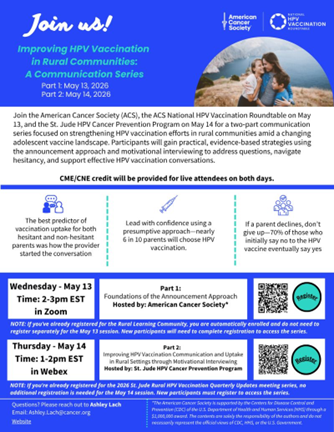
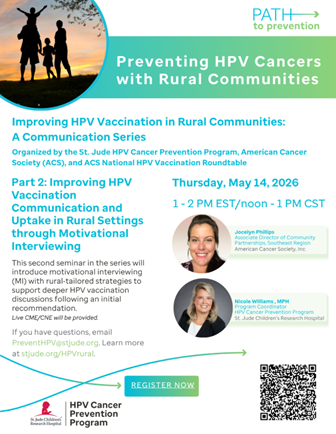
HPV vaccination conversations do not end with a strong recommendation; they continue with listening, reassurance, and next steps. On May 13-14, the St. Jude HPV Cancer Prevention Program, American Cancer Society (ACS), and ACS National HPV Vaccination Roundtable are partnering to deliver Improving HPV Vaccination in Rural Communities: A Communication Series, a two-part virtual series designed to build provider capacity and improve HPV vaccination conversations with rural communities.
This duet series highlights how two complementary approaches work together to support more effective HPV vaccination conversations in rural settings. Participants who attend both sessions will gain strategies to confidently initiate vaccination discussions and respond skillfully when questions or hesitancy arise.
Both sessions are certified for free live CME and CNE credit. Together, these sessions offer shared learning and actionable strategies you can start using immediately to boost rural HPV vaccination coverage.
|
|
|
Part 1: May 13, 1:00-2:00 p.m. Central Time
The ACS Rural Learning Community hosted webinar will spotlight the Announcement Approach, an evidence‑based method for making clear, routine HPV vaccination recommendations. This session will also feature a fireside conversation on adapting the approach for rural workflows, engaging families, and navigating everyday practice realities.
|
|
Part 2: May 14, noon-1:00 p.m. Central Time
The St. Jude HPV Cancer Prevention Program hosted webinar will build on that foundation with motivational interviewing, a patient‑centered communication approach that supports empathy, shared decision‑making, and provider confidence. This session focuses on what to do when parents hesitate—and how to keep the conversation moving forward.
|
|
|
|
|
|
|
|
|
Rural Quarterly Updates Meeting Highlights: February 19 |
|
|
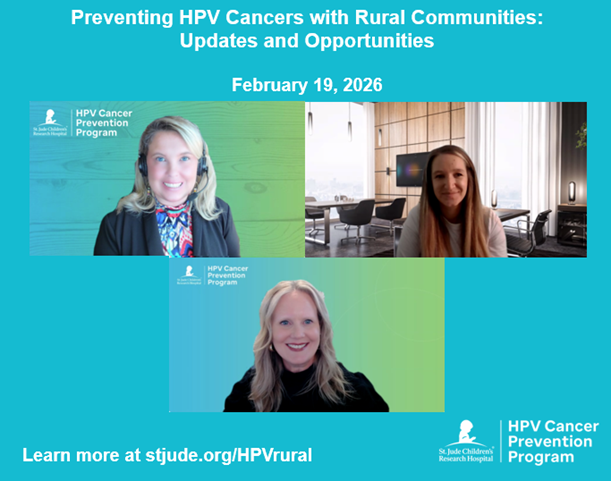
Partners from across the country convened for our first quarterly meeting of 2026 on February 19 to hear about updates, priorities, and resources for advancing HPV vaccination in rural communities. Highlights included a review of the updated St. Jude Rural HPV Vaccination Priority Actions and a reminder of available resources to support evidence‑based, rural‑relevant strategies.
Updates given on the national HPV vaccination landscape underscored that HPV vaccination remains recommended for all children, while acknowledging that changes to the immunization schedule may create new challenges for rural families, including confusion and access barriers. To support partners during this period, the ACS Rural Learning Community presented their expanded learning opportunities for 2026.
|
|
|
|
|
Rural HPV Vaccination Quarterly Updates and Opportunities Meetings |
|
|
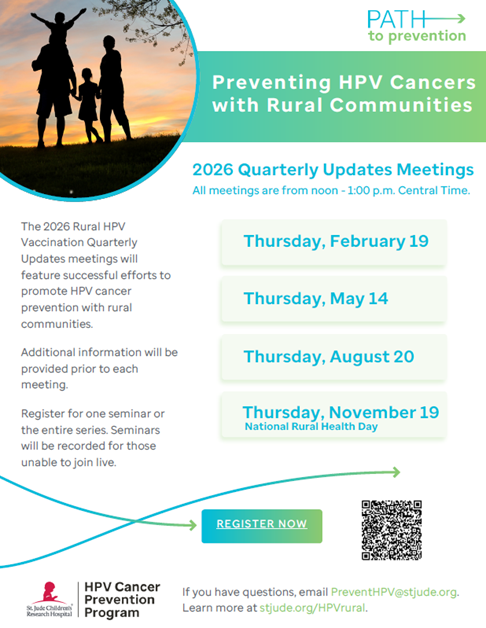
The 2026 Rural HPV Vaccination Quarterly Updates meeting series is shaping up to be one of our most dynamic yet as we continue advancing rural HPV cancer prevention nationwide. This year’s series will feature updates on the revised priority actions, stories of successful rural implementation, and new resources and timely updates to help partners turn priorities into practice. Get ready for fresh insights, practical takeaways, and inspiring examples of what is working on the ground. Look for meeting‑specific details as each session approaches—there is much to look forward to.
|
| Register Here
|
|
|
|
|
|
HPV Awareness Day Rural HPV-Focused Seminar |
|
|
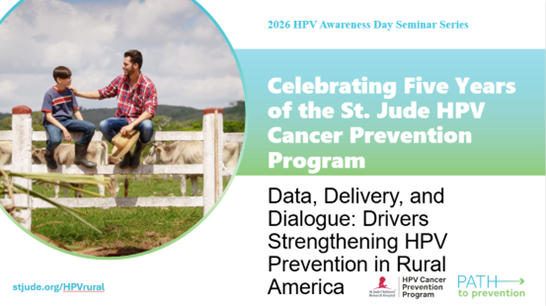
In March, the St. Jude HPV Cancer Prevention Program celebrated five years of impact. To commemorate the
momentous occasion, and in celebration of International HPV Awareness Day, we released a seminar series spotlighting the primary programming of our program, reflecting the dedication and collaboration that continues to support increases in HPV vaccination coverage for all children.
The HPV Awareness Day rural-focused seminar, Data, Delivery, and Dialogue: Drivers Strengthening HPV Prevention in Rural America highlighted five years of progress from the St. Jude HPV Cancer Prevention Program and its national initiative to prevent HPV cancers in rural communities. Nicole Williams, MPH, program coordinator, HPV Cancer Prevention Program, St. Jude Children’s Research Hospital led the seminar which featured rural HPV cancer subject matter experts Whitney Zahnd, PhD, Assistant Professor, Department of Health Management and Policy in the College of Public Health at the University of Iowa and Trisha Amboree, PhD, Assistant Professor at the Medical University of South Carolina, Hollings Cancer Center outlining updated rural HPV
vaccination priorities organized around three drivers: data, delivery, and dialogue, to guide action amid changing policy, funding, and access challenges. The seminar underscored higher HPV cancer burden and lower vaccination rates in rural areas and shared research and community examples showing how data‑driven strategies, strong provider recommendations, and trusted partnerships can strengthen rural prevention efforts.
|
 |
|
|
|
|
|
|
|
Strengthening HPV Vaccination Conversations with the Announcement Approach
|
|
|
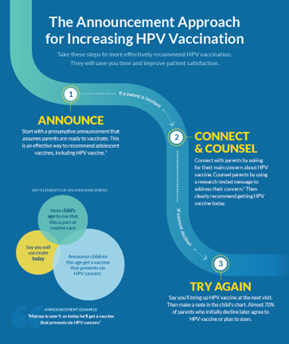
The Announcement Approach Training is a proven, evidence-based intervention that helps health care providers make effective, confident HPV vaccination recommendations. This training boosts HPV vaccination rates by teaching clinicians to deliver strong, presumptive messages that resonate with parents and respond to questions using research-tested messages and can be tailored for rural providers.
The St. Jude HPV Cancer Prevention Program team is available to help coordinate this impactful training for groups of rural health care providers. If your team is ready to improve communication and protect more patients from HPV cancers, email us at PreventHPV@stjude.org to get started.
Upcoming educational sessions to learn how to give strong recommendations for on-time HPV vaccination will be held in May and June. The Announcement Approach Training, a proven method for increasing HPV vaccination, teaches health care providers and professionals how to make and support strong HPV vaccination recommendations. The training includes reviewing evidence on HPV vaccination and presumptive announcements, building skills for using announcements and counseling hesitant parents, and practicing these skills with peers.
After the training, participants will be able to apply and implement the Announcement Approach in clinical settings where HPV vaccination is recommended and administered.
This training is well-suited for physicians, advanced practice providers, and clinical teams seeking practical tools to strengthen vaccine recommendations and improve HPV vaccination rates in their practice. These sessions are specifically available to those serving populations in the following states: Florida, Kentucky, Louisiana, Ohio, Oklahoma, South Carolina, and Virginia.
Training Dates:
May 19: 10:30-11:45 a.m. Central Time
May 28: 10:00-11:15 a.m. Central Time
June 2: 1:30-2:45 p.m. Central Time
June 3: 2:00-3:15 p.m. Central Time
CME credits will be available through the Trusted Provider Network (TPN). This educational activity is organized by Humana and the ACS with support from the St. Jude Children’s Research Hospital HPV Cancer Prevention Program.
|
|
|
|
|
|
|
Wide Open Spaces Article Series
|
|
|
Wide Open Spaces is a series of articles included in the St. Jude HPV Cancer Prevention Program’s monthly Path to Prevention
newsletter. These articles address ways to improve HPV vaccination with rural communities. Articles are written by guest contributors, who share information on their efforts and success in improving HPV vaccination with rural communities. We invite guest contributors to share information on how they are working to improve HPV vaccination in rural areas.
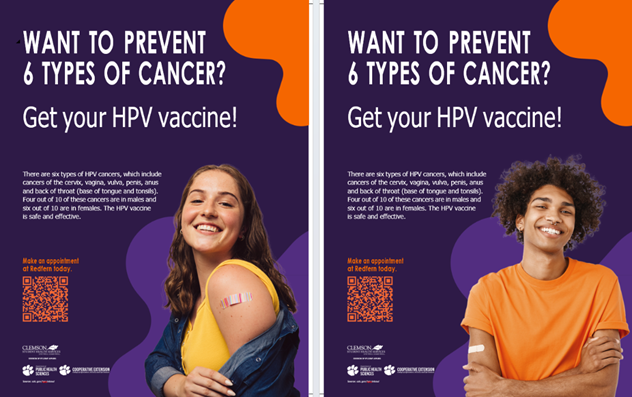
This month, we feature work highlighting a campus‑wide HPV vaccination initiative at Clemson University. Supported by the national EXCITE program, the project partnered with student health services to make HPV vaccination routine, accessible, and visible through provider training, point‑of‑care vaccination, and targeted digital and on‑campus messaging. The campaign reached
more than two million views and led to a 273% increase in HPV vaccine administration during the 2024–25 academic year—embedding HPV vaccination into standard student health operations.
Recent Wide Open Spaces articles include:
|
|
| Full Article
|
|
|
We are looking for authors for Wide Open Spaces articles.
Do you have a story about HPV cancer prevention efforts with rural communities? We invite guest contributors to share information on how they are working to improve HPV vaccination in rural areas through the Wide Open Spaces article series, which is promoted in our monthly Path to Prevention newsletter, featured in our quarterly rural HPV vaccination newsletter, and posted on stjude.org/HPVrural. If you are interested in contributing an article please email us at PreventHPV@stjude.org.
|
|
|
|
|
Access Reliable Information about Vaccines
|
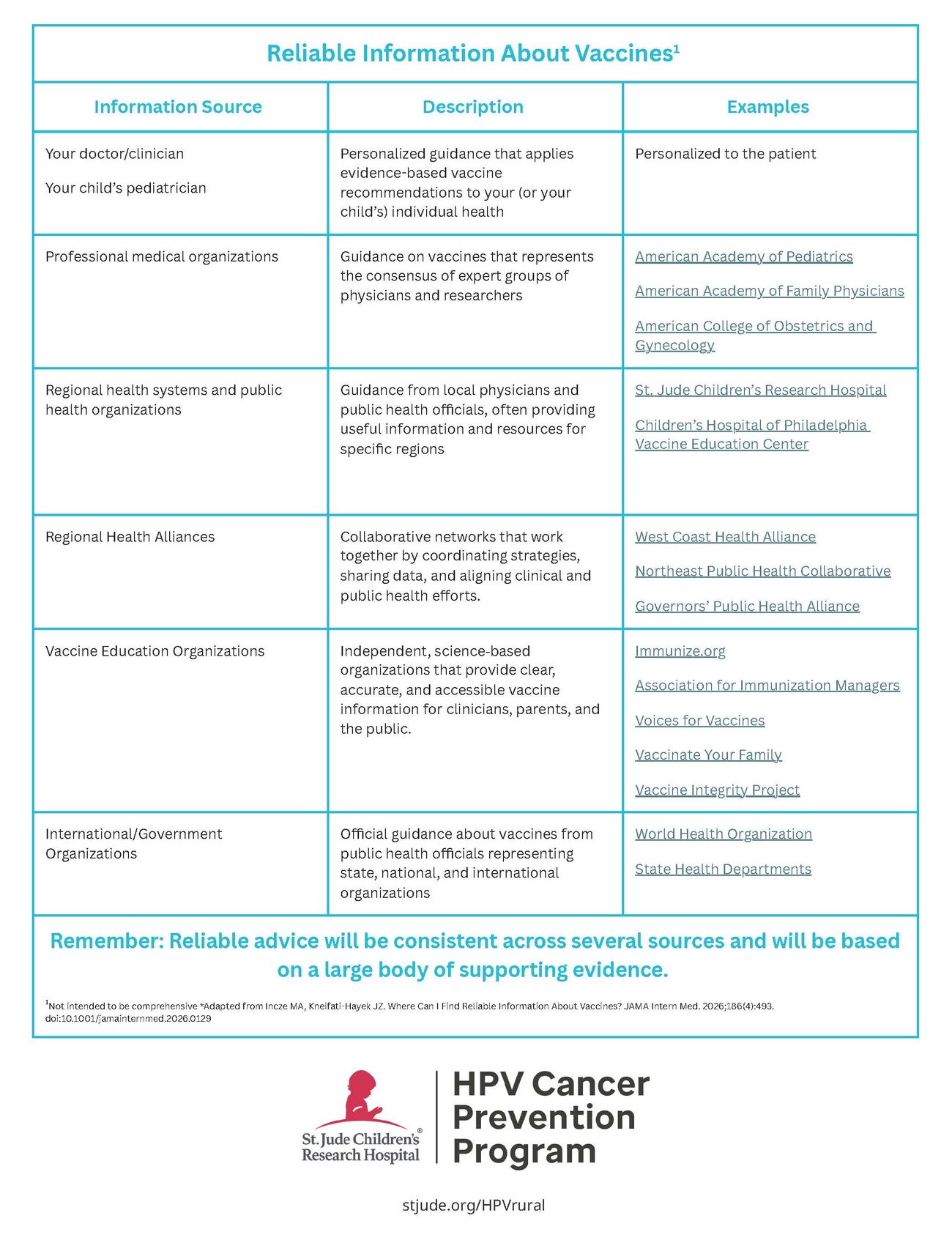
The following image, adapted from Incze et al. (2026), provides insight into where to look for reliable information about vaccines. It is important to note that reliable advice will be consistent across several sources and will be based on a large body of supporting evidence.
|
 |
|
|
|
|
Rural HPV Cancer Prevention Fact Sheet
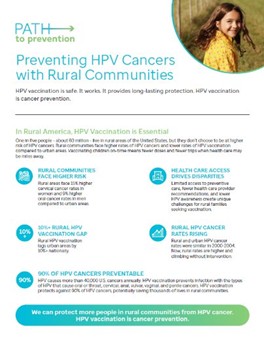
Our updated Preventing HPV Cancers with Rural Communities fact sheet is designed to better support your rural HPV work and communication efforts. We encourage you to use and share this fact sheet widely—at meetings, in outreach, and with partners who care about rural HPV cancer prevention.
|
| Access Here
|
|
|
Rural HPV Cancer Prevention Summary Report
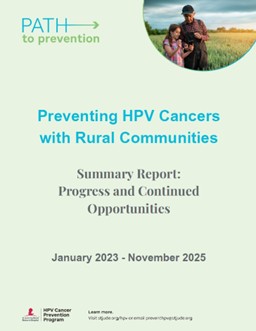
The Preventing HPV Cancers with Rural Communities Summary Report: Progress and Continued Opportunities was developed to document the efforts and progress made since the rural HPV initiative launch in January 2023, and was used as a guide to ensure 2025 revisions to the rural HPV vaccination priority actions were grounded in the reality of what has been done, as we reflected on current needs, opportunities, and evidence.
|
| Access Here
|
|
|
Rural HPV Cancer Prevention Awareness Campaign
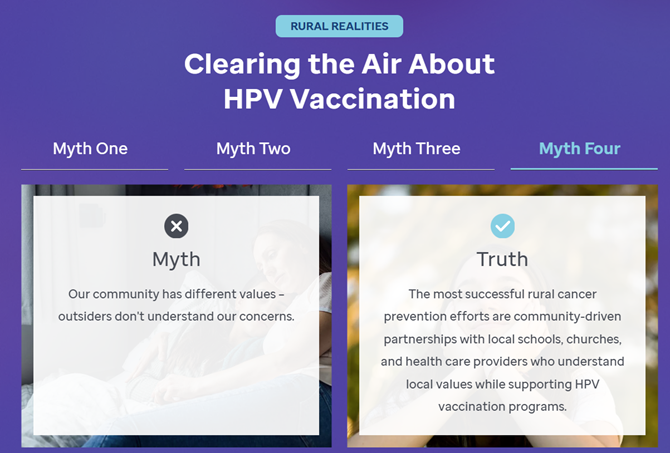
Our national awareness campaign, “The Kids Aren’t Thinking About HPV,” now includes tailored resources for rural communities which reflect the unique challenges and opportunities in rural HPV cancer prevention and are designed to support local outreach, education, and engagement efforts. We invite you to explore the updated materials—including rural-specific messaging and tools.
|
| Access Here
|
|
|
|
|
|
St. Jude Rural HPV Vaccination Resources
|
|
|
|
|
|
|
|
Do you have HPV vaccination resources for rural U.S. areas? Share guidelines, research articles, and educational materials on
HPV vaccination for health care providers and others living in rural settings. Your insights can enhance HPV prevention efforts in rural communities. To contribute, please send them to PreventHPV@stjude.org.
|
|
|
|
|
|
|
|
American Cancer Society’s 2026 Rural Learning Community |
|
|
The ACS Rural Learning Community has a new home! As part of ACS’s 2026 updates, the program’s landing page has transitioned to cancer.org under the newly created Accelerating Research to Care Network: Knowledge Translation section. This move brings all knowledge translation programs together in one place—making it easier to explore sessions, access materials, and discover new learning opportunities.
On the new landing page, you’ll still find everything you rely on from the ACS Rural Learning Community, including:
The previous ACS Rural Learning Community page was decommissioned on April 3, so be sure to update your bookmarks to the new page!
|

|
| Learn More
|
|
|
|
|
|
2026 Virtual State Engagement HPV Summit, July 21 |
|
|
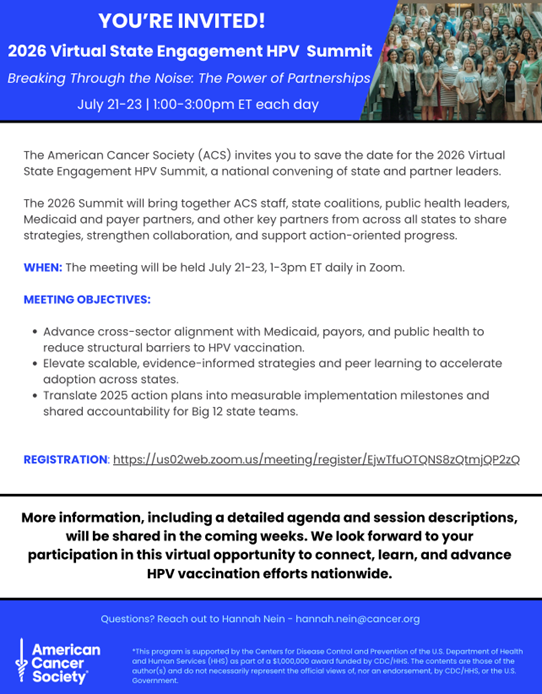
Register for the 2026 Virtual State Engagement HPV Summit organized by ACS on July 21-23 from 12:00-2:00 p.m. Central Time daily. The summit will be bring together ACS staff, state coalitions, public health leaders, Medicaid and payer partners, and other key partners from across all states to share strategies, strengthen collaboration, and support action‑oriented progress.
|
| Register
|
|
|
|
|
|
National Nurses Month Scholarship Opportunity |
|
|
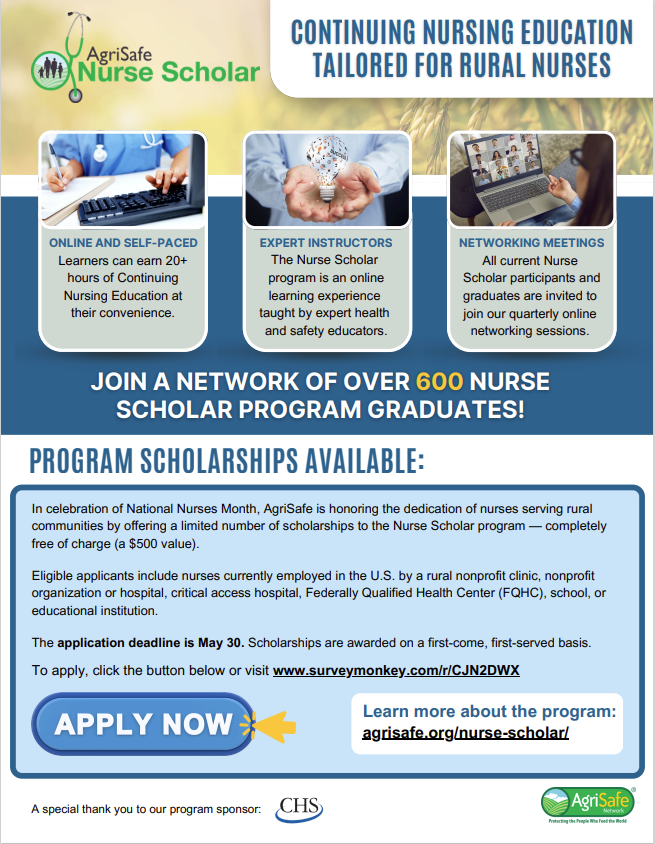
In celebration of National Nurses Month, AgriSafe is honoring the dedication of nurses serving rural communities by offering a limited number of scholarships to the Nurse Scholar Program – completely free of charge (a $500 value). Eligible applicants include nurses currently employed in the U.S. by a rural nonprofit clinic, nonprofit organization or hospital, critical access hospital, Federally Qualified Health Center (FQHC), school, or educational institution. The application deadline is May 30.
|
| Learn More
|
|
|
|
|
|
Markey Cancer Center Community Impact Office Launces Cancer InFocus: Rural/Urban
|
|
|
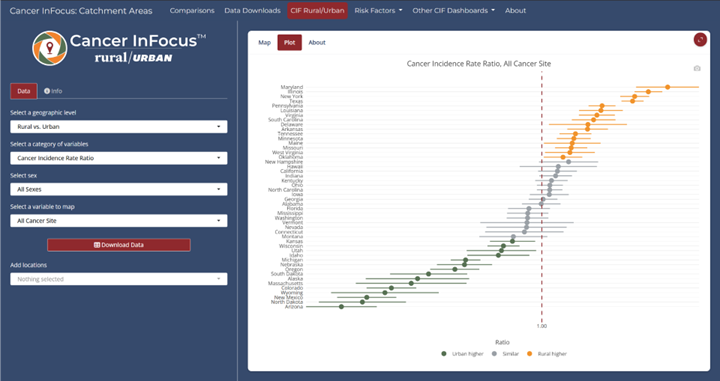
The Markey Cancer Center Community Impact Office is excited to announce the launch of Cancer InFocus: Rural/Urban—a state-level comparison of rural and urban areas across the US. Measures available include cancer incidence and mortality rates, screening and risk factor prevalence, provider ratios, and a novel application of the Social Vulnerability Index to rural and urban areas. Users can explore maps and plots of measures by urbanicity or compare ratios of rural versus urban to identify where disparities exist. This is another great addition to the place-based measures of cancer burden they work to make readily-available to researchers and community organizations. This new dashboard can be accessed via the Cancer InFocus (CIF) Rural/Urban tab on CancerInFocus.org or directly here.
|
|
| Cancer InFocus
|
|
|
|
|
2026 National Farm Safety & Health Week Call for Presenters
|
|
|
AgriSafe is now accepting webinar proposals for the 2026 National Farm Safety and Health Week. They are seeking engaging presentations that appeal to a wide audience, including agricultural health and safety professionals, Extension staff, healthcare providers, and anyone involved in or supporting the agricultural community. Daily Topics of Focus include:
September 21: Equipment and Rural Roadway Safety
September 22: Health and Wellness
September 23: Generations of Farming
September 24: Confined Spaces
September 25: Cancer Prevention
The deadline to apply is May 27.
|
|
|
|
|
CMS Convenes First Rural Health Transformation Summit to Advance State-led Innovation
|
|
|
The Centers for Medicare & Medicaid Services (CMS) is leading the historic $50 billion Rural Health Transformation Program, partnering with states to strengthen rural health systems, expand access to care, and tackle chronic disease. To advance that work, on March 18, 2026, CMS convened leaders from all 50 states for the first Rural Health Transformation Summit, bringing together state officials and experts to accelerate implementation of the program. Throughout the gathering, states discussed early implementation efforts aligned with the program’s five strategic goals:
Make Rural America Healthy Again – expanding preventive, primary, maternal, and behavioral health services and addressing root causes of chronic disease.
Sustainable Access – advancing regional partnerships, hub-and-spoke networks, and coordinated emergency medical services to stabilize rural providers.
Workforce Development – building rural clinical pipelines, supporting training and residency programs, and increasing recruitment and retention.
Innovative Care – testing value-based care models and alternative payment approaches tailored to rural communities.
Tech Innovation – modernizing health IT infrastructure, expanding telehealth and remote patient monitoring, and strengthening cybersecurity and interoperability.
For more information, visit www.cms.gov/priorities/rural-health-transformation-rht-program. Click for answers to Rural Health Transformation Program Post-Award Frequently Asked Questions (FAQs).
If your organization or state’s RHT‑funded work will include HPV vaccination or HPV cancer prevention, we would love to learn about it and explore ways we can collaborate or support your efforts. Email us at PreventHPV@stjude.org.
|
|
|
|
|
|
|
1st Annual Tennessee Rural Healthcare Center of Excellence Innovation Conference
|
|
|
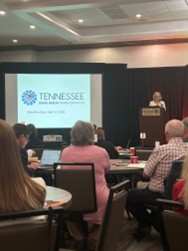
The 1st Annual Tennessee Rural Healthcare Center of Excellence Innovation Conference on April 21 brought together healthcare professionals for a one-day continuing education event focused on strengthening the knowledge and skills of health care providers serving rural communities. Sessions highlighted updates on rural health in Tennessee and practical strategies to close health disparity gaps in rural communities while fostering collaboration among providers.
The conference also highlighted several major statewide initiatives and programs aimed at improving rural health outcomes. These included Make Tennessee Healthy Again, which offers new grant opportunities to support community-based interventions; the launch of the Tennessee Rural Healthcare Task Force, designed to guide policy and strategic planning; and the Better Care, Closer to Home – Rural Health Transformation Program, focused on expanding access and improving quality of care in rural areas. Additionally, the Center for Rural Health and Research was emphasized as a critical resource for data, innovation, and evidence-based solutions. Key themes throughout the conference included:
Addressing health disparities in underserved rural populations,
Measuring and building prosperity through improved health and economic outcomes, and
Strengthening rural resilience in the face of ongoing healthcare challenges.
|
 |
|
|
|
|
|
|
|
Vaccine Hesitancy and Communication Strategies
Studies focused on hesitancy, counseling approaches, and communication methods to improve vaccination uptake.
Blank TM, Osborne VG, Buchholz SW, Pathak D, Eschbach C, Schrader K. Motivational Interviewing to Address Vaccine Hesitancy in a Rural Population. J Dr Nurs Pract. 2025 Jan 27:JDNP-2024-0050.R1. doi: 10.1891/JDNP-2024-0050. Epub ahead of print. PMID: 39870423.
Naavaal S, Boyle J, Brickhouse T, Chukmaitov A, Oliver J and Fuemmeler BF (2026) Bridging the gap: tackling general and HPV vaccine hesitancy in rural and low-vaccination areas to improve HPV vaccine uptake. Front. Public Health 13:1702968. doi: 10.3389/fpubh.2025.1702968
Odebunmi OO, Spees LP, Biddell CB, Yemeke T, Yanguela J, Higgins C, Gilkey MB, Ozawa S, Wheeler SB. Benefits, challenges, and strategies related to using presumptive recommendations for HPV vaccination: A qualitative study with rural and non-rural-serving primary care professionals. Hum Vaccin Immunother. 2024 Dec 31;20(1):2347018. doi: 10.1080/21645515.2024.2347018. Epub 2024 May 6. PMID: 38708779; PMCID: PMC11085946.
Implementation of Evidence-Based Interventions in Rural Settings
Studies examining how HPV vaccination strategies are implemented, adopted, and sustained in real‑world rural care settings.
Rodriguez EM, Foschio E, Kaijar T, Abdella AM, Catalfamo K, Glaser K, Kuo DZ, Marsteller JA, Pease M, Schlecht NF. PC TEACH, a cancer prevention intervention: Assessing the implementation and adoption of evidence-based strategies to increase human papillomavirus (HPV) vaccination delivery in rural primary care settings. Cancer Epidemiol Biomarkers Prev. 2025 Sep 1;34(9 Suppl):B047. doi: 10.1158/1538-7755.DISP25-B047.
Roux K, Roux F, Burns S, Guy R. Effective strategies in human papillomavirus (HPV) vaccination interventions to increase uptake in rural, low socioeconomic, indigenous and migrant populations: A scoping review. Vaccine. 2025 Aug 13;61:127359. doi: 10.1016/j.vaccine.2025.127359. Epub 2025 Jun 4. PMID: 40472670.
Rural-Urban Disparities in HPV Vaccination and Cancer Outcomes
Studies documenting differences in vaccination, incidence, mortality, and cancer burden by rurality.
Islami F, Zahnd WE, Wiese D, Sung H, Schafer EJ, Siegel RL, Jemal A. Long-term trends in cancer mortality by rural-urban status, United States, 1969–2023. J Natl Cancer Inst. 2026;djag047. doi: 10.1093/jnci/djag047.
Sharma R, Armstrong A, Gully B, Eldien A, Mah S, DeVince T.M., Jacobson I, Williams, A. The HPV Vaccination Divide: Rurality’s Effect on Oropharyngeal Cancer Incidence. International Journal of Radiation Oncology, Biology, Physics, 125, e66-e67. DOI: 10.1016/j.ijrobp.2026.02.135.
Semprini J, Brandt H. Exploring rural-urban disparities in HPV vaccine initiation: new insights from the 2022 national health interview survey. Vaccine. 2026 Mar 19;76:128334. doi: 10.1016/j.vaccine.2026.128334. Epub 2026 Feb 10. PMID: 41672029.
Reviews of Influences on Rural HPV Vaccine Uptake
Scoping and integrative reviews synthesizing factors that influence HPV vaccination in rural populations.
Sheinfeld Gorin S, Hyman R, Olson C, Fournier EA, Yang K, Hanko D, Hpv Review Working Group. A Scoping Review of Influences on HPV Vaccine Uptake in the Rural US. Vaccines (Basel). 2026 Feb 5;14(2):156. doi: 10.3390/vaccines14020156. PMID: 41746077; PMCID: PMC12945006.
|
|
|
|
|
|
Other Happenings in Rural Health
|
|
|
Prevent Cancer Foundation Community Grants
Grants for projects focused on cancer prevention and early detection in rural communities from organizations located in the communities they serve. The Prevent Cancer Foundation is investing in projects focused on cancer prevention and early detection in rural communities from organizations located in the communities they serve.
Funding priorities:
Fill an unmet need within the organization or community, with an emphasis on direct services to community members, specifically cancer screenings, vaccinations, and patient navigation support
Have established trust and partnerships within the community they are serving
Make intentional efforts to reach medically underserved rural populations with culturally sensitive care, especially Tribal communities and American Indian/Alaskan Native populations
Engage community members and people with lived experience in the planning, implementation, and evaluation of the project
Ensure the organization's patient navigators, staff, and leadership reflect the priority population the organization is serving
Address structural barriers to receiving healthcare and/or create systemic change
Serve all patients regardless of status or ability to pay
Demonstrate sustainability and impact can extend beyond the duration of the grant period
Projects led by independent clinics and organizations
The foundation is especially interested in funding projects in Arkansas, Connecticut, Delaware, Idaho, Massachusetts, Missouri, Montana, Nebraska, Oklahoma, Rhode Island, South Dakota, and Vermont. Application deadline is May 20.
Learn more here.
|
 |
|
|
|
Federal Action Supports Continued Investment in Rural Health Care
On April 21, 2026, the House passed H.R. 2493, the Improving Care in Rural America Reauthorization Act. This bill reauthorizes the Rural Health Care Services Outreach Programs, which expand health care service delivery and improve population health for rural communities through community engagement and evidence-based models. Reauthorization of this legislation is integral in
ensuring lasting access to health care services in rural communities and secures continued expansion of these vital programs.
|
|
|
Call for Papers | Improving Rural Health: Solutions for
Persistent Rural Public Health Challenges
Submission Due Date: June 15
Public health challenges have been documented in rural geographic areas and remain barriers to delivering public health, clinical, and allied health services to communities in these areas. These challenges include limited health care access, excessive tobacco use in economically poor counties, limited physical activities, and high prevalences of behavioral and mental health conditions and chronic diseases. PCD welcomes manuscripts that will help advance the discourse on public health solutions to persistent conditions that exacerbate poor health outcomes in rural settings. Example topics include
- Community–clinical linkages to improve population health in rural settings.
- Community engagement efforts to improve child and adolescent health.
- Community engagement approaches to address chronic disease prevention.
- Community health workers to address access to care in rural settings.
- Opportunities and challenges for rural local health departments to improve population health in rural settings.
Learn more here.
|
|
|
|
|
|
2026 ACS CAN National Forum on the Future of Health Care, May 13
|
|
|
Join the American Cancer Society Cancer Action Network (ACS CAN) for their 14th annual National Forum on the Future of Health Care on May 13at the Ronald Reagan Building and International Trade Center in Washington, DC.
The event will explore policy solutions to the unique issues facing cancer patients in rural communities —including availability of cancer providers and facilities, access to innovative treatments, cancer prevention and early detection, and timely follow-up care and treatment. Issue experts will also address the challenges rural patients face in accessing cutting-edge treatments through appropriate clinical trials. While federal action is critical, the forum will also highlight state and local policy solutions, featuring voices from patients, practitioners, and policymakers working directly in rural communities.
|

|
| Register
|
|
|
|
Rural Health and Cancer Conference, Burlington, Vermont, June 19-21
|
|
|
The University of Vermont Cancer Center is pleased to announce the Rural Health and Cancer Conference to be held June 2-4 in Burlington, Vermont. The conference aims to improve rural cancer outcomes by convening a wide-array of experts from across the nation in rural cancer health care delivery and building cross-disciplinary collaborations amongst rural cancer health experts. Register through May 10 here.
|
|
|
|
About the St. Jude HPV Cancer Prevention Program
|
|
|
St. Jude Children's Research Hospital is leading the way the world understands, treats and cures childhood cancer and other
life-threatening diseases. That is why St. Jude is raising awareness on HPV vaccination, which can prevent six types of cancer caused by the virus. As the only NCI-designated Comprehensive Cancer Center dedicated solely to children, St. Jude has an important role and responsibility in increasing the number of children who benefit from HPV vaccination and reduce their risk of preventable cancers later in life.
The St. Jude HPV Cancer Prevention Program envisions a world free of HPV cancers. Through education, promoting best practice models, and strategic partner engagement, its mission is to increase on-time HPV vaccination. On-time HPV vaccination by the 13th birthday provides safe, effective, and long-lasting protection against the most common types of HPV linked to cancers. The program is committed to ensuring equitable access to HPV cancer prevention, which includes a specific focus on geographic disparities in the southeastern United States and in rural communities.
Learn more about the St. Jude HPV Cancer Prevention Program at stjude.org/hpv. Email PreventHPV@stjude.org with any questions.
|
 |
|
|
|
|