|
|
|
HPV vaccination is safe, yet safety continues to be a major concern for parents, caregivers, and vaccine decision makers. Further, misinformation often plays into fears about safety. Numerous studies have examined HPV vaccination safety with similar results. The ACS National HPV Vaccination Roundtable recently published an overview of the facts about HPV vaccination effectiveness and safety with a look at any new information over the past few years.
Just this week, a systematic review and meta-analysis released by the Vaccine Integrity Project examined additional peer-reviewed studies published between September 2024 and January 2026 to understand HPV vaccination safety. The Vaccine Integrity Project team integrated 121 studies, with 153 studies from two previously published comprehensive Cochrane reviews (2025) related to vaccines approved in the U.S. that assessed outcomes of interest. The updated review synthesizes results from 274 studies across safety, effectiveness, and immunogenicity outcomes, encompassing randomized controlled trials, cohort studies, ecological studies, case-control studies, and immunogenicity analyses. Overall, the updated evidence continues to strongly support the safety and effectiveness of HPV vaccination and remains consistent with prior Cochrane reviews. The totality of evidence indicates no association between HPV vaccination and serious adverse events, while demonstrating substantial protection against cervical cancer, high-grade cervical lesions, and persistent HPV infection.
In addition, the Vaccine Integrity Project review identified emerging evidence suggesting a single-dose schedule may offer protection comparable to two- and three-dose regimens for key outcomes in females, supporting ongoing policy discussions around dose reduction. However, important evidence gaps remain for male populations, non-cervical cancers, and long-term durability of single-dose protection, underscoring the need for continued surveillance and longer-term follow-up studies. Access the full evidence review, executive summary, and data visualization tool on the Vaccine Integrity Project website.
Check out this month’s Path to Prevention newsletter for more updates and opportunities on HPV cancer prevention.
If you have information to share in upcoming newsletters, please email us at PreventHPV@stjude.org. |
|
|
|
|
|
|
|
Updates on the Current Vaccination Landscape |
|
|
|
Over the past month, updates on HPV vaccination highlight major scientific progress, anchored by the Vaccine Integrity Project’s safety and effectiveness review. This synthesis of 274 studies remains a key advance, reaffirming that HPV vaccines are safe, show no link to serious adverse events, and provide strong protection against cervical cancer and related outcomes. It also introduces important emerging evidence on single-dose efficacy, while identifying ongoing research gaps, especially for males and long-term durability.
Newly added research further strengthens the case for inclusive vaccination strategies. A study published in JAMA Oncology provides direct evidence that the nine-valent HPV vaccine reduces cancer-related outcomes in males, reinforcing earlier epidemiological findings. This builds on previous publications showing that vaccinating men and boys can substantially reduce cancers such as oropharyngeal and anal cancers, while enhancing herd immunity. Together, these findings shift male vaccination from a secondary consideration to a central pillar of cancer prevention, which has been the case in the U.S. for several years with a focus on gender neutral vaccination promotion.
Recent policy analysis also deepens the discussion of structural barriers. Research on navigating state-level politics highlights how vaccine policy is increasingly shaped by legislative and ideological dynamics, not just scientific evidence. This complements prior findings from KFF on disparities in access, illustrating that both policy environments and health systems influence uptake.
Finally, misinformation remains an active and evolving threat. In addition to Paul Offit’s discussion of “collateral damage,” new commentary cataloging repeated false claims by Secretary Kennedy underscores how persistent, high-profile misinformation can undermine public trust and complicate vaccination efforts.
The scientific case for HPV vaccination is stronger than ever. However, achieving high and equitable coverage will depend increasingly on addressing political barriers and countering misinformation alongside improving access and delivery systems.
|
|
World Immunization Week: April 24-30
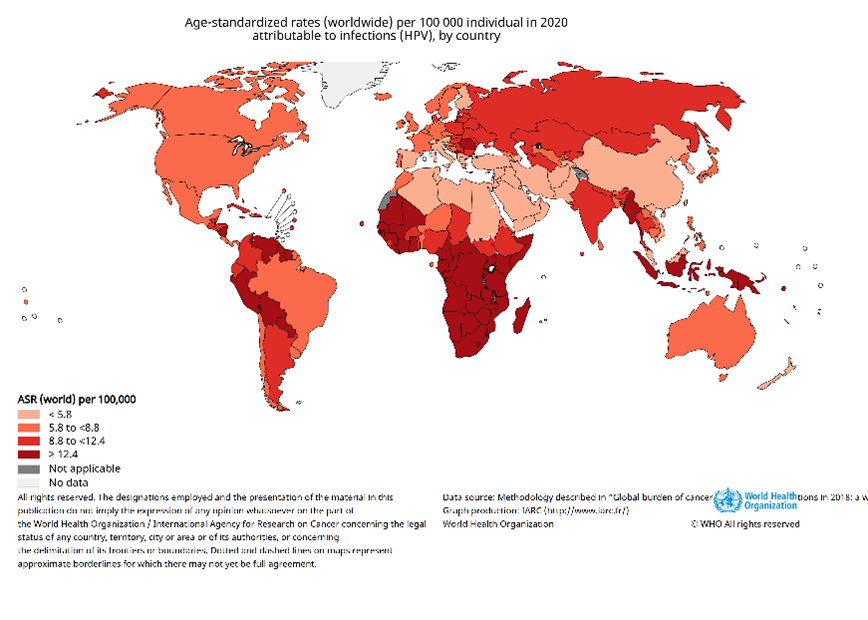
World Immunization Week 2026 was observed from April 24-30 and highlighted the vital role of vaccines in protecting people of all ages from preventable diseases and advancing global health equity. Led by the World Health Organization (WHO), the 2026 campaign emphasized vaccination across the life course, reinforcing that vaccines are essential not only in childhood but throughout adolescence, adulthood, and older age. A major focus was on closing gaps that widened during recent global crises and accelerating progress toward universal health coverage. The campaign also underscored vaccines’ role in preventing serious conditions, such as cervical and other cancers linked to HPV, a priority emphasized by the International Agency for Research on Cancer (IARC). Through coordinated global action, World Immunization Week 2026 called on governments, health systems, and communities to ensure everyone, everywhere, is protected by lifesaving vaccines. |
|
|
 |
|
Additional Resources
|
|
|
|
|
|
Things Newer than HPV Vaccination: Instagram |
|
|
|
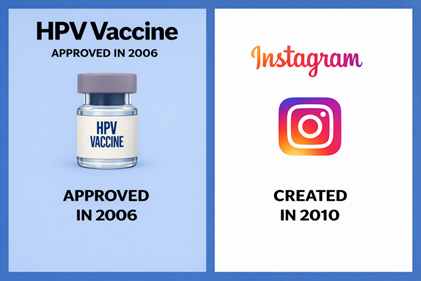
HPV vaccination first became available in the U.S. on June 8, 2006, years before Instagram launched in 2010. While our feeds have been refreshing, the message has not changed: HPV vaccination is cancer prevention. So, although HPV vaccination may feel new, it has been protecting adolescents for almost 20 years, longer than we have been double-tapping screens. |
|
|
|
|
|
|
|
May is Asian American and Pacific Islander Heritage Month |
|
|
|
In recognition of Asian American and Pacific Islander (AAPI) Heritage Month, we celebrate the cultures and histories that enrich our communities while also promoting HPV vaccination as an important cancer prevention tool for adolescents in AAPI communities. NIS-Teen data suggest opportunities to strengthen on-time vaccination among Asian (non-Hispanic) adolescents ages 13–17 in the U.S. In 2024, 77% of adolescents identifying as Asian (non-Hispanic) had received ≥1 dose of HPV vaccine, and 63% were up-to-date. Estimates for AAPI communities are often unavailable due to small sample sizes or data misclassification. Because AAPI communities are diverse, access to trusted information can look different across languages, cultures, and lived experiences. To continue improvements in HPV vaccination coverage in AAPI communities, we encourage partners to share clear, culturally responsive HPV vaccination messages during AAPI Awareness Month and every day. |
|
|
|
Access the Empowering and Strengthening Community, Culture and Connection to Prevent HPV Cancers Factsheet with a focus on Asian American and Pacific Islander communities |
| Factsheet |
|
|
Access the recording of Beyond the Numbers: Understanding and Addressing HPV Vaccination and HPV Cancer Disparities among Asian American and Pacific Islanders
|
| Recording |
|
|
|
|
|
Improving Rural HPV Vaccination Coverage |
|
|
|
Improving HPV Vaccination in Rural Communities: Partnership Communication Series with American Cancer Society
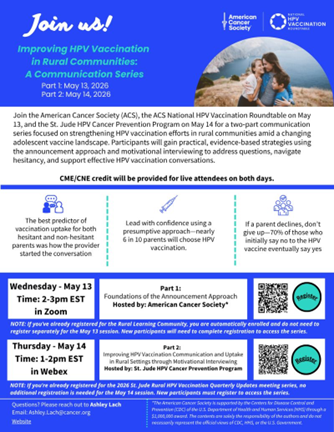
HPV vaccination conversations do not end with a strong recommendation; they continue with listening, reassurance, and next steps. This May, we are partnering with the American Cancer Society (ACS) and the ACS National HPV Vaccination Roundtable to support rural providers with a two‑part rural hpv vaccination communication series focused on practical, real‑world communication strategies to have better HPV vaccination conversations.
On May 13-14, this duet series highlights how two complementary approaches work together to support more effective HPV vaccination conversations in rural settings. Participants who attend both sessions will gain strategies to confidently initiate vaccination discussions and respond skillfully when questions or hesitancy arise.
Both sessions are certified for free live CME and CNE credit. Together, these sessions offer shared learning and actionable strategies you can start using immediately to boost rural HPV vaccination coverage. |
|
|
|
Part 1: May 13, 1:00-2:00 p.m. Central Time
The ACS Rural HPV Learning Community hosted webinar will spotlight the Announcement Approach, an evidence‑based method for making clear, routine HPV vaccination recommendations. This session will also feature a fireside conversation on adapting the approach for rural workflows, engaging families, and navigating everyday practice realities.
|
 |
| Register Here |
|
|
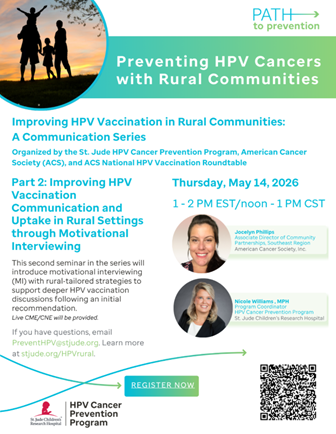
Part 2: May 14, noon-1:00 p.m. Central Time
The St. Jude HPV Cancer Prevention Program
hosted webinar will build on that foundation with motivational interviewing, a patient‑centered communication approach that supports empathy, shared decision‑making, and provider confidence. This session focuses on what to do when parents hesitate—and how to keep the conversation moving forward.
|
 |
| Register Here |
|
|
|
Wide Open Spaces:
Supporting HPV Vaccination
with Rural Communities |
|
|
Clemson University’s HPV Vaccination Approach Becomes Part of National EXCITE Curriculum |
|
Clemson University launched a campus‑wide HPV vaccination initiative in 2024-25 to protect more students from HPV cancers. Supported by funding from the national EXCITE program, researchers partnered with student health services to implement the project, which combined provider training, strong routine recommendations, point‑of‑care vaccination, and targeted digital and on‑campus messaging. By leveraging electronic health records, visual cues, and multidisciplinary collaboration, the campaign made vaccination accessible and normalized prevention for Clemson students. Campaign messages received over two million views across campus and resulted in a 273% increase in HPV vaccine administration during the 2024-25 campaign compared to the previous academic year. HPV vaccination is now embedded into standard student health operations at Clemson. |
| Full Article |
|
About the Author: Kathleen Cartmell, MPH, PhD, is a health services researcher and associate research professor in the Department of Public Health Sciences at Clemson University. She earned an MPH from Emory University’s Rollins School of Public Health and a PhD from the Medical University’s Health and Rehabilitation Sciences Program. Most of Cartmell’s work focuses on disseminating evidence-based approaches to improve health, and her projects have focused on HPV vaccination, vaccine confidence, tobacco cessation, and home-based palliative care. In carrying out her work, Cartmell works closely with stakeholders to determine simple, streamlined strategies for integrating evidence-based programs into routine clinical care and community programs. |
|
|
|
Do you have a story about HPV cancer prevention efforts with rural communities? We invite guest contributors to share information on how they are working to improve HPV vaccination in rural areas through the Wide Open Spaces article series, which is promoted in our monthly Path to Prevention newsletter, featured in our quarterly rural HPV vaccination newsletter, and posted on stjude.org/HPVrural. If you are interested in contributing to or learning more about our efforts to improve HPV vaccination in rural communities, please email us at PreventHPV@stjude.org. |
|
|
|
HPV Vaccination Roundtable of the Southeast |
|
|
|
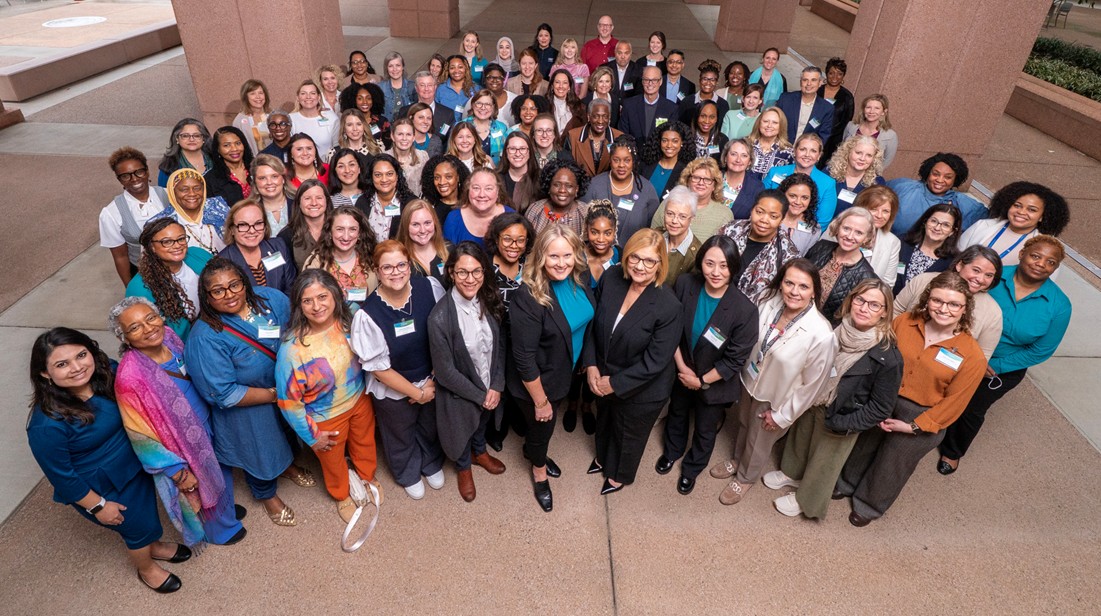
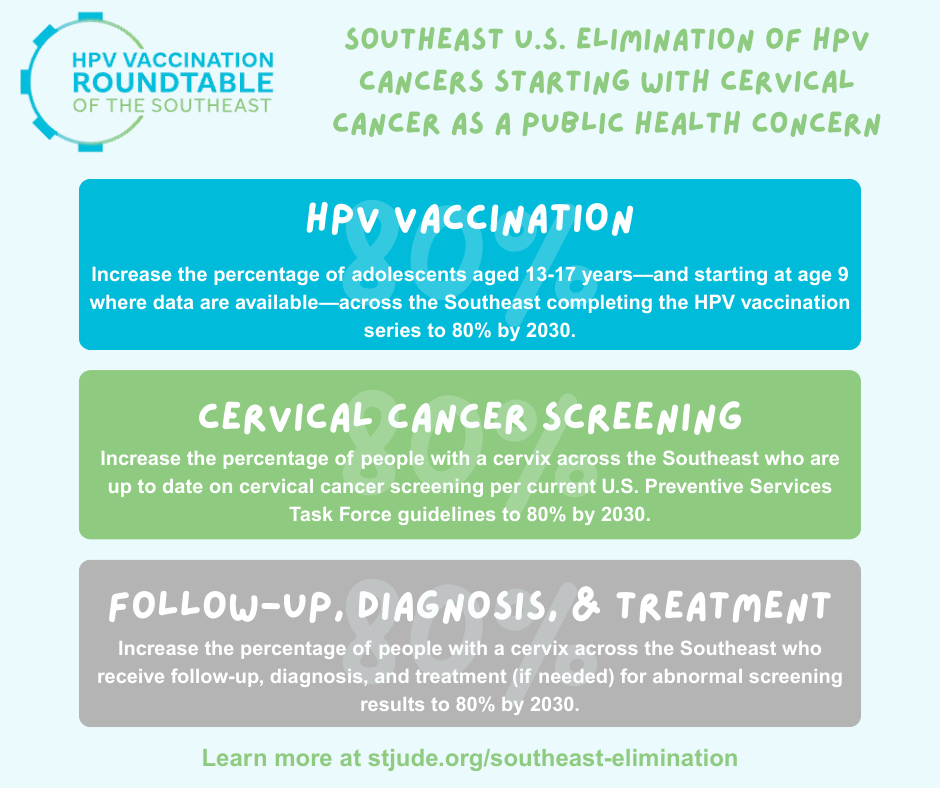
The HPV Vaccination Roundtable of the Southeast convened its 2026 In-Person Annual Meeting on March 9–10 in Memphis, Tennessee. Visit the Southeast Roundtable webpage to view photos, slides, recordings, and updates to the action plan from the annual meeting.
As a primary outcome of the annual meeting, attendees identified strategies to guide priority action areas for 2026–2028. Building off this initial work, implementation team members have refined these strategies into updated action plans, laying a strong foundation for the work ahead. To continue the great work started during the in-person annual meeting, the Southeast Roundtable will host a series of post-meetings open to all Roundtable members. If you were unable to attend the first post-meeting on April 21, please find the recording here.
As the Southeast Roundtable continues to spring into action following the 2026 In-Person Annual Meeting, all Southeast Roundtable members – and those interested in joining – are invited to join us for the two remaining post-meeting sessions on May 19 from 2:00 – 3:00 p.m. Central Time and June 18 from 10:00 – 11:00 a.m. Central Time. These gatherings will help us nurture the ideas planted during the annual meeting and keep our momentum growing.
Please join us as we cultivate next steps together.
|
|
|
|
|
|
|
|
Communication: It's Our Way Down South
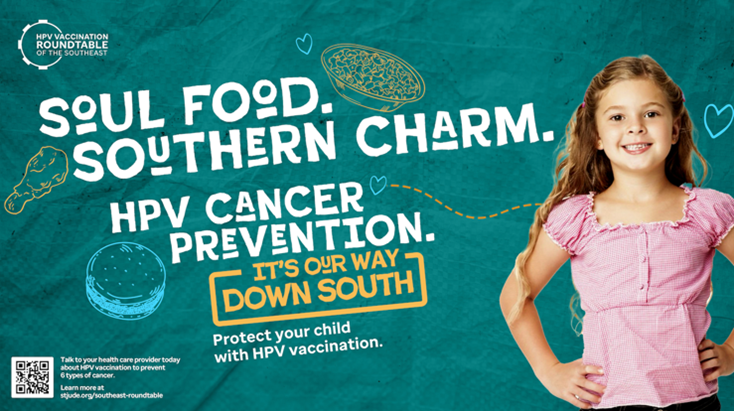
Access the It’s Our Way Down South Campaign here
Request Campaign Print Materials here
|
|
|
|
Elimination
Access the Southeast Roundtable Call to Action here
|
|
|
|
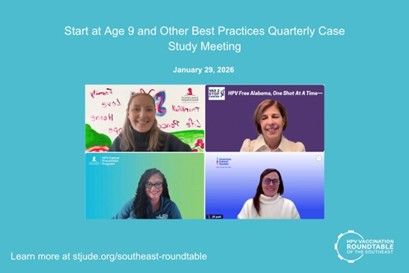
Starting HPV Vaccination at Age 9 and Other Best Practices
Register for the Start at Age 9 and Other Best Practices Quarterly Case Study Meeting on July 30 here
|
|
|
|
To learn more, visit the HPV Vaccination Roundtable of the Southeast website.
|
| Website |
|
|
Join us as a member of the Southeast Roundtable to receive the latest information about the Southeast Roundtable. This also will allow you to access quarterly communications and other resources. |
| Membership |
|
|
|
|
|
Memphis and Shelby County HPV Cancer Prevention Roundtable |
|
|
|
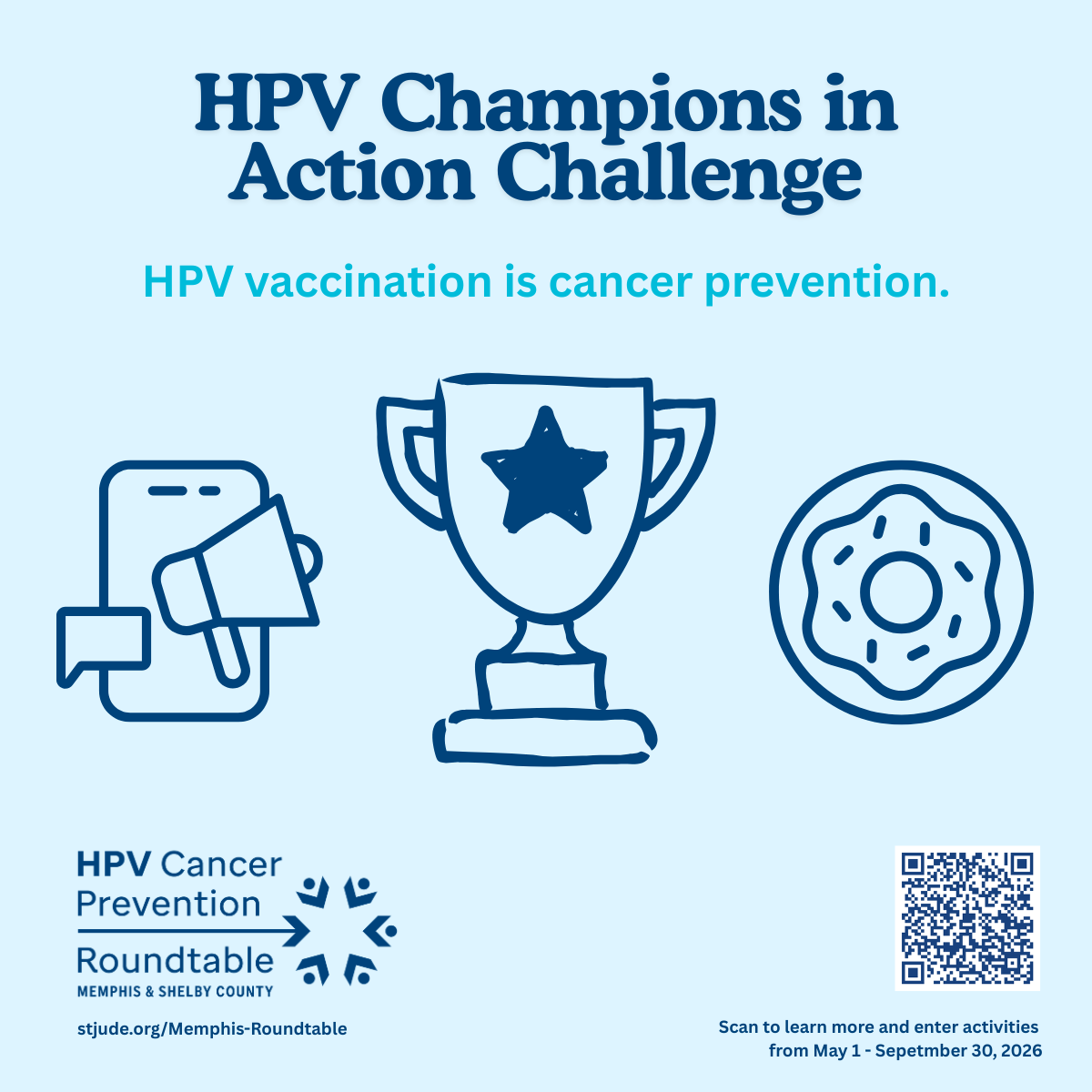
HPV Champions in Action Challenge
The Memphis Roundtable is excited to announce the HPV Champions in Action Challenge, running from May 1 through September 30. This is commonly referred to as the “back-to-school” time and is when many children receive routinely recommended vaccinations, including HPV vaccination. This friendly challenge invites all community partners, clinical settings, and health care organizations, patient-facing and non-patient-facing alike, to join in and show how HPV cancer prevention is a shared responsibility across roles and settings. This competition will highlight how It’s Our Way in Memphis is not just a phrase, but how we put those words into action.
Getting involved is simple and impactful. Throughout the challenge period, teams and organizations can submit their efforts to highlight how they are supporting HPV cancer prevention in their own way. Each submission helps us spotlight the great work happening across Memphis and Shelby County while building collective momentum toward prevention.
As a bonus, submissions will be entered into a drawing to win donuts for your organization. Selected participants will have the opportunity to be officially recognized as HPV Vaccination Champions.
Whether big or small, your efforts matter. Great work deserves to be celebrated!
Ready to join the fun?
Learn more about what is happening with the Memphis Roundtable. Read the latest Memphis and Shelby County HPV Cancer Prevention Roundtable communication here. |
 |
| Participate |
|
|
|
|
|
Survivor Proud: Improving HPV Vaccination Coverage among Childhood Cancer Survivors |
|
|
|
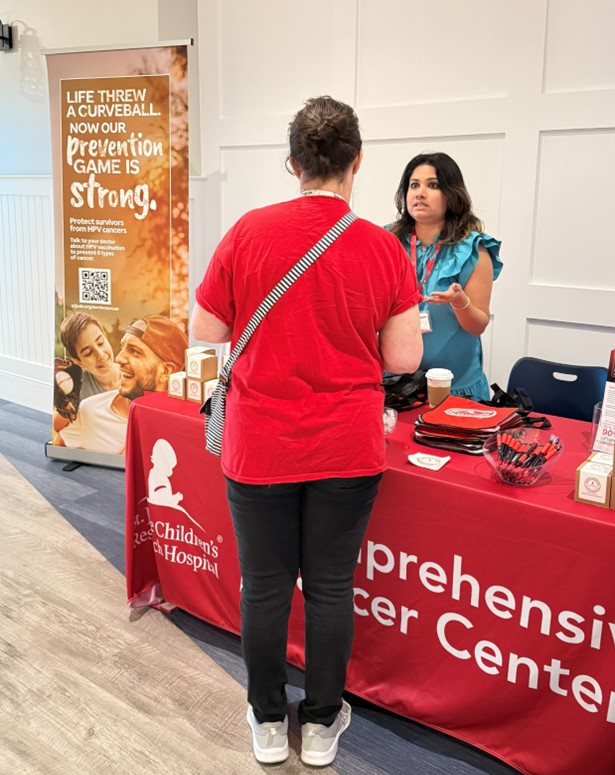
Pragya Gautam Poudel, DrPH, MPH, a postdoctoral fellow in the St. Jude HPV Cancer Prevention Program, is advancing research to improve HPV vaccination among childhood cancer survivors and other vulnerable populations. Mentored by Heather Brandt, PhD, her research focuses on identifying gaps in vaccine uptake and developing evidence-based strategies to address them. With her training in implementation science, she is interested in getting what we know works to protect children from HPV cancers.
Gautam Poudel’s recent first-authored publication in the Journal of Cancer Survivorship examined HPV vaccination coverage using data from the St. Jude Lifetime Cohort Study. The study found that only 27.3% of childhood cancer survivors had initiated HPV vaccination, revealing a critical gap in cancer prevention. It also identified key sociodemographic and cancer-related factors associated with vaccine uptake, providing direction for targeted interventions.
She further expanded this work through a scoping review published in Human Vaccines & Immunotherapeutics. This review synthesizes multi-level barriers and facilitators influencing HPV vaccination among childhood cancer survivors and outlines actionable strategies to improve coverage.
In addition to her publications, Gautam Poudel contributed to a National Cancer Institute administrative supplement project evaluating a multi-channel communication campaign to enhance HPV-related education and outcomes – known as Survivor Proud. Together, her research and applied work aim to empower survivors and improve vaccination uptake.
Gautam Poudel has a grant application pending with the National Cancer Institute to continue and expand this important work. |
 |
|
|
|
|
|
Partners on the Path to Prevention |
|
|
|
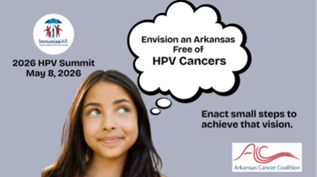
Immunize Arkansas HPV Summit, May 8
Immunize Arkansas will host its annual HPV Summit on May 8 from 8:00 a.m. to 4:30 p.m. Central Time. The meeting will highlight strategies to turn HPV prevention into cancer elimination by strengthening the connection between HPV and cancer, equipping providers with tools to discuss the benefits of the HPV vaccine and sharing best practices to increase HPV immunization rates. |
|
|
|
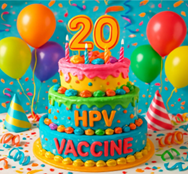
Celebrating 20 Years of the HPV Vaccine: A Western Regional Summit on Prevention and Progress, May 20
The Western Regional Summit will take place virtually on May 20 from 1:00–3:00 p.m. Central Time and will bring together public health professionals, health care providers, pharmacists, health plans, universities, and associations to reflect on two decades of progress and discuss the future of HPV prevention. The Summit will feature expert speakers, Q&A, and networking opportunities with regional leaders in HPV prevention and care. Participating states include Alaska, Arizona, California, Colorado, Hawaii, Idaho, Montana, Nevada, New Mexico, Washington, and Wyoming. |
|
|
|
Call for Nominations: 2026 Immunization Champion Award
Know someone making an impact on immunizations in Tennessee? Nominate them for the 2026 Immunization Champion Award, open now until May 22. Hosted by the Association of Immunization Managers, this national award recognizes individuals who demonstrate leadership, innovation, and advocacy in promoting vaccination across the lifespan. Eligible nominees include health care professionals, community leaders, educators, and other immunization partners.
Help us recognize those strengthening vaccine confidence and protecting communities by submitting a nomination and sharing with your network. Contact Rana Zakaria with any questions. |
|
|
|
Strengthening HPV Vaccination Conversations with the Announcement Approach, May-June
Upcoming educational session to learn how to give strong recommendations for on-time HPV vaccination will be held in May and June. The Announcement Approach Training, a proven method for increasing HPV vaccination, teaches health care providers and professionals how to make and support strong HPV vaccination recommendations. The training includes reviewing evidence on HPV vaccination and presumptive announcements, building skills for using announcements and counseling hesitant parents, and practicing these skills with peers.
After the training, participants will be able to apply and implement the Announcement Approach in clinical settings where HPV vaccination is recommended and administered.
This training is well-suited for physicians, advanced practice providers, and clinical teams seeking practical tools to strengthen vaccine recommendations and improve HPV vaccination rates in their practice. These sessions are specifically available to those serving populations in the following states: Florida, Kentucky, Louisiana, Ohio, Oklahoma, South Carolina, and Virginia.
Training Dates:
-
May 19: 10:30-11:45 a.m. Central Time
-
May 28: 10:00-11:15 a.m. Central Time
-
June 2: 1:30-2:45 p.m. Central Time
-
June 3: 2:00-3:15 p.m. Central Time
CME credits will be available through the Trusted Provider Network (TPN). This educational activity is organized by Humana and the ACS with support from the St. Jude Children’s Research Hospital HPV Cancer Prevention Program. |
| Register Here |
|
|
|
See, Test & Treat - Grant Opportunity, June 18-September 4
See, Test & Treat is a College of American Pathologists (CAP) Foundation supported, one-day, pathologist-led screening and health education program that brings the power of diagnostic medicine to medically underserved populations with the goals of:
-
Addressing health disparities by reducing barriers to care for medically underserved people through health care system partnerships.
-
Empowering prevention by delivering dignified screenings with same-day or prompt results and health education.
-
Connecting patients and their families to a medical home and resources within their own communities.
As of 2026, See, Test & Treat began expanding the scope of its grant funding to enable programs to reach and meet the needs of even MORE communities. Grantees are now given the option to provide free cervical cancer screenings plus at least one other screening with prompt results, connection to follow-up care, interpretive services, impactful health education, and translated educational materials to take home.
The Request for Applications period for 2027 runs from June 18 to September 4. Learn more about this grant opportunity here. |
|
ACS and ACS National HPV Vaccination Roundtable Promising Practices, June 18
The ACS and the ACS National HPV Vaccination Roundtable invite health care professionals to a dynamic, multi-session webinar series to highlight and discuss the latest evidence-based practices to improve HPV vaccination (among adolescents aged 9–13) and cervical cancer elimination efforts nationwide. Each session brings together experts and innovators to share evidence, strategies, and real-world successes. The next session will be on June 18 from 1:00-2:00 p.m. Central Time.
-
June 18: Partnering for HPV Vaccination Progress
-
August 20: Provider Education for On-Time HPV Vaccination
-
October 15: Provider & Team Champions for HPV Vaccination
-
December 10: Cervical Cancer Elimination
|
| Register Here |
|
|
|
2026 Virtual State Engagement HPV Summit, July 21
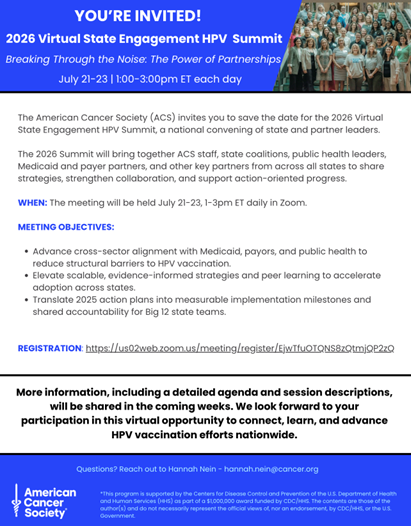
Register for the 2026 Virtual State Engagement HPV Summit organized by ACS on July 21-23 from 12:00-2:00 p.m. Central Time daily. The summit will be bring together ACS staff, state coalitions, public health leaders, Medicaid and payer partners, and other key partners from across all states to share strategies, strengthen collaboration, and support action‑oriented progress. |
| Register Here |
|
|
|
Back‑to‑School, Backed by Prevention: HPV Vaccine Highlights from Virginia Department of Health
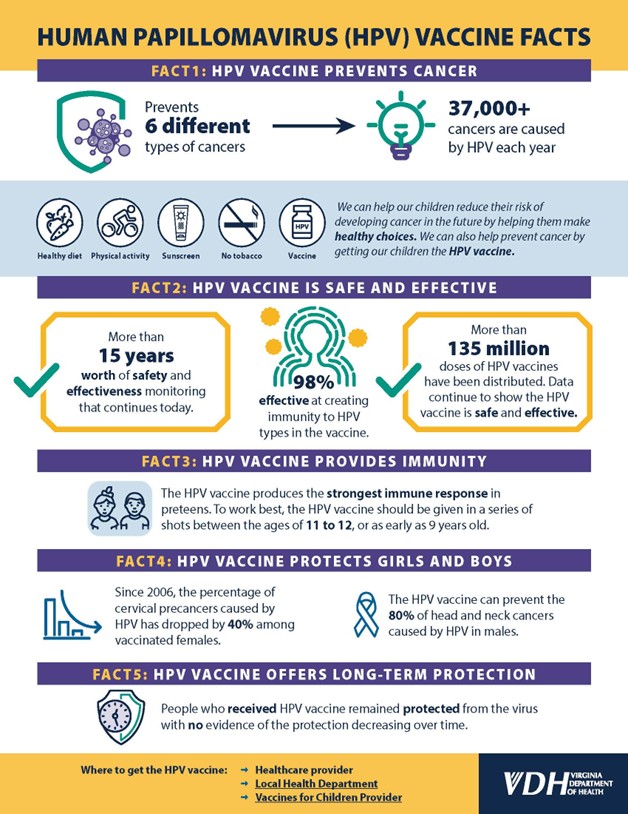
As summer approaches, the Virginia Department of Health (VDH) is encouraging families to complete school-required immunizations before the new school year. VDH Health Commissioner Dr. Cameron Webb signed letters to parents and guardians of rising kindergarteners, 7th graders, and 12th graders, reinforcing key back‑to‑school vaccination reminders. Notably, the letter to parents of rising 7th graders includes an infographic highlighting the HPV vaccine and its role in cancer prevention. This infographic, available in 11 languages, is part of VDH’s communication toolkit and can be shared by partners and the public to raise awareness of HPV vaccination. |
 |
|
|
|
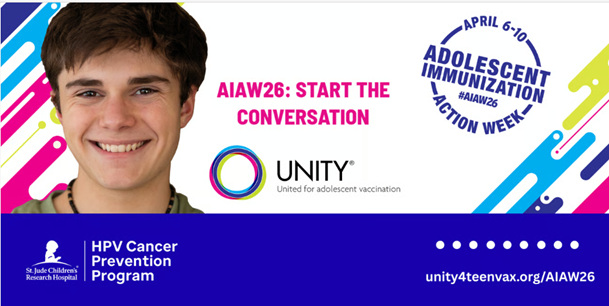
Empowering Prevention: Celebrating Adolescent Immunization Awareness Week 2026
Adolescent Immunization Action Week (AIAW) on April 6-10 highlighted the importance of preventive care and staying up to date on recommended vaccines, including HPV vaccination which starts at age 9. Throughout the week, the St. Jude HPV Cancer Prevention Program shared trusted information, encouraged well visits, and engaged youth and community partners in conversations about immunizations.
The week featured themed activities to inform and inspire action. “Speak Up for Your Health” included a young adult panel where vaccine advocates shared personal experiences and encouraged peer engagement. A discussion moderated by Chelsea Clinton, PhD “The New Coversation About Vaccines” emphasized the role of trusted voices in shaping health decisions. A special FACTSinnated podcast episode provided guidance for families, and a PSA video reinforced timely vaccination.
St. Jude HPV Cancer Prevention Program communications reached 3,764 partners, and newsletter content reached 3,757 individuals. Overall, AIAW 2026 strengthened partnerships and raised awareness about adolescent immunizations and cancer prevention. |
 |
|
|
|
VAX 2 STOP Cancer Annual Luncheon
The VAX 2 STOP CANCER annual luncheon was held on April 14 and highlighted the power of collective purpose, bringing together people from diverse backgrounds united in increasing HPV vaccination and reducing HPV cancers. The shared passion and expertise in the room underscored the importance of collaboration in driving meaningful change.
Keynote speaker Linda Eckert, MD, professor at the University of Washington and author of Enough: Because We Can Stop Cervical Cancer, delivered a compelling message about both the urgency of this work and the real possibility of eliminating cervical cancer through prevention and vaccination.
Attendees were also moved by Dani Odom, a cervical cancer survivor, whose personal story offered a powerful reminder of what is at stake and why this mission matters.
The event also honored Barbara Schuler, CEO and Executive Director, for her lasting impact as the founder and leader of VAX 2 STOP CANCER. Overall, the luncheon left attendees energized and focused on protecting lives through HPV vaccination. |
 |
|
|
|
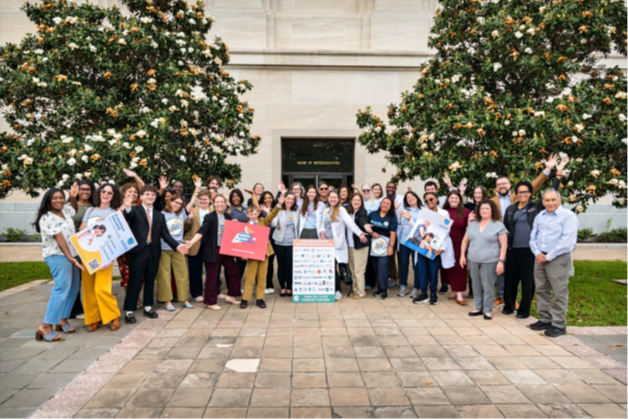
Louisiana Families for Vaccines Day of Action
Louisiana Families for Vaccines hosted its 5th annual Day of Action on April 21 at the State Capitol in Baton Rouge, uniting advocates from 48 organizations to support fact-based vaccine policy and public health protections. Participants included health care professionals, parents, students, grandparents, and disease survivors, reflecting broad community backing for immunizations. Ten partner organizations also participated in the Capitol rotunda.
Advocates celebrated a major legislative victory: the Louisiana House Education Committee’s bipartisan rejection of HB 737, which would have eliminated the meningococcal vaccine requirement for school entry. Meningitis survivor Jamie Schanbaum shared her story to underscore the importance of vaccine protection.
Attendees also urged opposition to pending bills, including HB 1041 and SB 29, which could undermine vaccine confidence. New April 2026 polling showed strong bipartisan support, with 80% of residents backing school vaccine requirements and two-thirds opposing efforts to remove them. |
 |
|
|
|
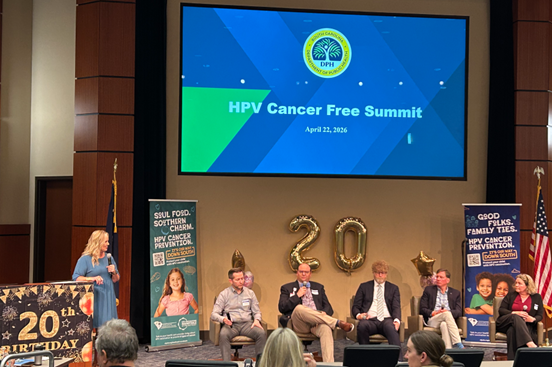
South Carolina Immunization Coalition Hosts HPV Cancer Free Summit
On April 22, the South Carolina Immunization Coalition hosted HPV Cancer Free: Celebrating 20 Years of HPV Immunizations, a day‑long summit highlighting progress, partnerships, and next steps in HPV cancer prevention across the state. The meeting featured updates on HPV vaccination coverage, and HPV‑associated cancers, survivor stories, clinical and community best practices, and innovative initiatives ranging from mobile vaccination to campus engagement. Breakout sessions and panels brought together providers, advocates, and partners to explore strategies for increasing vaccination rates, engaging diverse communities, elevating survivor voices, and advancing efforts towards a South Carolina cervical cancer elimination plan. |
 |
|
|
|
|
|
Team Question: 2006 Pop Quiz |
|
|
|
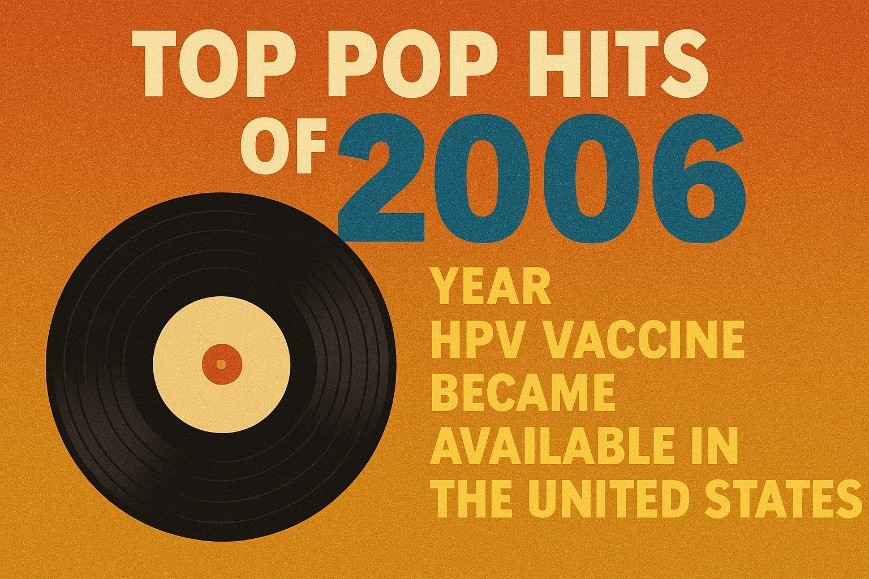
The HPV vaccine first became available in the United States on June 8, 2006.
In 2006, as radios played “Bad Day” and “You’re Beautiful,” a different kind of headline quietly changed the future. The HPV vaccine was announced, turning what once felt “Unwritten” into something certain: HPV cancer prevention was finally within reach. It sounded almost “Crazy,” that a simple series of shots could guard against six types of cancer—safe, effective, and built to last.
Teens and parents listened, hope rising like the “Temperature” in summer, realizing this was not just another passing trend like “Promiscuous” on the charts. This was protection that could “Save a Life.” Conversations replaced fear with possibility.
Amid the soundtrack of 2006, a quiet revolution took hold and continues today on the path to elimination. The HPV vaccine does not just prevent disease—it is rewriting futures. And while the world sang along to the hits of 2006, science delivered one of its own: a breakthrough that turned uncertainty into confidence, giving a generation more reasons to keep dancing forward.
Leading up to the 20-year anniversary of the HPV vaccine next month, St. Jude HPV Cancer Prevention Program team members share their favorite pop song from the year 2006.
“I chose “Put Your Records On” by Corinne Bailey Rae because its warm, uplifting tone reflects the importance of appreciating life’s simple joys and overall well-being. It serves as a reminder that through cancer prevention efforts like HPV vaccination, we can help more people enjoy longer, healthier lives filled with those meaningful everyday moments.”– Andrea Stubbs, administrative director
“’Unwritten’ was the soundtrack to a pivotal season of my life, circa 2006 – one marked by new independence and a growing sense of possibility. Its message about life as a blank page and having the courage to live authentically resonated deeply, reminding me to trust myself and embrace the unknown. I carry that spirit with me still and while the song celebrates writing your own story, the future does not have to be unwritten when it comes to preventing HPV cancers. Together, we’re penning an HPV cancer-free future.” – Nicole Williams, program coordinator
“I absolutely love this question because it brings back so many memories of my senior year! In the fall of 2006, “Walk It Out” by Unk had just come out, and it quickly became the soundtrack of our pep rallies. As a cheerleader, I remember the moment that song started playing, everyone in the gym would jump up, full of energy, and join in the dance. It didn’t matter where you were sitting; when that beat dropped, the whole school was “walking it out” together. Truly good times!” -- Portia Knowlton, program coordinator
“In 2006, I was in Nepal, and I remember a Nepali band, Abhaya and The Steam Engines, was very popular at that time. I liked their song “Ma Timro Lagi Sara Sansar.” It is a beautiful and deeply emotional Nepali song about unconditional love, devotion, and sacrifice. The singer expresses a willingness to give up everything, even the whole world, just to see their loved ones happy. I still listen to it, and it makes me feel good and brings back great memories.” – Pragya Gautam Poudel, postdoctoral fellow
“In 2006, I believe I’d just started gaining consciousness! Although this was the case, my parents have told me that I was a huge fan of all things Outkast, and I especially loved their 2006 smash hit song “Hey Ya!” – Keimirra Lewis, student intern
“In 2006, I was a sophomore in high school, and I remember feeling like I was basically growing up with Chris Brown. He had just started his musical career and was beginning to establish his legacy in the music industry (still going strong today). My favorites from 2006 were singles from his first album like “Run It!” and “Say Goodbye.” – Samantha Wells, program coordinator
“I normally don’t listen to pop music, but looking at the Top 100 pop songs from 2006, I’d pick “Gimme That” by Chris Brown” – Ursula Leflore, senior administrative coordinator
“If you know me, you know I love Beyoncé. Since she’s not considered “pop,” I’ll switch it up and give this shout‑out to Memphis’ own, Justin Timberlake featuring Beyoncé, “Until the End of Time.” I still play that song to this day, truly a timeless duet. And honestly, that entire Justin album had some great hits too, like “My Love” with T.I. and “What Goes Around… Comes Around.” Love those as well.” – Akeria Taylor, program coordinator
“I have such great memories from the year 2006, primarily listening to Radio Disney hits on my way to school. To this day, I still listen to lots of 2000s songs, and some of my favorites from 2006 are “Hips Don’t Lie” by Shakira and “SOS” by Rihanna.” – Maddy McNee, program coordinator
“I really liked a lot of songs from 2006, but I think “Irreplaceable” by Beyoncé will forever be stuck in my head.” – Julia Brown, program manager
“While I wanted to go with one of the best pop songs ever, which is “Hung Up” by Madonna, I found out it was released in 2005, so it is older than the HPV vaccine. I thought about “SOS” by Rihanna, “Irreplaceable” by Beyoncé (“to the left, to the left…” anyone), and “Moneymaker” by Ludacris (and Pharrell). I decided to go with “You’re Beautiful” by James Blunt. That is what I think about the HPV vaccination; it’s beautiful. It is beautiful that science brought us a safe, effective, and durable vaccination to prevent six types of cancer and other HPV conditions.” – Heather Brandt, senior director |
 |
|
|
|
|
|
Get Free St. Jude HPV Education Materials |
|
|
|
The St. Jude HPV Cancer Prevention Program has created a series of HPV fact sheets that emphasize basic information about HPV vaccination and include action steps to prevent HPV cancers. |
|
Four versions of the fact sheets target various audiences:
- General public
- Parents
- Health care providers
- Cancer patients and families
- College students
- Faith community
|
|
Select the versions in English or Spanish most appropriate for those you serve. Download the fact sheets or email PreventHPV@stjude.org to have copies mailed to you. |
| Find Materials |
|
|
|
|
|
About the HPV Cancer Prevention Program |
|
|
|
St. Jude Children's Research Hospital is leading the way the world understands, treats and cures childhood cancer and other life-threatening diseases. That’s why St. Jude is raising awareness on vaccination for human papillomavirus (HPV), which can prevent six types of cancer caused by the virus. As the only NCI-designated Comprehensive Cancer Center dedicated solely to children, St. Jude has an important role and responsibility in increasing the number of children who benefit from the HPV vaccination and reducing their risk of preventable cancers later in life.
On-time HPV vaccination provides safe, effective, and long-lasting protection against the most common types of HPV linked to cancers. HPV vaccination is routinely recommended at age 11 or 12 years and may be started at age 9. HPV vaccination is recommended for everyone ages 9-26. It’s not too late to catch up on HPV vaccination. People ages 27-45 are also strongly encouraged to talk with a health care provider to see if HPV vaccination is right for them.
HPV vaccination has been routinely recommended by health care professionals in the U.S. since 2006. Most children can receive an HPV vaccination at no cost, and it can be administered safely along with other routine vaccinations. With more than 500 million doses administered worldwide, HPV vaccinations are preventing new cases of cancer every day.
It’s not too late to help protect your child against HPV cancers later in life - learn more at stjude.org/PreventHPV and ask your doctor about HPV vaccination today. Email PreventHPV@stjude.org with any questions. |
|
|
 |
|
|
|
|