|
|
Oropharyngeal Cancers are the Most Common HPV Cancer |
|
|
Of the more than 100 types of HPV, about 40 types can spread through direct sexual contact to genital areas, as well as the mouth and throat. Oral HPV is transmitted to the mouth by oral sex, or possibly in other ways.
Many people are exposed to oral HPV in their life. About 10% of men and 4% of women have oral HPV, and oral HPV infection is more common with older age. Most people clear HPV within 1 to 2 years, but HPV infection persists in some people.
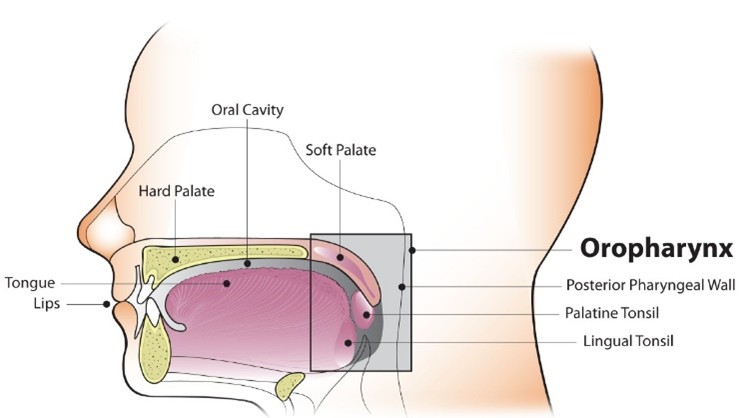
HPV can infect the mouth and throat. It usually takes years after being infected with HPV for cancers to develop in the oropharynx (back of the throat, including the base of the tongue and tonsils). This is called oropharyngeal cancer. HPV is thought to cause 70% of oropharyngeal cancers in the United States. Oropharyngeal caners are the most common type of HPV cancer in the U.S. surpassing cervical cancer several years ago. The majority of cases of oropharyngeal cancer caused by HPV occur among men (~85%).
HPV vaccination was originally developed to prevent cervical cancer. However, we know HPV vaccination protects against the types of HPV that can cause oropharyngeal cancers and may also prevent oropharyngeal cancers.
It is Adolescent Immunization Action Week (AIAW) from April 6-10. Be sure to check out the great resources provided by Unity Consortium to support adolescent vaccination during this week and throughout the year. Read our special communication about AIAW here.
If you have information to share in upcoming newsletters, please email us at PreventHPV@stjude.org.
HPV vaccination is cancer prevention.
|
|
|
|
|
|
|
|
Updates on the Current Vaccination Landscape |
|
|
There has been no Advisory Committee on Immunization
Practices (ACIP) meeting in 2026 following release of an updated vaccination schedule in January. In March, a U.S. District Judge Brian Murphy ruled (American Academy of Pediatrics v. Kennedy) Secretary Kennedy's ACIP panel violated federal law because members lacked vaccine expertise. Earlier this month, Secretary Kennedy released a new ACIP charter broadening panel membership criteria to allow more specialties and flexibility. HHS says charter renewal and publication are 'routine statutory requirements.' Implications of this latest development are pending.
New research has highlighted both progress and persistent gaps in the HPV vaccination landscape, emphasizing the critical role of early, equitable prevention strategies. A recent JAMA Pediatrics article reported that more than 20% of adolescents in a large Pennsylvania health system either did not start or complete the HPV vaccine series before sexual debut, despite clear CDC recommendations for vaccination at ages 11–12. Delayed decision making and vaccine hesitancy—particularly among insured and white adolescents—remain notable barriers, even in
settings with generally high coverage. Encouragingly, emerging evidence suggests that initiating HPV vaccination earlier, including at age 9, does not increase vaccine hesitancy and may improve on-time completion rates.
Long-term effectiveness data continue to strengthen the case for HPV vaccination, according to a recently published article in BMJ. A Swedish cohort study with 18 years of follow up confirms sustained protection against cervical cancer among vaccinated individuals, reinforcing HPV vaccination as a cornerstone of cancer prevention. Other research underscores the importance of integrated approaches, showing that low-income women experience the greatest protection when HPV vaccination is paired with regular cervical cancer screening.
Finally, innovative delivery models are gaining attention. A pilot study published in the Journal of the American Pharmacy Association examining pharmacy-based HPV vaccination found that targeted communication training can enhance pharmacist confidence and improve patient engagement, pointing to pharmacies as an underused access point for prevention. Collectively, these findings underscore the need to address structural barriers, normalize early vaccination, and expand trusted access points to ensure the lifesaving benefits of HPV prevention reach all
populations.
|
|
|
Check out the Unbiased Science podcast with Jessica Steier, DrPH, PMP and Sarah Scheinman,
PhD who debunk health science myths and break down complex topics, including vaccines.
|
| Access the Podcast
|
|
|
Learn More about the Current Vaccination Landscape |
|
|
|
|
|
|
|
Things Older than HPV Vaccination:
Hannah Montana |
|
|
Ever dreamed of living a double life as a teenage pop star? Us, too.
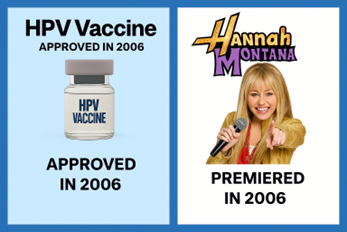
You might remember, Hannah Montana, a popular sitcom that first aired on Disney Channel on March 24, 2006, just a few months before the HPV vaccine was approved in the U.S. in June 2026. The show was based on the life of an average teenage girl, Miley Stewart, who was juggling all the things normal teenagers do, but she also happened to be the famous pop singer, Hannah Montanna, which complicated things a little for Miley. On March 24, 2026, fans celebrated the successful sitcom with a Hannah Montana 20th Anniversary Special and even a pop star refresher at Starbucks. Imagine making that kind of lasting impression on children, and eventually adults. Well, HPV vaccination does that every day by offering long lasting protection against HPV
cancers. As we continue to prioritize the elimination of HPV cancers, starting with cervical cancer, as a public health concern, choosing HPV vaccination really gives us the best of both worlds – lasting protection against HPV and fewer HPV cancers.
|
 |
|
|
|
|
|
Head and Neck Cancer Awareness Month |
|
|
April is recognized as Head and Neck Cancer Awareness Month—a time to raise
awareness about cancers that develop in the mouth, throat, and related structures, many of which are preventable through HPV vaccination. HPV is responsible for about 70% of oropharyngeal (throat) cancers, highlighting the critical role of prevention through vaccination and education. We are uplifting the importance of early recognition of symptoms—such as persistent sore throat, difficulty swallowing, or unexplained lumps—and encouraging timely medical evaluation.
|
|
|
|
|
|
|
|
Adolescent Immunization Action Week, April 6-10 |
|
|
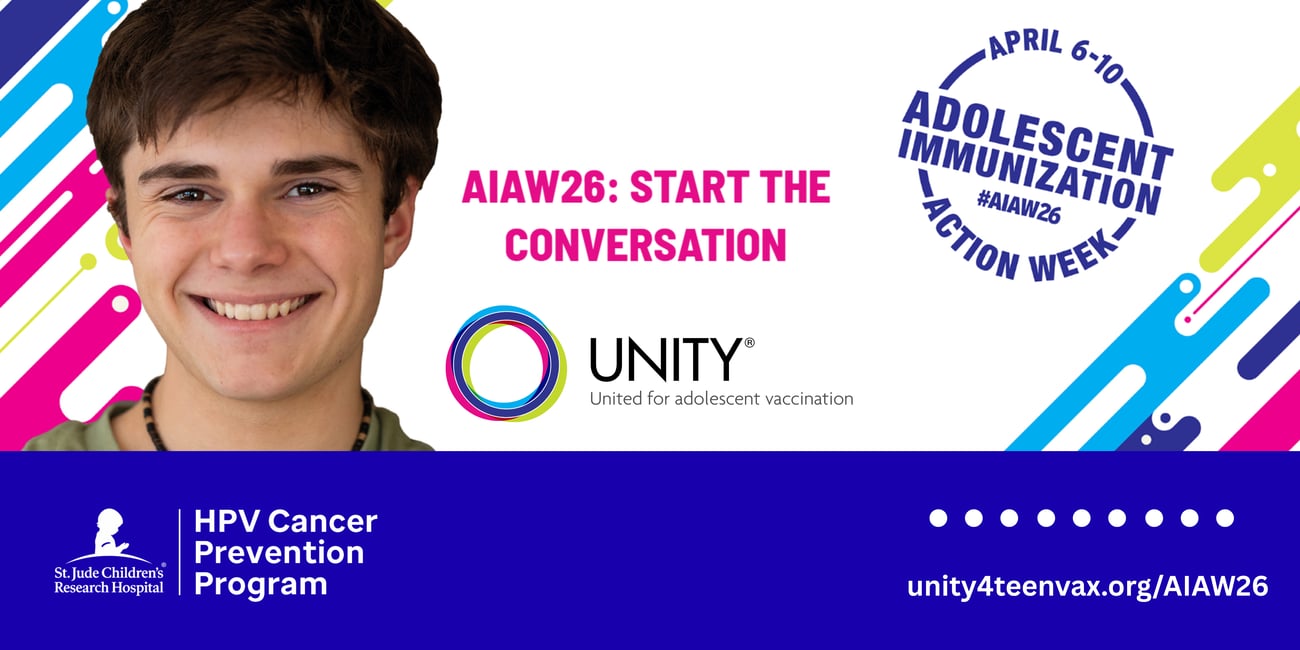
The St. Jude HPV Cancer Prevention Program is proud to support Adolescent Immunization Action Week (AIAW) from April 6–10 as a member of the Unity Consortium and event sponsor. This national week of action highlights the importance of adolescent well visits and staying up-to-date on recommended vaccinations, including the HPV vaccine starting at age 9.
Partners are encouraged to use Unity’s AIAW 2026 toolkit to share consistent, evidence-based messages that promote timely vaccination and help protect adolescents from HPV-related cancers.
We invite you to explore our special communication that outlines how you can participate.
|
|
|
|
|
|
Improving Rural HPV Vaccination Coverage |
|
|
Rural HPV Vaccination Duet Communication Series with American Cancer Society |
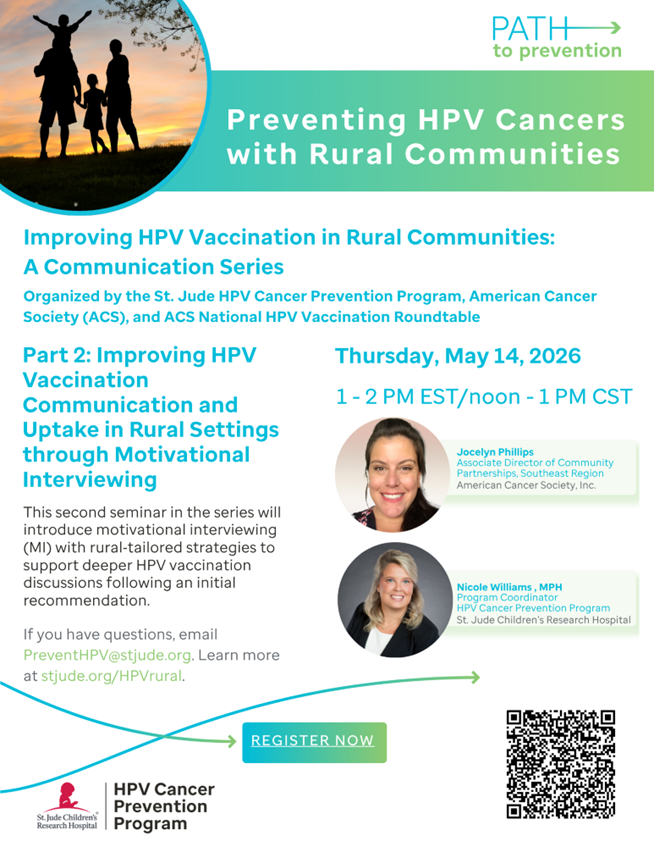
On May 13-14, the St. Jude HPV Cancer Prevention Program, American Cancer Society (ACS), and ACS National HPV Vaccination Roundtable are partnering to deliver Improving HPV Vaccination in Rural Communities: A Communication Series, a two‑part virtual series designed to build provider capacity and improve HPV vaccination conversations with rural communities.
Attend both sessions to gain a powerful communication toolkit—the Announcement Approach to deliver clear, confident HPV vaccination recommendations and Motivational Interviewing to navigate hesitation with empathy and skill. Participants will leave with rural‑relevant communication approaches they can apply immediately to support increased HPV vaccination uptake.
Part 1 will take place during the ACS Rural HPV Learning Community on May 13 and will feature an overview of the Announcement Approach (AAT), which is an evidence‑based communication strategy developed to increase HPV vaccination coverage by guiding clinicians to make clear, confident, and routine vaccination recommendations, and a fireside chat on implementing AAT in rural settings, engaging rural families, and adapting the approach to local practice realities.
|
 |
| Register Here
|
Part 2 will take place during the St. Jude Rural HPV Vaccination Quarterly Updates Meeting on May 14 and will focus on motivational interviewing (MI), which is a conversational approach that helps clinicians navigate hesitancy and ambivalence through empathy and shared decision‑making. Participants will learn how MI strengthens provider confidence, supports patient autonomy, and complements the Announcement Approach by offering tools for “what to do next” when parents or caregivers hesitate.
|
|
| Register Here
|
American Cancer Society’s (ACS) Rural HPV Learning Community Website Has Moved
The ACS Rural HPV Learning Community has a new home! As part of ACS’s 2026 updates, the program’s landing page has transitioned to cancer.org under the newly created Accelerating Research to Care Network: Knowledge Translation section. This move brings all knowledge translation programs together in one place—making it easier to explore sessions, access materials, and
discover new learning opportunities.
On the new landing page, you’ll still find everything you rely on from the Rural HPV Learning Community, including:
· Program overview
· Registration link
· Learning materials library
· Curated Resource Roundup
· Rural Learning Community playlist
The previous Rural HPV Vaccination Learning Community page will be decommissioned on April 3, so be sure to update any saved links.
|
|
|
|
|
|
Wide Open Spaces: Supporting HPV Vaccination with Rural Communities |
|
|
Improving HPV Vaccination Rates in Rural West Virginia through the HPV Dental Integration Pilot Project |
West Virginia faces some of the nation’s highest HPV cancer rates and lowest HPV vaccination completion rates, driven by rural access barriers, provider shortages, and widespread vaccine misinformation. To address these challenges, Mountains of Hope partnered with the West Virginia Oral Health Coalition, West Virginia Dental Hygienists’ Association, and a local federally qualified health center, Community Care of West Virginia, to launch the HPV Dental Integration Pilot Project. Through education and a new dental‑to‑medical referral workflow, Community Care of West Virginia’s dental clinic has educated 34 eligible
patients and helped 10 begin HPV vaccination. Building on early success, Mountains of Hope and partners are also exploring policy changes to allow HPV vaccination in dental clinics.
|
| Read the Full Article
|
About the Author: Lauren Wright, DSL, MPH, serves as program director of the CDC-funded West Virginia Comprehensive Cancer Control Program and the Facilitator of West Virginia's cancer coalition, Mountains of Hope, through the West Virginia University Cancer Institute. Wright received her Master of Public Health from West Virginia University in 2018 and her Doctor of Strategic Leadership from Liberty University in 2023. Wright has worked in the public health field since 2017, focusing on a variety of evidence-based interventions, policy, system, and environmental change, best practices, and social determinants
of health work within both healthcare and academic spaces. She is a proud West Virginian with a passion for providing access to high-quality care to her fellow West Virginians, especially within the cancer space.
|
|
|
Do you have a story about HPV cancer prevention efforts with rural communities? We invite guest contributors to share information on how they are working to improve HPV vaccination in rural areas through the Wide Open Spaces article series, which is promoted in our monthly Path to Prevention newsletter, featured in our quarterly rural HPV vaccination newsletter, and posted on stjude.org/HPVrural. If you are interested in contributing to
or learning more about our efforts to improve HPV vaccination with rural communities, please email us at PreventHPV@stjude.org.
|
|
|
|
HPV Vaccination Roundtable of the Southeast |
|
|
Southeast Roundtable 2026 In-Person Annual Meeting Recap
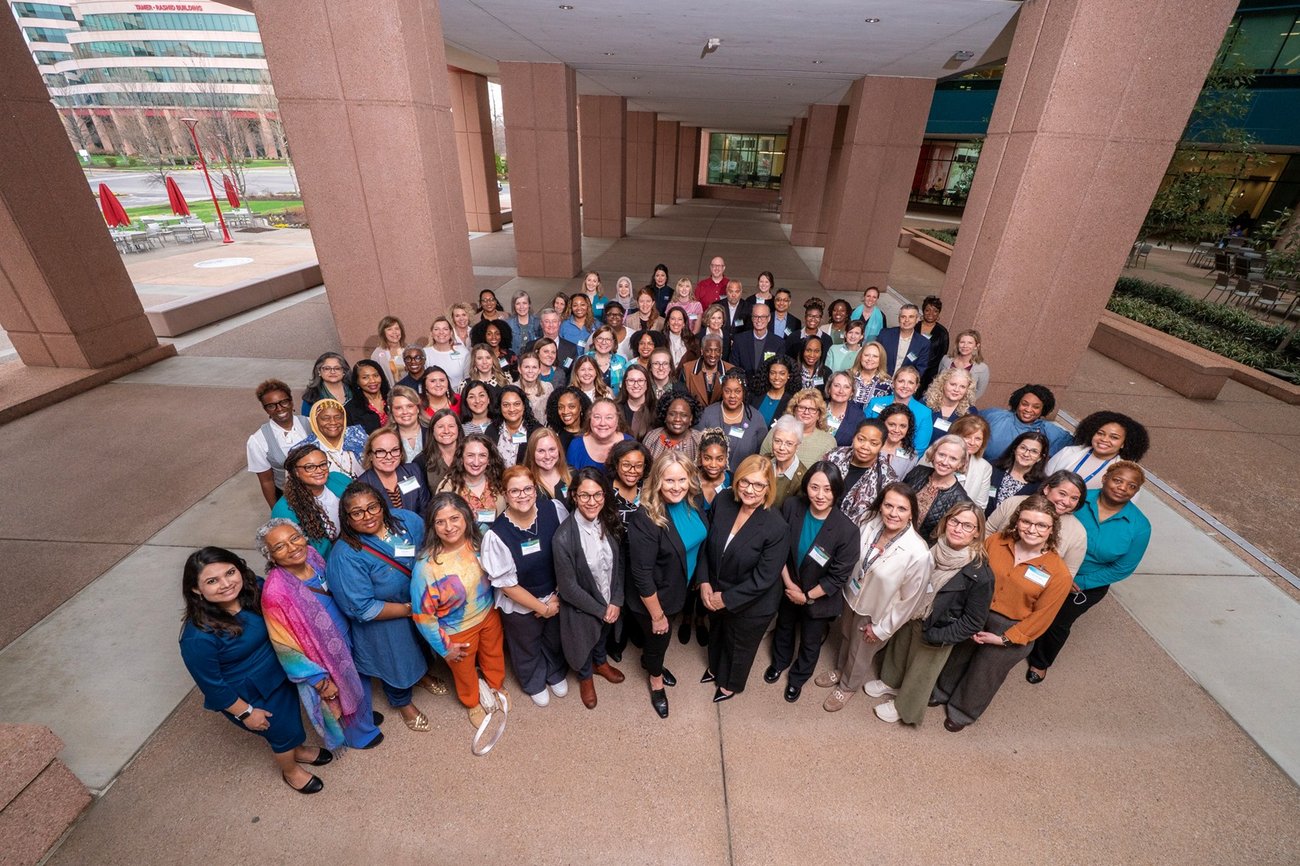
The HPV Vaccination Roundtable of the Southeast convened its 2026 In-Person Annual Meeting on March 9-10 in Memphis, Tennessee. Hosted on the campus of St. Jude Children’s Research Hospital, the meeting brought together 86 multidisciplinary partners from across the region. Attendees included representatives from public health agencies, health care systems, NCI-designated cancer centers, academic institutions, and national organizations committed to advancing HPV vaccination and cancer prevention.
The primary objective of the Southeast Roundtable 2026 In-Person Annual Meeting was to revisit and refine the three priority action areas established in 2024, including:
- Develop and implement a communication campaign and messages for the Southeastern region
- Develop and disseminate a plan for HPV cancer elimination in the Southeast, beginning with cervical cancer as a public health problem
- Accelerate efforts to start HPV vaccination at age 9 and other best practices
Meeting attendees also had the opportunity to strengthen state- and jurisdiction-level, as well as regional, collaboration and develop actionable strategies to increase HPV vaccination coverage. Through a combination of presentations, interactive exercises, strategic planning sessions, and a little “March Madness,” participants worked collectively to identify opportunities for impact and align on next steps.
As the Southeast Roundtable continues to spring into action following the 2026 In-Person Annual Meeting, all members are invited to join us for two post-meeting sessions on April 21 and May 19 from 2 to 3 p.m. Central Time. These gatherings will help us nurture the ideas planted during the annual meeting and keep our momentum growing.
Please join us as we cultivate next steps together.
|
 |
|
|
|
|
|
|
|
|
|
Memphis and Shelby County HPV Cancer Prevention Roundtable |
|
|
The Memphis
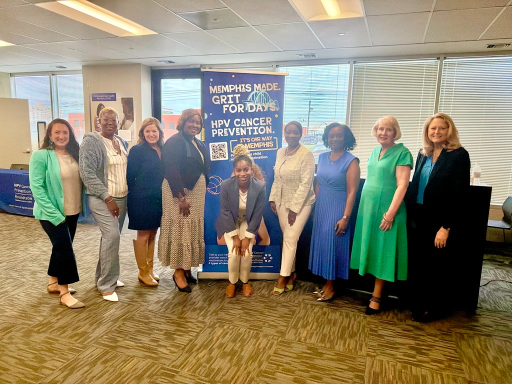
Roundtable hosted its 2026 Mid‑Year Meeting on March 24, bringing together partners for a morning of collaboration and shared learning. The convening brought together nearly 50 attendees, reflecting our community’s continued commitment to advancing HPV cancer prevention across Memphis and Shelby County, Tennessee.
This year’s keynote address was delivered by Deanna Kepka, PhD, MPH, of the University of Utah’s College of Nursing and Huntsman Cancer Institute. Dr. Kepka—founder and leader of the 500‑member Mountain West HPV Vaccination Coalition and Director of Global and International Health—shared insights on national and global progress toward eliminating cervical cancer and other HPV cancers. Her presentation highlighted emerging strategies, current momentum, and the collective efforts needed to continue driving vaccination coverage forward.
The meeting also featured an incredible data presentation from Caitlin Newhouse, MD, Medical Director of the Vaccine‑Preventable Diseases and Immunization Program at the Tennessee Department of Health, highlighting recent HPV vaccination trends across Tennessee, Memphis, and Shelby County. Her update underscored encouraging local progress, with HPV vaccination coverage among youth ages 11–17 in Memphis and Shelby County rising to 48.2%—an increase of nearly seven percent from March 2025. These gains reflect the collective efforts of partners across the community and reinforce the momentum driving our shared prevention goals.
The interactive meeting also provided space for Memphis Roundtable members and partners to discuss next steps to strengthen local HPV cancer prevention initiatives, foster cross-sector collaboration, and to map out priorities for the remainder of 2026.
|
|
|
 |
To learn more, visit the Memphis and Shelby County HPV Cancer Prevention Program website. Join us as a member of the Memphis Roundtable to receive the latest information. Read the latest Memphis Roundtable monthly communication here.
|
|
|
|
|
|
|
|
Survivor Proud: Improving HPV Vaccination Coverage among Childhood Cancer Survivors |
|
|
Survivor Proud: Empowering Families Through Prevention and Hope |
Emily Browne DNP, Director of the Transition Oncology Program at St. Jude Children’s Research Hospital, shared insights on the Survivor Proud initiative, which focuses on promoting HPV vaccination to childhood cancer survivors to prevent subsequent neoplasms caused by HPV in adulthood.
Browne described Survivor Proud as a reflection of resilience, accomplishment, and a commitment to future health. It honors the strength required to overcome cancer while emphasizing the importance of ongoing care. As she explained, it is about recognizing what you have been through and taking proactive steps—like HPV vaccination—to reduce the risk of future cancers.
For parents facing their child’s cancer diagnosis, much can feel out of their control. HPV vaccination offers something tangible they can do to protect their child long-term. “Parents want to do everything possible,” Browne noted, emphasizing that prevention—even decades later—can provide a powerful sense of control.
These conversations begin before treatment ends, as families prepare to transition back to primary care. While vaccine discussions may not happen all at once, they are revisited over time. Browne emphasized the importance of early, consistent communication and gentle reminders during what can be a busy and emotional period.
By reinforcing this message, providers help families understand that preventive care, including HPV vaccination, is a vital part of survivorship.
With more than 23 years at St. Jude, Browne brings both expertise and passion to her work. She also shared a fun fact—she is undefeated in every hula hoop contest in which she has entered.
|
 |
|
|
|
|
|
Partners on the Path to Prevention |
|
|
Badge of Honor: Greg’s Journey Through Head and Neck Cancer |
|
|
Greg Tacker never expected his life to change so sharply in June 2020, when the proud husband, father of three boys, Delta State graduate, and former police officer heard the words: HPV-related squamous cell carcinoma. What followed was a fight marked by grit and grace — eight surgeries, months of treatment, and a radical neck dissection in January 2022.
Through it all, Greg held tightly to the reasons he refused to give up: his wife, his sons, and the future he still planned to see with them. A lifelong music lover, Greg found strength in rhythm even when surgery changed his voice.
|
|
|
At home, his loyal dogs Maggie and Neli — his explosive-detection K-9 — stayed faithfully by his side, reminding him daily that he
still had so much to live for.
His greatest motivation came from two small but powerful anchors, his youngest boys who were then just 9 and 14. “They’re not growing up without their dad,” he vowed — and he fought like it.
Today, Greg stands not only as a survivor but as a symbol of resilience. “Surviving this ordeal has become my badge of honor”, Greg stated.
This April, we honor Greg — and all who face head and neck cancers with courage, hope, and unshaken determination.
|
|
|
|
|
Turning Checkups into Change: Fighting HPV Cancers One Visit at a Time in Mississippi |
The Mississippi State Department of Health (MSDH) has been at the center of statewide HPV cancer prevention efforts, partnering with academic institutions, community organizations, and clinical leaders to strengthen education, outreach, and policy strategies. A key example of this work was published in the Journal of Mississippi Academy of Sciences article Opening New Pathways to HPV Cancer Prevention through Changes in Practice, Policy, and Partnerships, co-authored by MSDH and collaborators. The article can be found here and highlights the burden of HPV-associated cancers in the state and outlines strategies to increase awareness and uptake of HPV prevention, including engaging dental providers alongside medical and community partners to broaden prevention efforts.
Along with these statewide priorities, dentists and dental professionals across Mississippi are incorporating HPV discussions into routine care and are now authorized to administer the HPV vaccination. The widens access to help close the gaps in HPV vaccination uptake. These collaborative, practice-level efforts reflect MSDH’s vision of integrating oral health into broader cancer prevention pathways and advancing equitable prevention for the future. Through its leadership, providers across the state, like Angela Barnes Filzen, DDS, with G.A. Carmichael Family Health Center, have been able to play an important role in advancing these efforts at the community level. The MSDH’s approach emphasizes prevention as part of everyday patient interactions,
supporting broader efforts to increase awareness and early intervention across the state through a team-based model aligned with the MSDH strategy of leveraging multiple healthcare touchpoints to improve outcomes.
|
 |
|
|
|
|
Partner Activities and Updates |
|
|
ACS Rural HPV Learning Community,
April 8
|
|
|
Registration for the 2026 Rural HPV Learning Community
is now open. In addition to covering HPV vaccination topics, sessions will explore cancer screening best practices to help rural partners strengthen prevention efforts in their clinics and communities. The next session will be April 8.
|
| Register Here
|
Stories on Vaccines for Congress, April 10
|
Senate Minority Leader Charles ("Chuck") Schumer's office has asked for assistance in collecting stories on four specific topics related to vaccines. They are looking for stories from providers, public health, scientific experts, patients and others. These are meant to be short stories--ready-made to read on the floor of the Senate, or in a committee hearing--so a short paragraph will do. They are also interested in collecting these stories by state and Congressional district. Submit updates by April 10.
|
| Learn More
|
|
|
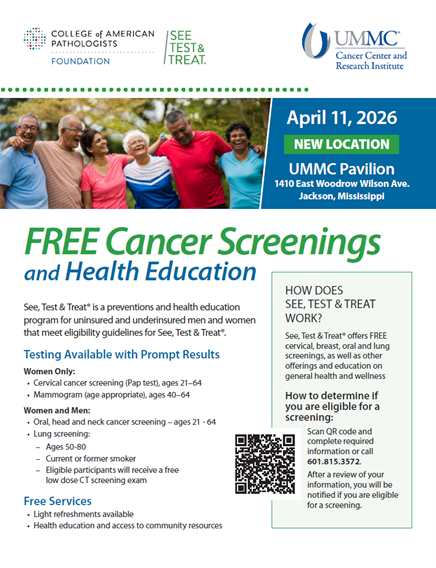
Free Cancer Screenings and Health Education in Mississippi, April 11
|
|
|
The University of Mississippi Medical Center will host a free cancer screening event on April in Jackson, Mississippi. Screenings will be supported by vendors and community partners who will provide education and helpful resources to participants while they wait for their results. HPV screening will be conducted during Pap testing, and ENT providers will perform visual screenings. Participants will receive their Pap test and mammogram results the same day. HPV results will be available within one week. Appointments are required; call 601-815-3572 to register.
|
|
|
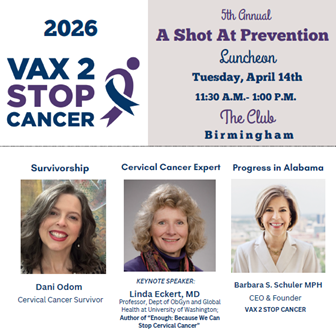
VAX 2 STOP CANCER Luncheon, April 14
|
|
|
Attend the VAX 2 STOP CANCER Fifth Annual “A Shot at Prevention” Luncheon on April 14 at 11:30 a.m. Central Time in Birmingham, Alabama. The keynote speaker will be Linda Eckert, MD. Dr. Eckert is a Professor in the Department of Obstetrics and Gynecology and the Department of Global Health at the University of Washington, and author of Enough: Because We Can Stop Cervical Cancer. This impactful event will also feature Dani Odom, cervical cancer survivor sharing her survivorship story and Barbara S. Schuler, MPH, CEO and founder of VAX 2 STOP CANCER highlighting progress in Alabama
|
|
|
2026 Tennessee Immunization Provider Expo (Virtual), April 14
|
|
|
Tennessee Department of Health’s Vaccine-Preventable Diseases and Immunization Program (VPDIP) will hold the 4th Annual Immunization Provider Expo on April 14 from 8 a.m. to 12 p.m. Central Time followed by an optional VFC training session from 1 p.m. to 3 p.m. Central Time. The VFC training qualifies for annual VFC education credit. This year’s theme, “Restoring Trust in Vaccines”, highlights how emotional storytelling, community engagement, and data-driven insights can help rebuild public confidence in immunizations. Participants who attend the Expo will be eligible for nursing contact hours.
|
| View the Agenda Here
|
|
|
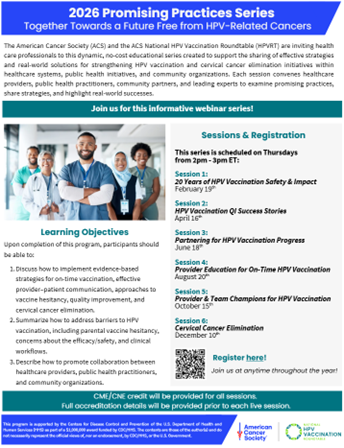
2026 Promising Practices Series,
April 16
|
|
|
Continuing the 2026 Promising Practices Series: Together Towards a Future Free from HPV-Related Cancers, the American Cancer Society (ACS) and the ACS National HPV Vaccination Roundtable (HPVRT) are hosting their second session of this webinar series, “HPV Vaccination QI Success Stories,” on April 16 from 1 to 2 p.m. Central Time. This free, one-hour webinar will spotlight real-world quality improvement (QI) strategies that have successfully increased HPV vaccination rates across healthcare and community settings. The session
will focus on practical, scalable approaches to improving vaccination workflows, addressing common implementation challenges, and using data to drive improvement. It is designed for healthcare providers, public health professionals, health systems, immunization programs, and community-based organizations involved in cancer prevention and adolescent vaccination efforts. CME/CNE credit will be available.
|
|
|
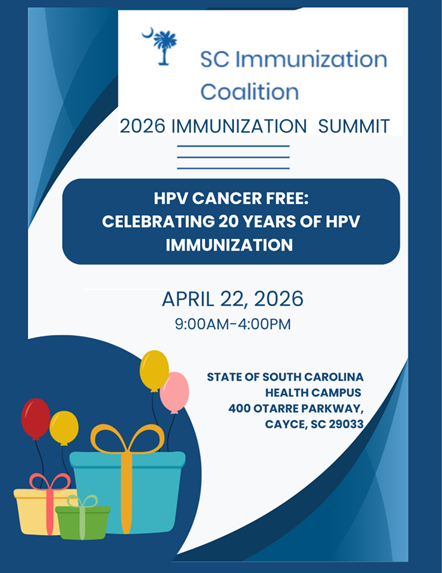
South Carolina Immunization
Coalition to Host 2026 Immunization Summit Celebrating 20 Years of HPV Vaccination, April 22
|
|
|
The South Carolina Immunization Coalition will host the 2026 Immunization Summit, “HPV Cancer Free: Celebrating 20 Years of HPV Immunization” on April 22 in Cayce, South Carolina. This year’s event recognizes two decades of progress since the introduction of the HPV vaccine and will bring partners together to recognize progress and highlight opportunities to continue reducing HPV cancers in South Carolina.
|
|
|
Southeast Roundtable Start at Age 9 and Other Best Practices Quarterly Case Study Meeting, April 30
|
|
|
Join us on April 30 from 1 to 2:15 p.m. Central Time for the next Quarterly Case Study Meeting. In recognition of National Oral Health Month, our April session will feature Angela F. Barnes, Filzen, D.D.S., a Mississippi-based General Dentist
with Innovative Consulting & Training Solutions, LLC. She is the co-author of Opening New Pathways to HPV Cancer Prevention through Changes in Practice, Policy, and Partnerships, published in the Journal of Mississippi Academy of Sciences.
|
| Register Here
|
|
|
|
|
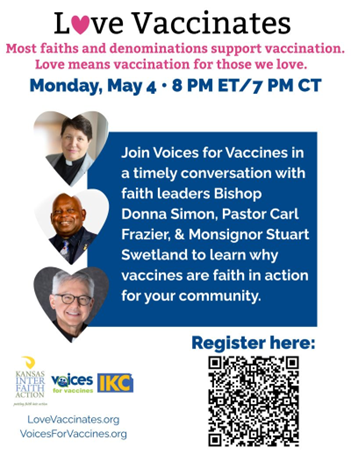
Join Voices for Vaccines, Kansas Interfaith Action, and Immunize Kansas Coalition on May 4 at 7 p.m. Central Time for Love Vaccinates, a timely webinar exploring vaccination
as an expression of faith and care for community. Faith leaders Monsignor Stuart Swetland, Bishop Donna Simon, and Pastor Carl Frazier will share why many religious traditions support vaccination—especially as declining vaccination rates and outbreaks of measles and other preventable diseases continue to rise. Learn how faith communities can play a powerful role in protecting public health.
|
|
|
Immunize Arkansas HPV Summit, May 8
|
|
|
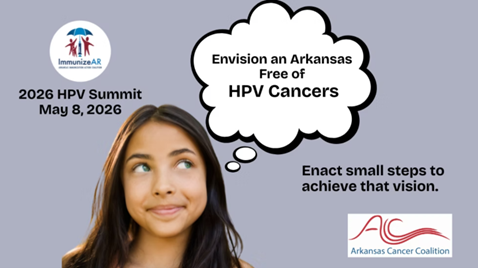
Immunize Arkansas will host its annual HPV Summit on May 8 from 8:00 a.m. to 4:30 p.m. Central Time. The meeting will highlight strategies to turn HPV prevention into cancer elimination by strengthening the connection between HPV and cancer, equipping providers with tools to discuss the benefits of the HPV vaccine, and sharing best practices to increase HPV immunization rates.
|
|
|
Winston-Salem State University
Cancer Prevention Symposium
|
|
|
Winston‑Salem State University (WSSU) hosted its Bridging the Gaps in Cancer Screening & Prevention Symposium on March 26-27, bringing together national leaders and community partners to address cancer disparities. Our program was honored to be given the opportunity to speak at the symposium with Maddy McNee, MPH, program coordinator, presenting an “HPV 101” session, sharing foundational information on HPV, HPV vaccination and cancer data, along with updates on initiatives of the HPV Vaccination Roundtable of the Southeast to
advance prevention across the region. Organized by WSSU’s Rams Cancer Network Center, the symposium emphasized strategies to expand equitable access to prevention and early detection—providing a meaningful platform to elevate HPV vaccination as a key tool in reducing cancer disparities.
|
|
|
|
|
|
|
Welcome St. Jude HPV Cancer Prevention Program Student Intern, Keimirra Lewis |
Keimirra Lewis is an MPH student in biostatistics and epidemiology at the University of Southern Mississippi and a native of Hattiesburg, Mississippi. She earned her B.S. in Public Health from the University of Southern Mississippi and has engaged in research addressing public health challenges, including work as a Mississippi Health INBRE Scholar, McNair Scholar, and USM Honors Scholar.
Keimirra is currently a student intern in the St. Jude HPV Cancer Prevention Program and a fellow in the Mississippi Emerging Evaluators Fellowship, where she is developing skills in evaluating social programs. Her research interests focus on health equity, mental health, and data-driven public health interventions, and she aspires to earn a doctorate in biostatistics and pursue a career in academia.
|
 |
|
|
|
|
Team Question: National Minority Health Month |
|
|
April is recognized as National Minority Health Month, a time to raise awareness about
differences in health outcomes and the importance of advancing health equity in the communities we serve. As spring brings a season of renewal, it also offers an opportunity to recommit to prevention—especially through increasing access to life-saving interventions like HPV vaccination. This month, we highlight the voices and experiences of those working to ensure equitable access to cancer prevention resources for all populations, inviting team members to share how they are planting the seeds of awareness, education, and the role they play in their communities to support healthier futures. This builds on the groundbreaking research and discourse pioneered by Camara Jones, MD, PhD, MPH in The Gardener’s Tale.
|
 |
“This time of year is a meaningful reminder for me to focus on prevention. Every April, I encourage people within my reach to prioritize their health by scheduling annual physicals and routine checkups, like dental and eye exams, and I also highlight the importance of HPV vaccination in preventing cancer—something many people still don’t realize. These small actions are my way of contributing to healthier communities and longer, healthier lives.” – Andrea Stubbs, administrative director
“I aim to be both a gardener and a bridge – planting evidence-based, culturally responsive information and connecting communities with resources to choose HPV vaccination with confidence. By meeting communities where they are, I also strive to be a steady source of sunlight – nurturing the trust and awareness necessary for HPV cancer prevention to take root and reach those too often left in the shadows.” – Nicole Williams, program coordinator
“Every morning begins with a prayer—that God allows my light to shine in all that I do and that I may be a positive influence to anyone I encounter. Through education and awareness, I’m grateful for the opportunity to share that HPV vaccination is cancer prevention. It’s more than information—it’s impact. I look forward to continuing to be used for a greater purpose, to shine that light, and to help others see, understand, and take steps toward protecting their health.” – Portia Knowlton, program coordinator
“I enjoy supporting efforts that improve education and awareness about HPV vaccination, particularly among vulnerable populations, including childhood cancer survivors. Through my research, I aim to identify barriers to HPV vaccination and inform strategies that improve uptake. In addition to generating evidence through research, I also support translating the evidence into practice, helping to ensure that prevention efforts reach all populations and ultimately contribute to healthier communities. – Pragya Gautam Poudel, postdoctoral fellow
“I see my role in the larger ecosystem of our communities as the rain in which I support the conditions needed for growth and change in HPV cancer prevention. Whether I’m assisting with research, outreach, or communication, I strive to contribute to efforts that increase awareness of HPV vaccination and improve access to prevention resources.” – Keimirra Lewis, student intern
“I strive to plant the seeds of awareness, education, and my role within the community each day. As an African American woman growing up in the South, I see myself as both a gardener and a vessel, called to plant seeds of awareness and education within my community. I try to intentionally weave conversations about prevention, health equity, and HPV vaccination into everyday moments.” – Samantha Wells, program coordinator
“I plant seeds by having conversations and sharing information with people in my community.” – Ursula Leflore, senior administrative coordinator
“I see myself as both a gardener and the rain—planting seeds of knowledge while helping remove barriers that prevent communities from access to proper health care. By supporting education, trust, and equitable access, I’m helping nurture healthier futures where cancer prevention is possible for everyone.” – Akeria Taylor, program coordinator
“I see my role as the rain and the gardener—helping grow essential conversations with partners and planting seeds where awareness may not yet exist. I also strive to be the sunshine, uplifting communities by sharing the hopeful truth that HPV-related cancers are preventable through on-time vaccination, and that equitable access to prevention can transform futures.” – Maddy McNee, program coordinator
“I really enjoy being able to contribute to many roles, but the role I want to highlight is that of landscaper. As a landscaper, I get to shape and design the landscape of our work through strategy. This matters for determining which communities we reach, how we reach them, and the meaningful impact of that reach.” – Julia Brown, program manager
“HPV vaccination is one powerful example of how early intervention prevents cancer, yet awareness and access remain uneven. Dr. Camara Jones’s The Gardener’s Tale reminds us that outcomes depend on the environments we create. Through education, collaboration, implementation, and intentional outreach, I aim to build and support healthier environments where every person and every community has the opportunity to thrive.” – Heather Brandt, senior director
|
|
|
|
|
|
Get Free St. Jude HPV Education Materials |
|
|
The St. Jude HPV Cancer Prevention
Program has created a series of HPV fact sheets that emphasize basic information about HPV vaccination and include action steps to prevent HPV cancers.
|
Four versions of the fact sheets target various audiences:
- General public
- Parents
- Health care providers
- Cancer patients and families
- College students
- Faith community
|
Select the versions in English or Spanish most appropriate for those you serve. Download the fact sheets or email PreventHPV@stjude.org to have copies mailed to you.
|
| Find More Materials
|
|
|
|
|
|
About the HPV Cancer Prevention Program |
|
|
St. Jude Children's Research Hospital
is leading the way the world understands, treats and cures childhood cancer and other life-threatening diseases. That’s why St. Jude is raising awareness on HPV vaccination, which can prevent six types of cancer caused by the virus. As the only NCI-designated Comprehensive Cancer Center dedicated solely to children, St. Jude has an important role and responsibility in increasing the number of children who benefit from HPV vaccination and reduce their risk of preventable cancers later in life.
The St. Jude HPV Cancer Prevention Program envisions a world free of HPV cancers. Through education, promoting best practice models, and strategic partner engagement, its mission is to increase on-time HPV vaccination. On-time HPV vaccination by the 13th birthday provides safe, effective, and long-lasting protection against the most common types of HPV linked to cancers.
Learn more at stjude.org/HPV. Email PreventHPV@stjude.org with any questions.
|
|
|
|
|
|
|