Improving Rural HPV Vaccination Coverage |
|
|
|
In this quarterly communication about our efforts to improve HPV vaccination with rural communities in the United States, we highlight the following: |
-
Upcoming virtual Rural HPV Vaccination Quarterly Updates and Opportunities Meeting on February 19, featuring Heather Brandt, PhD, Director, HPV Cancer Prevention Program, St. Jude Children’s Research Hospital and Ashley Lach, MHA, CPHQ, Program Manager, Knowledge Translation, American Cancer Society. Register here.
-
New HPV Vaccination Resources for Rural Action
-
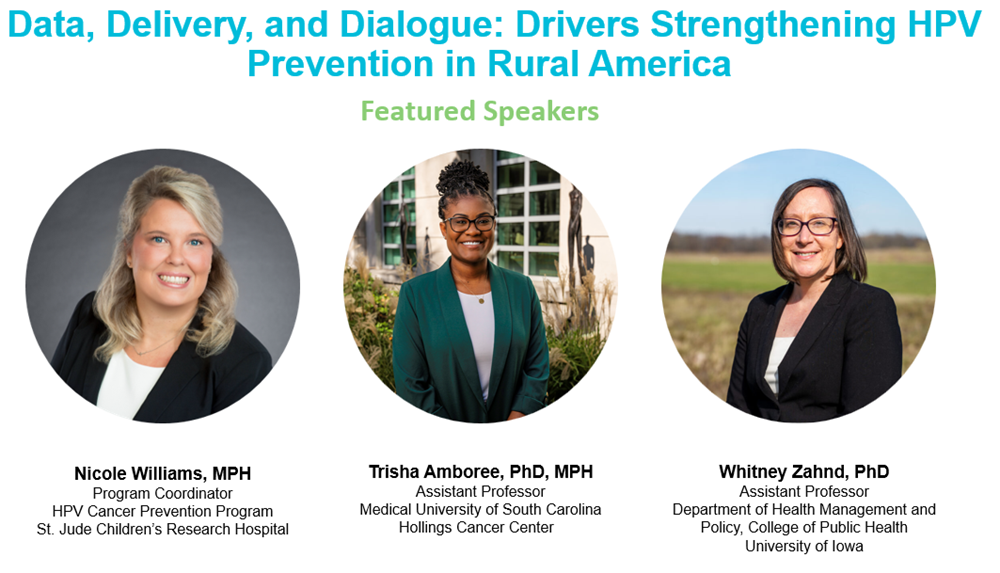
2026 HPV Awareness Day Seminar Series rural seminar, Data, Delivery, and Dialogue: Drivers Strengthening HPV Prevention in Rural America
-
Wide Open Spaces: Improving HPV Vaccination Through Provider Voices: Lessons from Southern California Tribal Health Clinics
-
Updates on Changes to the U.S. Childhood Immunization Schedule
-
Plus, new trainings and resources, recent publications, and upcoming events
|
|
Tell us what you are working on related to rural HPV cancer prevention.
If you are interested in presenting as part of an upcoming quarterly updates meeting, sharing information in the quarterly communication (sent one week prior to each quarterly meeting), and/or contributing to our monthly Wide Open Spaces article series, we would love to showcase your work with rural communities to increase HPV vaccination and prevent HPV cancers. We are all learning from each other to improve protection among people living in rural communities.
Join our efforts to improve rural HPV vaccination coverage.
Visit the Preventing HPV Cancers in Rural Communities website at stjude.org/HPVrural or sign up here to receive the latest information on our rural HPV vaccination coverage efforts. Email PreventHPV@stjude.org with any questions.
|
|
|
|
Rural Resources and Reach: From Our Program to You |
|
|
Rural HPV Vaccination Quarterly Updates and Opportunities Meetings |
|
|
|
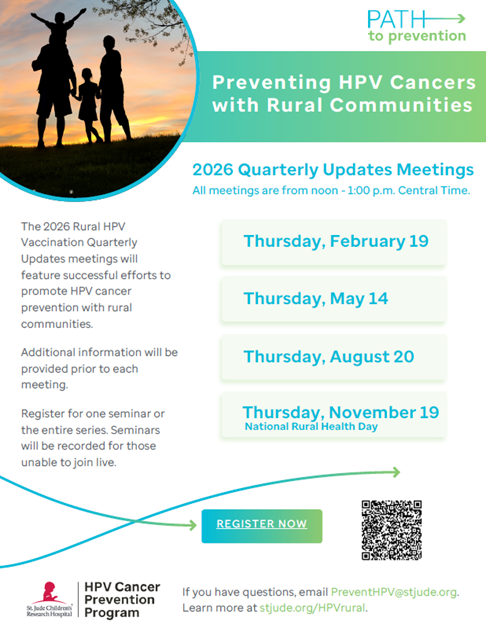
The 2026 Rural HPV Vaccination Quarterly Updates meeting series is shaping up to be one of our most dynamic yet as we continue advancing rural HPV cancer prevention nationwide. This year’s series will feature updates on the revised priority actions, stories of successful rural implementation, and new resources and timely updates to help partners turn priorities into practice. Get ready for fresh insights, practical takeaways, and inspiring examples of what is working on the ground. Look for meeting‑specific details as each session approaches—there is much to look forward to. |
| Register Here |
|
|
|
|
|
Join us on February 19 from noon-1 p.m. Central Time for the first Preventing HPV Cancers with Rural Communities: Updates and Opportunities Meeting of 2026 |
|
|
|
The first meeting of 2026 is designed to ground our rural partners in the updates, resources, and priorities guiding our shared work this year. We will begin with an orientation to the year ahead, including the updated rural HPV vaccination priority actions and ongoing efforts shaping rural HPV cancer prevention, setting the stage for an informative and action‑focused meeting.
Attendees will hear from Heather Brandt, PhD, director of the St. Jude HPV Cancer Prevention Program, who will provide an in‑depth overview of recent changes to U.S. Childhood Immunization Schedule including updates to HPV vaccination recommendations and what they mean for rural clinics, vaccination workflows, and local families. She also will share strategies to reinforce HPV vaccination as routine care amid communication and access challenges unique to rural settings.
Ashley Lach, MHA, CPHQ from the American Cancer Society (ACS) will then introduce the 2026 Rural Learning Community, hosted jointly by ACS and the ACS National HPV Cancers Roundtable. Attendees will get a preview of upcoming topics such as self‑collection testing, series completion strategies, small‑media campaigns, and clinic‑level HPV report cards. These offerings directly align with our rural priority actions—supporting partners in implementing best practices, building capacity, preserving data resources, and strengthening partnership collaboration in a shifting rural health landscape.
We hope you will register and take part in this important early‑year conversation as we work together to advance rural HPV cancer prevention in 2026. |
|
|
|
|
|
Heather Brandt, PhD, Director, HPV Cancer Prevention Program, St. Jude Children’s Research Hospital |
|
|
Ashley Lach, MHA, CPHQ, Program Manager, Knowledge Translation, American Cancer Society
|
|
|
|
|
|
|
|
Revisiting National Rural Health Day: Progress, Priorities, and Tools for 2026 |
|
|
|
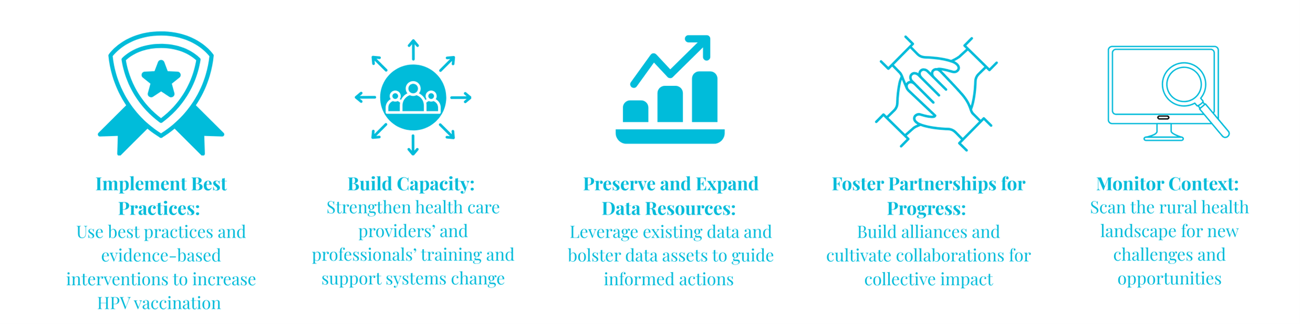
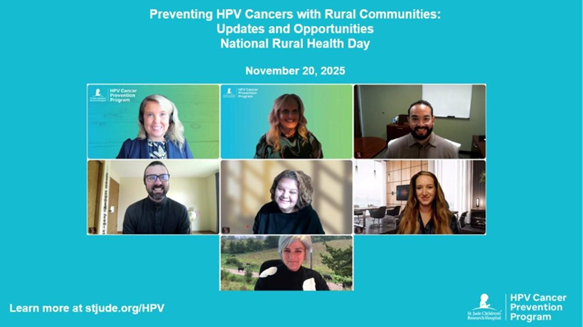
Our final Preventing HPV Cancers with Rural Communities: Updates and Opportunities quarterly meeting of 2025 was held on National Rural Health Day (November 20, 2025), celebrating the ‘Power of Rural’ and the partners advancing HPV cancer prevention across the country. During the meeting, we unveiled the revised Rural HPV Vaccination Priority Actions, updated during 2025 in collaboration with rural subject matter experts to better reflect today’s realities and guide our efforts through 2026 and beyond. Experts joined us to introduce the updated framework—outlining key challenges, opportunities, areas of focus, and real‑world examples across all five priorities: implementing best practices, building capacity, preserving and expanding data resources, fostering partnerships, and monitoring context. |
|
|
 |
|
National Rural Health Day not only celebrated the progress happening across rural communities—it also renewed our collective commitment to the work ahead. The priorities and resources we introduced in November are already shaping new collaborations and creative approaches. Together, we are carrying that momentum forward and turning inspiration into sustained action for rural HPV cancer prevention.
Several new HPV vaccination resources for rural action also debuted, more information about those is below! Meeting recordings and slides remain available for anyone who missed the session at stjude.org/HPVrural.
|
|
|
 |
New HPV Vaccination Resources for Rural Action |
|
As we begin the new year, we want to re‑highlight several key resources that debuted during our National Rural Health Day meeting in November. These tools were created to strengthen rural HPV vaccination and cancer prevention efforts and now is a great time to make sure you have them in your toolkit as we launch into 2026! |
|
|
|
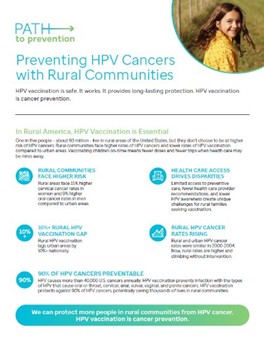
Rural HPV Cancer Prevention Fact Sheet
Our updated Preventing HPV Cancers with Rural Communities fact sheet is designed to better support your rural HPV work and communication efforts. We encourage you to use and share this fact sheet widely—at meetings, in outreach, and with partners who care about rural HPV cancer prevention. |
| Access Here |
|
|
|
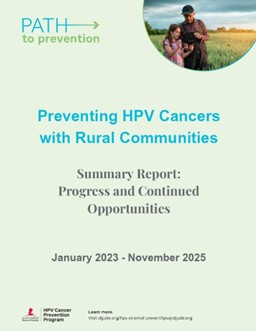
Rural HPV Cancer Prevention Summary Report
The Preventing HPV Cancers with Rural Communities Summary Report: Progress and Continued Opportunities was developed to document the efforts and progress made since the rural HPV initiative launch in January 2023, and was used as a guide to ensure 2025 revisions to the rural HPV vaccination priority actions were grounded in the reality of what has been done, as we reflected on current needs, opportunities, and evidence. |
| Access Here |
|
|
|
Rural HPV Cancer Prevention Awareness Campaign
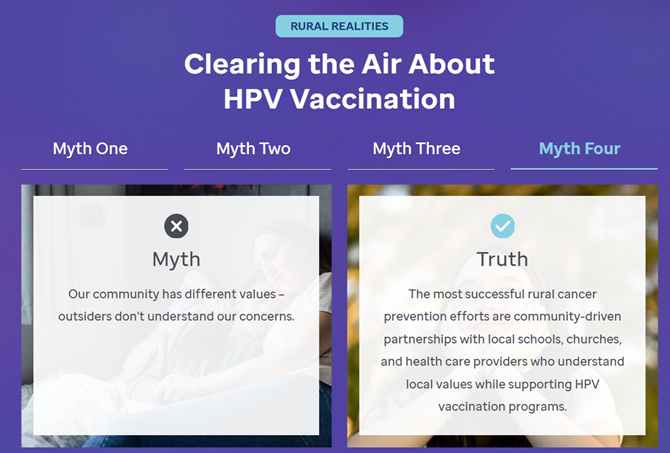
Our national awareness campaign, “The Kids Aren’t Thinking About HPV,” now includes tailored resources for rural communities which reflect the unique challenges and opportunities in rural HPV cancer prevention and are designed to support local outreach, education, and engagement efforts. We invite you to explore the updated materials—including rural-specific messaging and tools. |
| Access Here |
|
|
|
|
|
2026 HPV Awareness Day Seminar Series: Data, Delivery, and Dialogue: Drivers Strengthening HPV Prevention in Rural America |
|
|
|
To commemorate five years of impact from the St. Jude HPV Cancer Prevention Program, this year’s HPV Awareness Day Seminar Series brings together pre‑recorded sessions highlighting programmatic milestones, expert insights, and forward‑looking strategies shaping the next phase of HPV cancer prevention. All sessions will go live at stjude.org/HAD2026 on March 4 in recognition of HPV Awareness Day. |
|
|
|
As part of the HPV Awareness Day Seminar Series, we are especially excited to spotlight our rural‑focused seminar, “Data, Delivery, and Dialogue: Drivers Strengthening HPV Prevention in Rural America.” Created specifically with rural partners in mind, this session will organize our rural HPV vaccination priorities into three practical drivers—data, delivery, and dialogue, together capturing the full framework of the rural initiative. Participants will learn how the program’s rural priorities put these drivers into action—using rural-relevant data to guide decisions and track progress; strengthening HPV vaccination delivery through evidence-based best practices and provider capacity-building; and deepening dialogue through cross-sector partnerships and trusted messengers. The session will also show how monitoring policy and funding shifts, and vaccination trends functions as a cross-cutting priority that enhances each driver and supports adaptable, forward-looking strategies to advance rural HPV cancer prevention. This session is designed to equip rural partners with insights, tools, and momentum to continue advancing HPV cancer prevention where it is needed most. |
|
|
|
|
|
Announcement Approach Training Available |
|
|
|
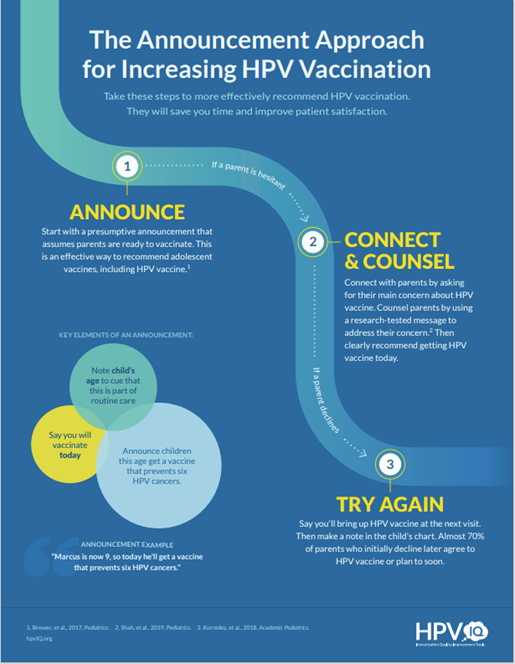
The Announcement Approach Training is a proven, evidence-based intervention that helps health care providers make effective, confident HPV vaccination recommendations. This training boosts HPV vaccination rates by teaching clinicians to deliver strong, presumptive messages that resonate with parents and respond to questions using research-tested messages and can be tailored for rural providers.
The St. Jude HPV Cancer Prevention Program team is available to help coordinate this impactful training for groups of rural health care providers. If your team is ready to improve communication and protect more patients from HPV cancers, email us at PreventHPV@stjude.org to get started. |
|
|
|
|
|
|
Wide Open Spaces is a series of articles included in the St. Jude HPV Cancer Prevention Program’s monthly Path to Prevention newsletter. These articles address ways to improve HPV vaccination with rural communities. Articles are written by guest contributors, who share information on their efforts and success in improving HPV vaccination with rural communities. We invite guest contributors to share information on how they are working to improve HPV vaccination in rural areas.
This month, we feature work from the University of Southern California and the Riverside–San Bernardino County Indian Health Clinic. Rural and Native‑serving clinics in California are experiencing significant declines in HPV vaccination—challenges fueled by persistent misinformation, limited opportunities for provider training, and lingering mistrust following the COVID‑19 pandemic. Through a partnership with the Riverside–San Bernardino County Indian Health Clinic, the University of Southern California has gathered critical insights from providers working directly in these communities. Their experiences highlight effective, culturally grounded strategies that strengthen confidence in HPV vaccination, including normalizing the vaccine as routine cancer prevention, using clear and efficient communication tools like the Announcement Approach, and building trust through relationships rooted in community values.
This work underscores an important truth: boosting HPV vaccination in rural Native communities requires more than access—it requires connection, clarity, and community‑informed support for providers. Read the full article to learn how these clinics are reshaping HPV prevention through locally driven solutions. |
| Read the February 2026 Wide Open Spaces Article Here |
|
|
|
Accelerating Our Impact: Introducing Revised Priority Actions to Improve Rural HPV Vaccination Coverage
|
| November 2025 |
|
|
|
Protecting Patients Beyond the Smile: HPV Vaccinations in the Dental Setting
|
| December 2025 |
|
|
The Power of Familiar Voices: Building HPV Vaccine Trust in Rural Communities |
| January 2026 |
|
|
|
We are looking for authors for Wide Open Spaces articles.
Do you have a story about HPV cancer prevention efforts with rural communities? We invite guest contributors to share information on how they are working to improve HPV vaccination in rural areas through the Wide Open Spaces article series, which is promoted in our monthly Path to Prevention newsletter, featured in our quarterly rural HPV vaccination newsletter, and posted on stjude.org/HPVrural. If you are interested in contributing an article please email us at PreventHPV@stjude.org. |
|
|
|
|
|
American Cancer Society’s 2026 Rural Learning Community |
|
|
|
The American Cancer Society and the National HPV Cancers Roundtable are partnering with rural health care providers to expand knowledge and improve access to preventive care, including on-time HPV vaccination and other cancer screenings. The 2026 Rural Learning Community will provide practical strategies and peer-based learning to help participants implement evidence-based interventions that strengthen cancer prevention and screening efforts in their clinics and communities.
This no-cost, practical forum offers:
-
Opportunities to exchange promising practices with peers facing similar challenges.
-
Hands-on guidance for applying quality improvement (QI) methods to boost HPV vaccination and increase cancer screening rates.
-
Open discussions to address barriers and share solutions for rural settings.
Together, participants will explore topics that not only improve on-time HPV vaccination but also increase access to recommended cancer screenings. Join the Rural Learning Community to gain actionable insights, build meaningful connections, and bring proven strategies back to your clinics and communities.
Register now to be part of this impactful initiative from our partners at the American Cancer Society and the ACS National HPV Vaccination Roundtable. And you can catch up anytime on the 2025 sessions you might have missed here. |
 |
| Register Here |
|
|
|
|
|
Featured Resource: Webinar Clarifying the New Vaccine Schedule |
|
|
|
Recent changes to the U.S. childhood vaccine schedule have left many health care providers with questions about what has changed, why it matters, and how it may affect patient care. From the North Dakota State University Center for Immunization Research and Education (NDSU CIRE), the webinar, What Changed, What Matters: Navigating the Latest Vaccine Schedule Updates, breaks down the most significant updates, compares the new HHS schedule with evidence-based recommendations, and highlights areas that may create confusion in clinical practice. Participants will examine the potential public health implications of adopting a less science-backed vaccine schedule and gain practical strategies for addressing patient and community concerns with clarity and confidence. Additional resources available here. |
|
|
|
|
|
|
|
2026 American Academy of Pediatrics (AAP) Vaccination Schedule |
|
|
|
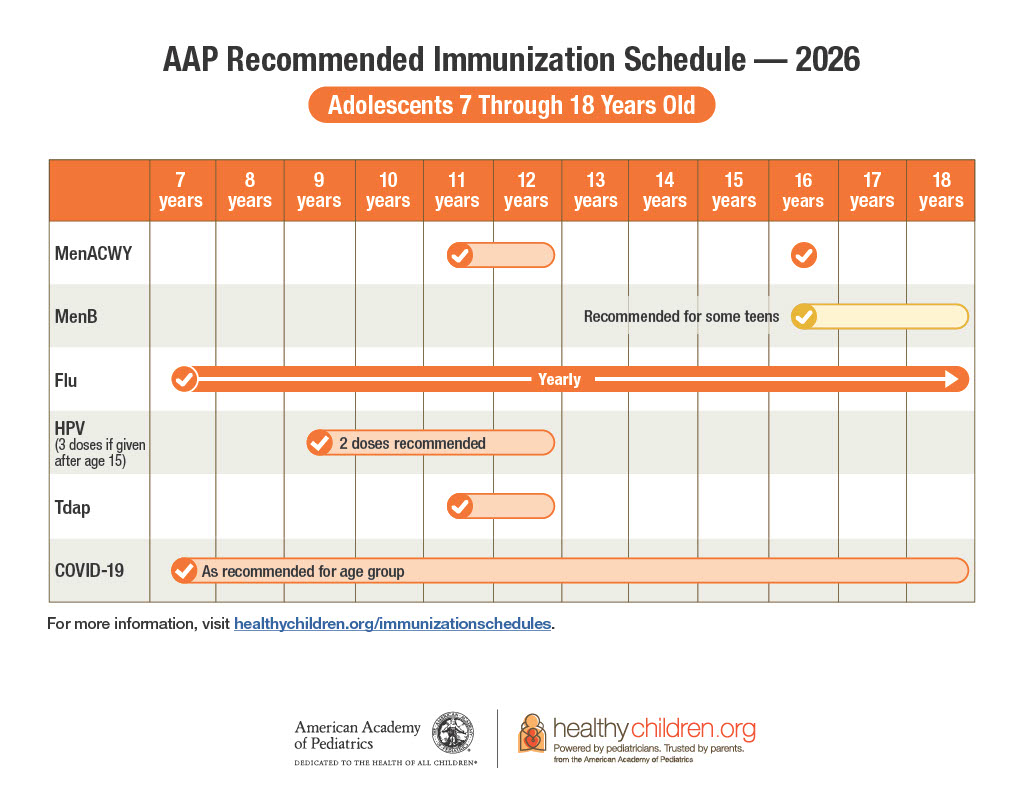
The 2026 recommended childhood and adolescent immunization schedule has been published by the American Academy of Pediatrics (AAP). The AAP schedule provides the latest trusted guidance on when children and teens should receive each immunization. Every vaccine included has been thoroughly reviewed and licensed by the Food and Drug Administration. Twelve national organizations representing more than 1 million clinicians, physicians, pharmacists and other pediatric health care professionals agree with the AAP immunization schedule. |
 |
|
|
| Learn More |
|
|
Other U.S. Childhood Immunization Schedule Change Resources |
|
|
|
|
|
|
|
Rural Health Transformation Program: How States Are Strengthening Cancer Prevention & Creating New Opportunities for Rural HPV Work |
|
|
|
The Rural Health Transformation (RHT) Program—created under the One Big Beautiful Bill Act—is a new federal initiative to strengthen rural health care and stabilize essential services. Early state proposals consistently prioritize workforce stabilization, prevention and chronic disease management, value‑based care models, emergency management services modernization, mobile and community‑based services, and technology upgrades such as telehealth, interoperability, consumer tools, and cybersecurity. Most states also focus on strengthening rural care infrastructure, building local partnerships, and addressing long‑standing access gaps—including behavioral health and substance use disorders treatment.
Within these priorities, many states propose expanded cancer prevention and screening efforts. Examples include mobile screening units (Alabama), statewide initiatives and cancer‑specific Health Hubs (Iowa), rural screening events led by community health workers (Kansas), and virtual oncology clinics (Florida). These efforts create opportunities to integrate HPV‑related work through:
-
Cervical cancer prevention messaging
-
HPV vaccine education
-
CHW‑supported vaccine navigation
-
Linkages across vaccination, screening, and prevention
Although the RHT Program represents a major new investment, it replaces only a portion of the funding rural communities lost under the One Big Beautiful Bill Act. Within these constraints, cancer related activities in state plans—such as added screening capacity, mobile units, communitybased prevention, CHW outreach, and teleoncology—offer practical touchpoints for embedding HPV vaccination and cervical cancer prevention. Even modest initiatives highlight where states are investing in prevention infrastructure and where alignment with HPV strategies could enhance impact.
The National Rural Health Association published a Rural Health Transformation Program State Application Summary accessible here.
If your organization or state’s RHT‑funded work will include HPV vaccination or HPV cancer prevention, we would love to learn about it and explore ways we can collaborate or support your efforts. Email us at PreventHPV@stjude.org. |
|
|
|
|
|
|
|
From CDC TRAIN: Strengthen Your Skills with the Rural Public Health Training Plan |
|
|
|
CDC’s Rural Public Health Training Plan offers a flexible, self‑paced learning opportunity designed to equip public health professionals with the tools needed to effectively serve rural communities. From CDC’s Office of Rural Health, the training covers core topics—including an introduction to rural public health, communicating with rural communities, risk management, leadership, and conflict resolution—while emphasizing strong communication, effective partnerships, and community‑centered strategies. Each course provides free continuing education credits, and participants receive a certificate upon completion of the full plan. Explore the training through CDC TRAIN, the national hub for high‑quality public health education, and start building new skills today. |
| Access Here |
|
|
|
|
|
St. Jude Rural HPV Vaccination Resources |
|
|
|
|
|
|
|
|
Calling all contributors! Do you have HPV vaccination resources for rural U.S. areas? Share guidelines, research articles, and educational materials on HPV vaccination for health care providers and others living in rural settings. Your insights can enhance HPV prevention efforts in rural communities. To contribute, please send them to PreventHPV@stjude.org. |
|
|
|
|
|
Study Spotlight: HPV Vaccination Improvement Efforts in Rural Oregon |
|
|
|
The Rural Adolescent Vaccine Enterprise (RAVE) through the Oregon Rural Practice-based Research Network tested a tailored, multicomponent intervention to improve HPV vaccination in 45 rural Oregon primary care clinics. Over 18 months, clinics selected evidence‑based strategies such as reminder/recall, starting vaccination at age 9, staff training, workflow changes, and data improvements. Although HPV vaccination rates increased steadily during the study, the intervention itself did not produce additional gains. However, clinics showed significant improvement in quality‑improvement capacity, especially in care coordination. Despite pandemic‑related challenges, rural clinic engagement remained high, underscoring the need for stronger external support and community‑partnered approaches to boost HPV vaccination in rural settings. |
|
|
|
|
|
|
Key Insights on National Cancer Institute Rural Cancer Control-focused Grants |
|
|
|
A new analysis of National Cancer Institute‑funded research from 2016 to 2024 identified 128 grants focused on rural cancer control, reflecting growing attention to the well‑documented rural–urban difference in cancer outcomes. Most funded studies addressed prevention and treatment, with colorectal and breast cancer most commonly studied. However, relatively few grants focused on cervical cancer, signaling a missed opportunity given its higher incidence and later‑stage presentation in many rural communities. These findings underscore the need for expanded rural cancer research and reinforce the importance of strengthening HPV vaccination and cervical cancer prevention efforts in rural areas. |
|
|
|
|
|
Other Happenings in Rural Health |
|
|
Federal Rural Definitions Webinar |
|
|
|
In 2025, many agencies across the federal government released new data allowing users to understand how rural populations and areas are changing. A recent webinar from the Rural Health Information Hub (RHIhub) provided a brief history of rural populations over time and reviewed how the term "rural" is defined. Presenters from the Federal Office of Rural Health Policy (FORHP) focused on how FORHP compiles information from the Census Bureau, the Office of Management and Budget (OMB), and the United States Department of Agriculture (USDA) Economic Research Services (ERS) to identify rural areas in the United States for rural health grant program eligibility. Changes to rural areas, as identified by FORHP with their most recent September 2025 data release, were highlighted. |
| Watch Here |
|
|
|
|
|
A Provider’s Perspective on Building High Quality Cancer Care Programs in Rural Areas, March 3 |
|
|
|
The National Library of Medicine is hosting a webinar focused on improving cancer care delivery in rural communities. This session will explore how cancer care is currently provided in rural community hospitals, the unique challenges these facilities face, and the opportunities that exist to strengthen rural cancer programs. Participants will also learn how rural hospitals can use Commission on Cancer (CoC) accreditation as a framework to enhance program development and support high‑quality cancer care close to home. More information and registration here. |
|
|
|
|
2026 Rural Oncology Conference, April 17-18 |
|
The Rural Oncology Conference 2026 is an excellent opportunity to connect with colleagues and gain fresh insights into improving cancer outcomes in rural communities. Join leaders, practitioners, and researchers at the Graduate Minneapolis Hotel for a full slate of sessions focused on the latest developments in rural oncology, innovative approaches to care delivery, and strategies that address the unique challenges facing rural patients and providers. This in‑person event offers valuable networking, practical learning, and space to collaborate with experts dedicated to strengthening rural cancer prevention and treatment. |
| Register Here |
|
|
|
|
|
NRHA’s Annual Conference Week, San Diego, California, May 19-22 |
|
|
|
The National Rural Health Association (NRHA) will host its flagship annual events in San Diego, California this May—offering a full week of learning, connection, and innovation for everyone committed to strengthening rural health.
The 49th Annual Rural Health Conference, the largest gathering of rural health professionals in the country, brings together practitioners, advocates, researchers, and leaders to explore the issues shaping care in rural communities. Running alongside it, the 11th Rural Hospital Innovation Summit provides hospital leadership with strategy‑rich sessions, expert‑led workshops, and practical tools to navigate today’s rapidly changing health care environment.
Participants can also take advantage of two pre‑conference opportunities:
-
Rural Health Access Conference (May 18–19): Designed for those working to expand access and improve care for underserved rural populations.
-
Rural Medical Education Conference (May 19): Tailored for professionals focused on preparing and supporting the next generation of rural physicians.
Early registration ends April 24—register soon to save and secure your spot. |
| Register Here |
|
|
|
|
|
|
|
Rural Health and Cancer Conference, Burlington, Vermont, June 19-21 |
|
|
|
The University of Vermont Cancer Center is pleased to announce the Rural Health and Cancer Conference to be held June 2-4, 2026, in Burlington, Vermont. The conference aims to improve rural cancer outcomes by convening a wide-array of experts from across the nation in rural cancer health care delivery and building cross-disciplinary collaborations amongst rural cancer health experts. Registration for the 2026 Rural Health and Cancer Conference will open in early February 2026. |
|
|
|
About the St. Jude HPV Cancer Prevention Program |
|
|
|
St. Jude Children's Research Hospital is leading the way the world understands, treats and cures childhood cancer and other life-threatening diseases. That is why St. Jude is raising awareness on HPV vaccination, which can prevent six types of cancer caused by the virus. As the only NCI-designated Comprehensive Cancer Center dedicated solely to children, St. Jude has an important role and responsibility in increasing the number of children who benefit from HPV vaccination and reduce their risk of preventable cancers later in life.
The St. Jude HPV Cancer Prevention Program envisions a world free of HPV cancers. Through education, promoting best practice models, and strategic partner engagement, its mission is to increase on-time HPV vaccination. On-time HPV vaccination by the 13th birthday provides safe, effective, and long-lasting protection against the most common types of HPV linked to cancers. The program is committed to ensuring equitable access to HPV cancer prevention, which includes a specific focus on geographic disparities in the southeastern United States and in rural communities.
Learn more about the St. Jude HPV Cancer Prevention Program at stjude.org/hpv. Email PreventHPV@stjude.org with any questions.
|
 |
|
|
|
|