|
|
|
|
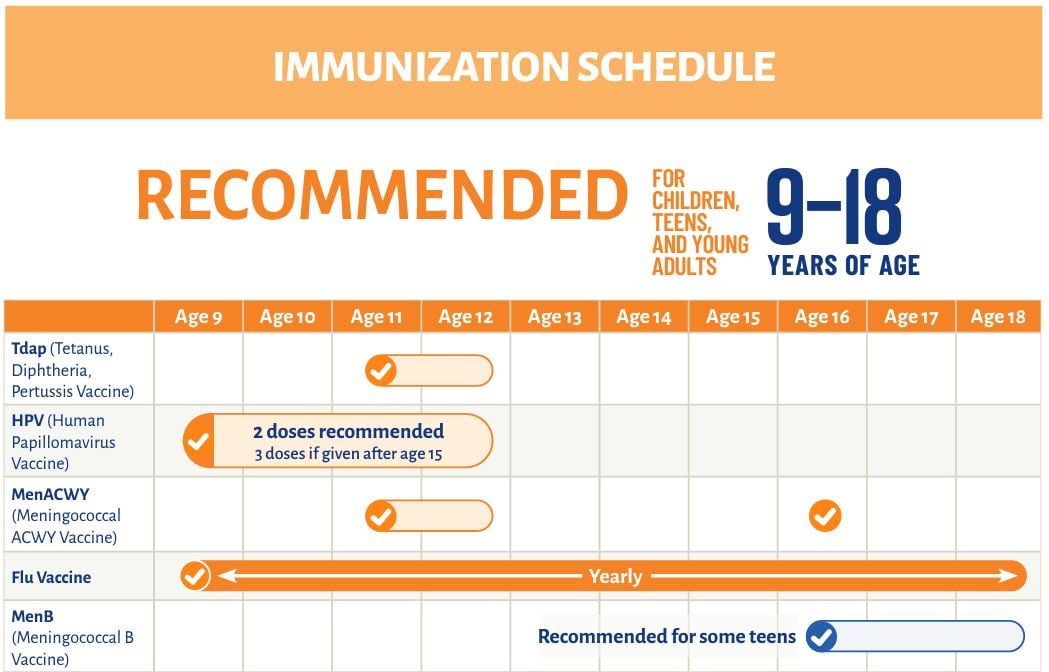
The New Year has already resulted in significant changes in the vaccination landscape. Earlier this week, the U.S. Department of Health and Human Services prompted the Centers for Disease Control and Prevention (CDC) to revise the childhood vaccination schedule. According to the new directive, HPV vaccination remains routinely recommended, and the CDC is following the lead of several peer nations by recommending one instead of two doses of this vaccine. These changes reflect how decisions are made, not access, said Diego Hijano, MD, a pediatric infectious diseases specialist at St. Jude. Also, the American Academy of Pediatrics (AAP) and the American Academy of Family Physicians continue to recommend the full roster of vaccines prior to
the changes. Our program remains aligned with the AAP recommendations for HPV vaccination, which remain consistent with prior CDC guidelines and are based on scientific evidence and public health expertise in the U.S. Read more in this newsletter about the evolving vaccination environment in the U.S. Even with ever-changing conditions, we remain focused on ensuring all children are protected against HPV cancers they may develop in adulthood.
Starting with this month’s Path to Prevention newsletter, the HPV Cancer Prevention Program team at St. Jude Children’s Research Hospital refreshed the look and feel of the communication. We hope you continue to find the information provided to be valuable. If you have information to share in upcoming newsletters, please email us at PreventHPV@stjude.org.
HPV vaccination is cancer prevention.
|
|
|
|
|
|
|
|
Updates on the Current Vaccination Landscape |
|
|
In addition to the recent revisions to the childhood
vaccination schedule made by the CDC under Secretary Kennedy, which reduced the routinely recommended vaccines for healthy children from 17 to 11 and advised “shared clinical decision-making” for six vaccines, including COVID and flu, many additional developments related to HPV cancer prevention have occurred since the last Path to Prevention communication.
Outcomes of the December 2025 ACIP Meeting
On December 5, 2025, the Advisory Committee on Immunization Practices (ACIP) voted to rescind the 35-year-old recommendation that all babies be given hepatitis B vaccines shortly after birth. President Trump praised the decision and subsequently issued a memo directing U.S. Department of Health and Human Services to align U.S. childhood vaccine recommendations with those in peer nations. By contrast, Senate HELP Committee Chair Cassidy strongly criticized the decision and decried ACIP’s credibility. On December 16, 2025, the CDC adopted individual-based decision-making for hepatitis B immunization for infants born to women who test negative for the hepatitis B virus. This change marked an abrupt end to 30 years of established medical guidance.
Reps. Castor, Bacon, Schrier Introduce Bipartisan Legislation to Combat HPV-associated Cancers
A bipartisan group of U.S. Representatives has reintroduced the PREVENT HPV Cancers Act, which aims to increase HPV vaccination awareness through a national education campaign and improve access to cervical cancer screening for underserved communities.
Researchers Reveal School-based HPV Vaccination Lowers Cervical Lesion Risk
Independent (UK) reported a Swedish study analyzed health data of 857,168 unvaccinated women, revealing lower cervical lesion rates in those exposed to school-based HPV vaccination. Women born between 1999-2000 had half the risk of pre-cancerous changes compared to those born between 1985-1988. Researchers emphasize that high vaccination coverage reduces cervical cancer risk through direct and herd immunity. The National Health Service aims to increase HPV vaccine uptake to 90% among girls for cervical cancer elimination by 2040. Current vaccination rates show improvement among
14-15-year-olds.
Self-collected Vaginal Samples To Screen For Cervical Cancer Endorsed in the U.S.
In good news, the U.S. Department of Health and Human Services has endorsed self-collected vaginal samples for cervical cancer screening and requires most private insurance plans to cover testing without cost sharing. The Health Resources and Services Administration (HRSA) announced updated cervical cancer screening guidelines on January 5 expanding screening options to include self-collection to test for HPV. The new guidelines also aim to lower out-of-pocket costs for screening that could deter people from getting care. A HRSA spokesperson said, “The guideline is designed to
help close the screening gap by expanding access and reducing cost barriers. ... About one in four women are not up to date on cervical cancer screening, and the disease often has no symptoms in its early stages, making regular screening critical.” This exciting development, which increases options for screening based on preference and facilitates greater access within and outside medical settings, was reported in many major news outlets.
|
|
|
|
|
|
Things Newer than HPV Vaccination: Apple iPhone |
|
|
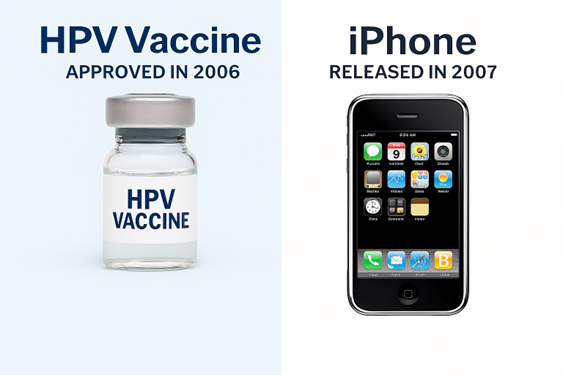
A common misconception about HPV vaccination is that the vaccine is too “new”, when in fact, many of the products we know, love, and trust have not been around as long as HPV vaccination. HPV vaccination has been offering lifesaving protection against HPV since 2006, making it newer than the very first iPhone, which debuted in 2007. Millions of HPV vaccine doses have been given worldwide and nearly 20 years of research has demonstrated proven safety and effectiveness that we can also trust.
|
 |
|
|
|
|
|
Cervical Health Awareness Month |
|
|
January is Cervical Health Awareness Month, a national observance focused on educating the public about cervical cancer prevention, early detection through regular Pap tests and HPV vaccination, and raising awareness that cervical cancer is one of the most preventable cancers. The recent inclusion of self-collection as a screening option aligns with the American Cancer Society's new cervical cancer screening guidelines released in December 2025. These new guidelines provide renewed optimism in the fight against cervical cancer.
As we recognize Cervical Health Awareness Month in January, we highlight two powerful organizations with which the St. Jude HPV Cancer Prevention Program partners. The work of these organizations underscores the importance of collaboration, innovation, and advocacy in the fight to end cervical cancer.
Cervivor
The Cervical Cancer Summit, powered by Cervivor, will be held January 23 at the National Press Club in Washington, DC. This national event brings together experts, patients, survivors, and advocates to advance the mission of eliminating cervical cancer through collaboration and patient-centered approaches. Key discussions will address breakthroughs in research and treatment, strategies to improve patient care, and the impact of policy and advocacy on expanding access to prevention, screening, and treatment. The summit will also showcase innovative partnerships and
community engagement models driving progress nationwide. Attendees will participate in interactive sessions and networking opportunities designed to share lived experiences, exchange ideas, and foster connections among healthcare professionals, advocates, and survivors. For details and registration, visit 2026 Cervical Cancer Summit Powered By Cervivor, Inc.
National Cervical Cancer Coalition
The National Cervical Cancer Coalition (NCCC), founded in 1996, is a grassroots nonprofit dedicated to supporting women affected by cervical cancer and HPV disease. In 2011, NCCC merged with the American Sexual Health Association (ASHA), expanding its reach in sexual health education. Today, NCCC has thousands of members worldwide and chapters across the U.S., led primarily by survivors, patients, and families impacted by cervical cancer. NCCC advocates for education, empowerment, and access to life-saving tools, including HPV vaccination and screening tests, while addressing stigma surrounding cancer and HPV. The coalition works to remove barriers to prevention and care, ensuring women can take charge of their health. Visit NCCC online for resources, education, and support. Cervical cancer is preventable—we have the tools; now we need the will.
|
 |
|
|
|
|
|
Improving Rural HPV Vaccination Coverage |
|
|
Join Us for Preventing HPV Cancers with Rural Communities: Updates and Opportunities Quarterly Meetings in 2026 |
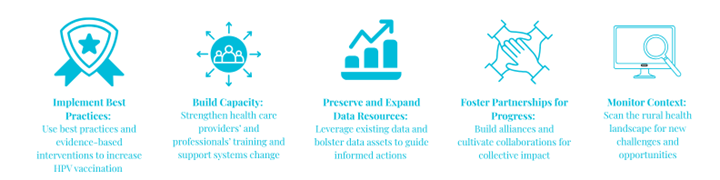
Stay engaged in advancing HPV cancer prevention in rural communities by joining this year’s quarterly meetings. Our 2026 quarterly meetings will spotlight progress on revised priority actions to increase HPV vaccination coverage and provide a forum for sharing impactful strategies to further implementation activities. The quarterly meetings will highlight successes, address challenges, and explore opportunities to implement evidence-based approaches
across rural settings. Each meeting will align with updated rural priorities: implementing best practices, building provider capacity, expanding data resources, fostering partnerships, and monitoring changes in rural health and immunization landscapes. Designed to inspire action and collaboration, these meetings equip participants with strategies to make HPV vaccination a routine part of rural health—ensuring geography never limits access to life-saving prevention. Join us to learn from peers, share insights, and strengthen efforts to close gaps in rural HPV vaccination. Together, we can close gaps in rural HPV vaccination and protect more lives.
|
Dates: February 19, May 14, August 20, and November 19 on National Rural Health Day
Time: All meetings are from noon - 1:00 p.m. Central Time
|
| Register Here
|
|
|
To learn more, visit the Preventing HPV Cancers in Rural Communities website or sign up to
receive the latest information on our rural HPV vaccination coverage efforts. Read the latest rural quarterly communication from November 2025 here.
|
|
|
|
|
|
|
Registration Now Open for American Cancer Society and ACS National HPV Vaccination Roundtable’s 2026 Rural Learning Community |
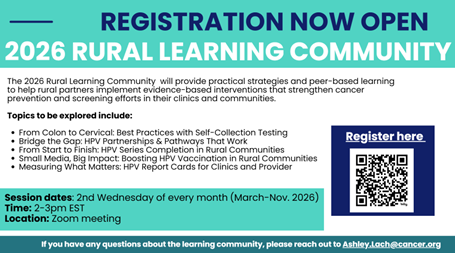
The St. Jude HPV Cancer Prevention Program is committed to reducing cancer disparities with rural communities by improving access to timely HPV vaccination and recommended screenings. Rural areas face unique challenges—limited resources, workforce shortages, and geographic barriers—that often delay care. Addressing these gaps is central to our rural priorities. To support these efforts, we highlight the 2026 Rural HPV Vaccination
Learning Community, hosted by the American Cancer Society and the ACS National HPV Vaccination Roundtable. This initiative partners with rural health care providers to deliver practical strategies and peer-based learning that strengthen cancer prevention and screening in rural clinics and communities. By fostering collaboration, building provider capacity, and promoting evidence-based approaches, the learning community advances shared goals: expanding access, improving coverage, and making HPV vaccination routine in rural health. Engaging in initiatives like this helps us collectively strengthen cancer prevention efforts.
Learn more and register here.
|
 |
|
|
|
Wide Open Spaces: Supporting HPV Vaccination with Rural Communities |
|
|
The Power of Familiar Voices: Building HPV Vaccine Trust in Rural Communities |
Despite progress in HPV vaccination, rural communities still lag urban areas. Trusted local voices—pastors, tribal elders, coaches, barbers, and community leaders—can play a pivotal role in closing this gap. Faith-based settings offer unique opportunities to connect health with values, while partnerships with familiar figures help overcome limited health care access and vaccine hesitancy. Engaging these messengers through respectful, community-driven approaches can normalize cancer prevention conversations and protect future generations from HPV cancers.
|
| Read the Full Article
|
About the Author: Gabriel Benavidez, MPH, PhD, is an epidemiologist and assistant professor in the department of public health at Baylor University. He earned an MPH from Baylor University and PhD in epidemiology from the Arnold School of Public Health at the University of South Carolina. A Robert Wood Johnson Foundation Health Policy Research Scholar alumnus, Dr. Benavidez focuses on addressing health care disparities among socially disadvantaged populations, including racial and ethnic minorities, rural communities, and individuals of low socioeconomic status. His innovative research integrates spatial and
traditional epidemiologic methods to improve health care access and reduce cancer-related morbidity and mortality.
|
|
|
Do you have a story about HPV cancer prevention efforts with rural communities? We invite guest contributors to share information on how they are working to improve HPV vaccination in rural areas through the Wide Open Spaces article series, which is promoted in our monthly Path to Prevention newsletter, featured in our quarterly rural HPV vaccination newsletter, and posted on stjude.org/HPVrural. If you are interested in contributing to
or learning more about our efforts to improve HPV vaccination with rural communities, please email us at PreventHPV@stjude.org.
|
|
|
|
HPV Vaccination Roundtable of the Southeast |
|
|
The HPV Vaccination Roundtable of the Southeast provides support for HPV vaccination coverage across 12 states and two jurisdictions across the Southeastern U.S. The Southeast Roundtable is guided by leadership from the Executive Committee, Steering Committee, implementation teams, and general membership. The priority actions of the Southeast Roundtable focus on implementing a regionally tailored communication campaign, supporting elimination of HPV cancers beginning with cervical cancer as a public health concern, and promoting starting HPV vaccination at age 9 and other best practices.
To learn more, visit the HPV Vaccination Roundtable of the Southeast website. Join us as a member of the Southeast Roundtable to receive the latest information. Read the latest Southeast Roundtable quarterly communication from October here.
|
|
|
|
|
Southeast Roundtable Annual Meeting, March 9-10 |
The HPV Vaccination Roundtable of the Southeast is in full swing planning for their 2026 In-Person Annual Meeting March 9-10 on the St. Jude campus in Memphis, Tennessee. During the meeting, which is invitation-only, attendees will work collaboratively to reframe the priority action areas of communications, elimination, and start at age 9 and other best practices to refocus their efforts for the years ahead. More information on the outcomes of the meeting will be available to all members in the future. Don’t forget to join as a member to remain informed about the resources and progress of Southeast Roundtable.
|
|
|
Communication: Develop and implement a communication campaign and messages for the Southeastern region |
The communications implementation team continues to move forward implementation of the next phase of the It’s Our Way Down South communication campaign. The group is working to prepare Spanish translations of recently developed materials, as well as considering new assets to benefit the scope of the campaign and its users.
|
Access the It’s Our Way Down South communication campaign here. If you have an upcoming in-person event and would like to have physical copies of posters or postcards, complete this request form.
|
|
|
Elimination: Develop and disseminate a plan for HPV cancer elimination in the Southeast, beginning with cervical cancer, as a public health concern |
|
|
The elimination implementation team is excited to be working closely with several states across the Southeast region to bring forth strong, focused, and carefully crafted state-level implementation plans. The group will continue to provide technical assistance and monitoring to partners across the region.
|
| Visit the Southeast U.S. Elimination Landing Page
|
|
|
Start at Age 9 and Other Best Practices: Accelerate efforts to start HPV vaccination at age 9 |
The start at age 9 and other best practices implementation team is excited to start 2026 with lots of new opportunities. Please use the link below to register for the Start at Age 9 and Other Best Practices Quarterly Case Study Meeting. The group looks forward to sharing more updates on their new Information and Resources Guide as well as the implementation of their pilot project for medical trainees in Tennessee.
|
|
|
|
Start at Age 9 and Other Best Practices Quarterly Case Study Meeting
|
January 29
1 - 2:15 p.m. Central Time
|
|
|
|
|
|
Memphis and Shelby County HPV Cancer Prevention Roundtable |
|
|
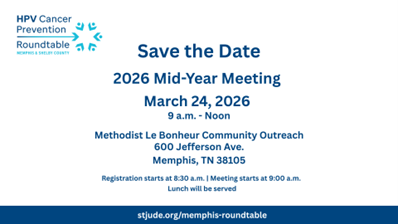
It is time “save the date” for the 2026 Memphis and Shelby County HPV
Cancer Prevention Roundtable Mid-Year Meeting on March 24 from 9 a.m. to noon. This convening reflects our ongoing commitment to advancing HPV cancer prevention across our community. This engaging session will bring together Roundtable members and partners to reflect on progress since our annual meeting in September 2025 and to discuss next steps in our collective efforts to prevent HPV cancers. Stay tuned for more details as we plan an engaging session to further our mission.
|
|
|
 |
To learn more, visit the Memphis and Shelby County HPV Cancer Prevention Program website. Join us as a member of the Memphis Roundtable to receive the latest information. Read the latest Memphis Roundtable monthly communication here.
|
|
|
|
|
|
|
|
Survivor Proud: Improving HPV Vaccination Coverage among Childhood Cancer Survivors |
|
|
A Parent’s Perspective: Why HPV Vaccination Matters After Treatment |
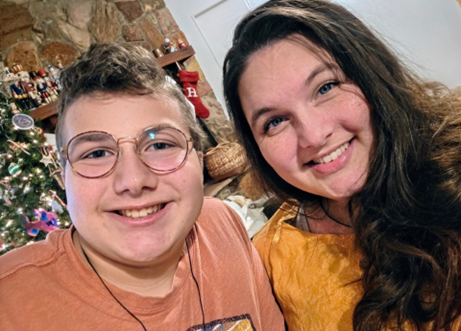
Samantha first learned about HPV vaccination after a family member developed cervical cancer caused by HPV. Like many people, she initially believed HPV was only a concern for girls. After learning more and speaking with doctors, she realized boys are affected too—and can carry HPV and develop serious cancers later in life. Before his cancer diagnosis, her son Fletcher had already received his first two doses of HPV vaccine. When the family arrived at St. Jude, his care team strongly encouraged them to complete the series with a third dose. Given Fletcher’s cancer treatment and the increased risk childhood cancer
survivors face for developing future cancers, Samantha said the decision made sense.
Childhood cancer survivors are at higher risk of HPV cancers compared to the general population. The Children’s Oncology Group recommends three doses of the HPV vaccine starting six months after completion of cancer treatment, regardless of age at the first dose. Samantha emphasized that parents—especially those of childhood cancer survivors—do everything possible to protect their children. “We fight
every day to give them a future,” she said. “Knowing how common HPV is, why wouldn’t we give them that extra layer of protection?”
She acknowledged that when survival is the priority, future prevention can be overlooked. “But the HPV vaccine is about protecting the future you’re working so hard to give them.”
Fletcher was diagnosed with medulloblastoma in 2017 and continues follow-up care at St. Jude. Samantha encourages families to talk with their care team about completing the HPV vaccine series.
|
 |
|
|
|
|
|
Partners on the Path to Prevention |
|
|
Inspired by Diane Crawford, Cancer Survivor |
|
|
In August 2009, at
the age of 43, Diane Crawford was diagnosed with cervical cancer following a routine annual exam and subsequent colposcopy. With no prior symptoms or history of HPV, the diagnosis came as a shock. She underwent treatment that included a radical hysterectomy. and was ultimately declared cancer-free. Diane credits early detection for saving her life and inspired by her experience, she founded The Crawford Crew to help others access timely screening and care.
|
|
|
Read on to learn more about how she turned her experience into action.
|
|
|
Partner Spotlight: The Crawford Crew Shines a Teal Light on Cervical Health Awareness Month |
The Crawford Crew (TCC) is once again leading efforts across Central Ohio to raise awareness and inspire prevention during Cervical Health Awareness Month. These actions are directly related to the experiences of Diane Crawford who is a survivor of cervical cancer.
Throughout the month, the LeVeque Tower in downtown Columbus will glow teal, serving as a bright reminder of the collective mission to eliminate HPV-related cancers.
TCC marked their official kickoff to Cervical Health Awareness Month on January 4 with Paint the ’Ville Teal in Westerville, featuring education and community engagement activities. With support from local businesses, schools, and residents the city will be covered with teal ribbons, spreading awareness and showing support for those impacted by cervical cancer.
On January 24, supporters will gather for the 13th Annual Raise A Racket for Cervical Cancer Awareness fundraiser at NewGen Racquet Club in Lewis Center. This year’s theme, “Giddy Up for Teal,” promises a lively evening filled with tennis, pickleball, and western-inspired fun — all for a powerful cause. Since its inception, Raise A Racket has raised over $700,000 to support education, patient navigation, clinical trials, and access to treatment for all people.
TCC has also requested that cities, townships, and municipalities across Ohio proclaim January as Cervical Health Awareness Month, further amplifying visibility statewide.
Through these efforts, TCC continues to shine a light on prevention, inspire action, and move closer to a future free from HPV cancers.
For information, please contact Diane Crawford, Founder and Executive Director, at di@thecrawfordcrew.org or visit thecrawfordcrew.org.
|
 |
|
|
Partner Activities and Updates |
American Cancer Society’s 2025 Report on Cancer Disparities: Key Insights for HPV Cancer Prevention
|
The American Cancer Society’s biennial report provides an in-depth analysis of cancer trends across the U.S., including incidence, stage at diagnosis, treatment, survival, and mortality by race, ethnicity, socioeconomic status, and geography. Findings reveal persistent disparities driven by social determinants of health and limited access to preventive care. For HPV-related cancers, prevention remains urgent. Cervical cancer—almost entirely preventable through HPV vaccination and screening—shows stark inequities. Women in nonmetropolitan areas face 28% higher incidence and 36% higher mortality compared to those in
large metropolitan counties. Lower screening rates and delayed diagnoses in rural communities contribute to poorer outcomes, reflecting broader gaps in insurance coverage and healthcare access. These findings underscore the need to expand HPV vaccination, strengthen provider engagement, and remove barriers in rural and underserved areas.
|
| Read the Full Report
|
|
|
Operation Wipe Out Summit, January
9
|
The 2026 OPERATION WIPE OUT SUMMIT takes place January 9 at the MacQueen Alumni Center Ballroom, University of South Alabama, Mobile, AL. Hosted by USA Health Mitchell Cancer Institute, the Alabama Department of Public Health, and UAB, the summit brings together leaders and community partners to celebrate progress and accelerate Alabama’s mission to eliminate cervical cancer by 2033.
Agenda includes registration and networking, opening remarks, a keynote on HPV and cancer, an Operation Wipe Out status update, and a panel on the elimination pillars—HPV vaccination, screening, and follow-up.
|
| Learn More Here
|
|
|
Georgia Cervical Cancer Awareness
Day, January 15
|
|
|
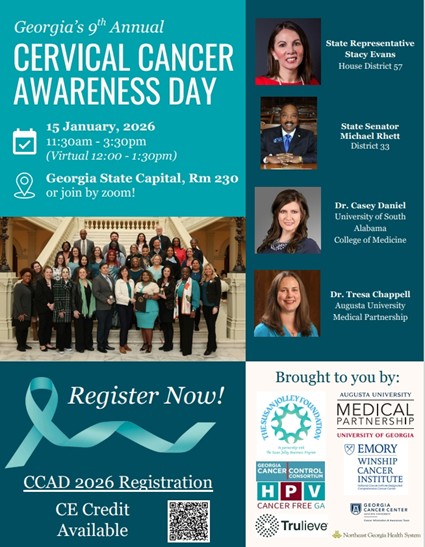
The 9th Annual Georgia Cervical Cancer Awareness Day will be held on January 15 from 11:30 a.m. to 3:30 p.m. Eastern Time at the Georgia State Capitol.
Attendees will be able to hear from key experts in cervical cancer, advocacy, and awareness. Casey Daniel PhD, the co-lead of the Elimination Implementation Team of the HPV Vaccination Roundtable of the Southeast, will offer a keynote presentation about cervical cancer elimination efforts.
|
| Register Here
|
|
|
Preparing for HPV Self-collection
Testing: Implementation, January 15
|
|
|
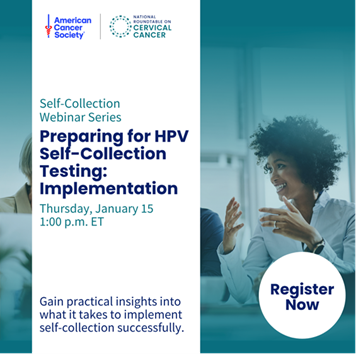
Join the ACS National Roundtable on Cervical Cancer for this implementation webinar that focuses on how federally qualified health centers (FQHCs) and safety-net systems have moved from planning to practice. Featuring insights from health systems and researchers, this session will highlight key steps, challenges, and lessons learned during the implementation of self-collection for screening across different geographic areas. The recent inclusion of self-collection as a screening option aligns with the American Cancer Society's new cervical cancer screening guidelines released in December 2025 and will offer an ideal opportunity for discussion.
|
| Register Here
|
|
|
VCU Massey’s Facts & Faith
Fridays: Protecting Our Health Together—HPV & Cervical Cancer, January 16
|
Louisiana Families for Vaccines is hosting an event: Knowledge is Your Light Teen and Parent HPV Awareness Summit on January 24 from 11 a.m. to 1 p.m. Central Time. The event will be an educational and empowering teen and parent summit to learn the importance of health literacy and enhance awareness of HPV prevention and treatment through engaging presentations and dialogue from local community leaders.
|
| Register Here
|
|
|
Louisiana Families for Vaccines:
Knowledge is Your Light Teen and Parent HPV Awareness Summit, January 24
|
|
|
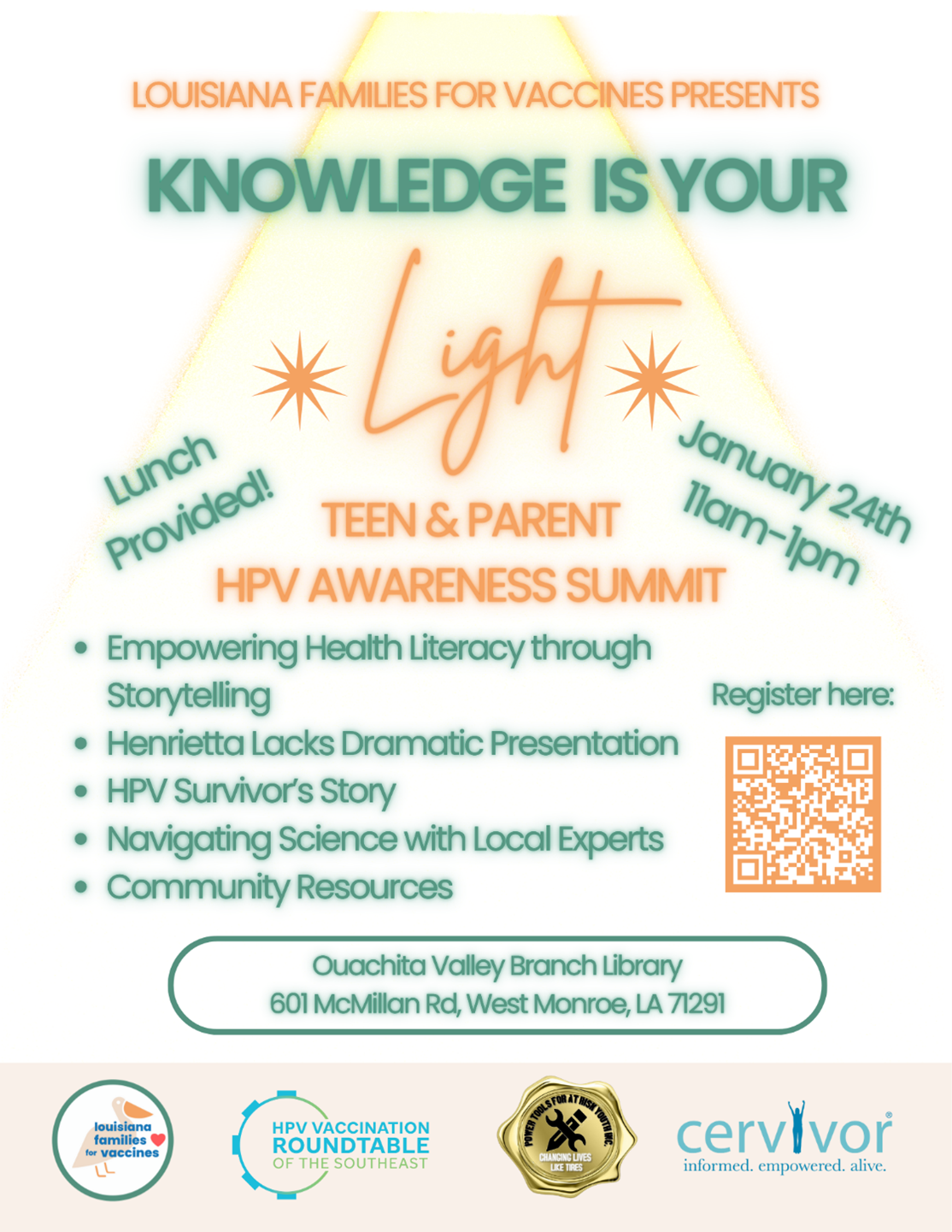
Louisiana Families for Vaccines is hosting an event: Knowledge is Your Light Teen and Parent HPV Awareness Summit on January 24 from 11 a.m. to 1 p.m. Central Time. The event will be an educational and empowering teen and parent summit to learn the importance of health literacy and enhance awareness of HPV prevention and treatment through engaging presentations and dialogue from local community leaders.
|
| Register Here
|
|
|
US vs HPV Week 2026, January
26-30
|
|
|
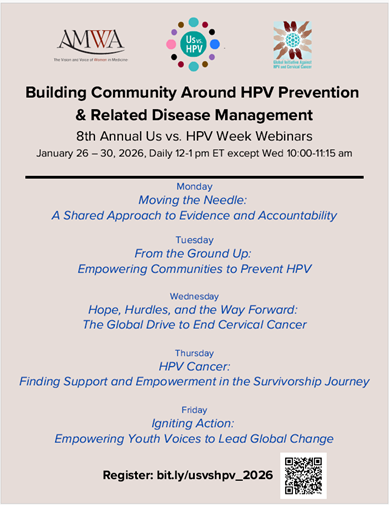
The 8th Annual Us vs. HPV Prevention Week organized by the Global Initiative Against HPV and Cervical Cancer and the American Medical Women’s Association will be held January 26-30. This year, the week will celebrate significant global progress in HPV vaccination, which prevents nearly 90% of six HPV cancers in all genders. Events will also showcase groundbreaking advancements in screening such as self-sampling and early treatment technologies aimed at eliminating cervical cancer—the first cancer we can end together. View the full agenda here.
|
| Register Here
|
|
|
Tennessee Families for Vaccines 4th
Annual Day on the Hill, January 27
|
|
|
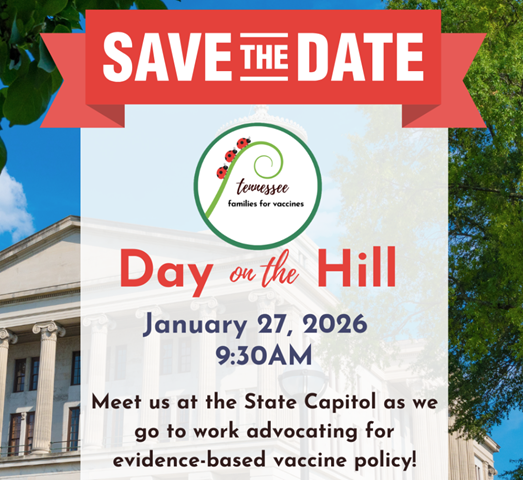
The 4th Annual Tennessee Families for Vaccines Day on the Hill will take place on January 27 from 9:30 a.m. to 12:00 p.m. Central Time at the Tennessee State Capitol. This event will bring advocates, health care professionals, and community leaders together to champion the importance of immunizations across the lifespan. Participants will engage with legislators, share personal stories and data-driven insights, and reinforce the critical role vaccines play in protecting Tennessee families and communities.
|
| Register Here
|
|
|
ACS National HPV Vaccination
Roundtable Emerging Leaders Fellows Showcase, February 18-19
|
|
|
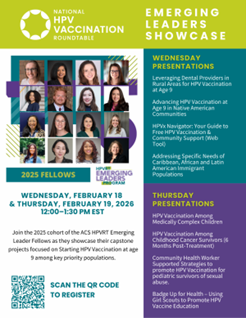
The American Cancer Society National HPV Roundtable will host the 2025 Emerging Leaders Showcase, featuring emerging leader fellows as they present their capstone projects focused on advancing HPV vaccination initiation at age 9 among priority populations. The virtual showcase will take place on February 18-19 from noon to 1:30 p.m. Eastern Time. Over two days, emerging leader fellows will share their innovative capstone projects aimed at improving HPV vaccination. This showcase will offer a unique opportunity to learn from emerging leaders working to strengthen HPV vaccination efforts nationwide. The showcase includes two members of the St. Jude HPV Cancer Prevention Program team -- Julia Brown, MPH, program manager and Pragya Gautam Poudel, DrPH, postdoctoral fellow.
|
| Register Here
|
|
|
Save the Date-Mission Possible:
Eliminating HPV Cancers in North Carolina, February 26
|
|
|
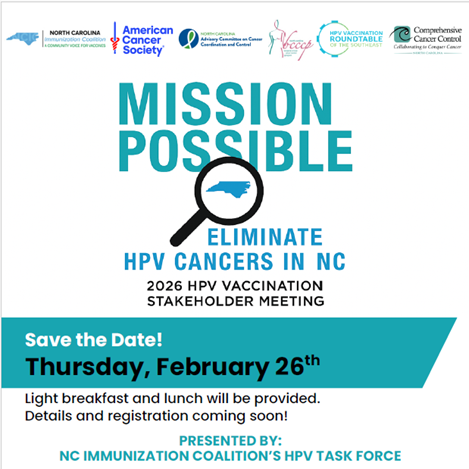
The North Carolina Immunization Coalition’s HPV Task Force will host the 2026 North Carolina HPV Vaccination Stakeholder Meeting on February 26. Mission Possible: Eliminating HPV Cancers in NC will bring together partners statewide to share successes, address challenges, and collaborate on strategies to improve HPV vaccination coverage across the state. This in-person event is a unique opportunity to strengthen partnerships and drive action toward eliminating HPV cancers in North Carolina. This mission is urgent—and possible. There is no registration fee. Details and registration will follow soon—mark your calendars!
|
|
|
The Grinch Didn’t Steal Christmas
in Alabama—He Helped Protect It
|
|
|
The Grinch didn’t steal Christmas in Marengo County—instead, he helped spread an important message about health and prevention. During the Marengo County Annual Christmas Parade, held in Dixon Mills, Alabama, holiday cheer came with a powerful purpose. Amid festive floats, music, and community celebration, awareness was raised about the importance of HPV vaccination. Thanks to the efforts of local health partners and strong community engagement during the parade, six individuals signed up to schedule HPV vaccination. The Grinch may be known for trying to steal Christmas, but this year he helped deliver something far more valuable: awareness, prevention, and healthier futures for Marengo County families.
|
|
|
Clemson University HPV Vaccination
Initiative
|
Clemson University has implemented a project to promote HPV vaccination and guide students to receive the vaccine through Student Health Services. This effort was funded by a National Extension Foundation grant and has been selected as one of the national core curricula for the Extension Collaborative on Immunization Teaching and Engagement (EXCITE) Program. Explore the curriculum for details on the project protocol and implementation here.
|
|
|
New Data Added to the Virginia
Cancer Plan Progress Dashboard
|
The latest data have been added to the Virginia Cancer Plan (VCP) dashboard which outlines progress on the goals and objectives in the 2023-2027 Virginia Cancer Plan. The dashboard provides a color-coded system to show whether progress is moving toward or away from targets. Notably, all four HPV objectives have moved closer to their respective targets, reflecting significant progress and strong momentum in HPV prevention efforts. The dashboard is updated
when new data are available. View the VCP Progress Dashboard here.
|
|
|
Upcoming Events |
In addition to events shared throughout the newsletter, here are additional upcoming events related to HPV cancer prevention.
|
|
|
Black Women and Cervical Cancer Virtual Webinar hosted by Cervivor, Inc.
|
|
January 22, 7 p.m. Eastern Time
|
| Register Here
|
|
UC San Diego Moores Cancer Center Community Outreach and Engagement team: 2026 Cervical Cancer Awareness Summit
|
January 26, 9:30 a.m. to 1 p.m. Pacific Time
|
| Register Here
|
|
|
|
|
Team Question: New Year, New Goals |
|
|
“What the new year brings to you will depend a great deal on what you bring to the new
year.” – Vern McLellan
"What the new year brings to you will depend a great deal on what you bring to the new year" means that your attitude, mindset, and actions will largely shape your experiences in the upcoming year. It emphasizes personal responsibility and proactive effort, suggesting that to have a positive and successful new year, you must actively contribute positive qualities, set clear goals, and be willing to make changes. Members of the HPV Cancer Prevention Program share goals for 2026.
“In 2026, my goal is to continue growing professionally while also creating space for rest, balance, and joy.” – Akeria Taylor, program coordinator
“One of my goals for 2026 is to be more intentional about preserving what matters most—capturing memories and recording family history as the seniors in my family continue to age gracefully. I want to document their sage wisdom and stories, so their experiences and voices are preserved for generations to come.” – Andrea Stubbs, administrative director
“My goal for 2026 is to be more present. I want to be intentional about quieting distractions and giving my full attention where it is needed most.” – Julia Brown, program manager
“My goal for 2026, professionally, is to strengthen my skills in communications, including Canva and other platforms, to better support the needs of our Program. In my personal life, I look forward to continuing needlepoint, learning new stitches and expanding my assortment of finished projects!” – Maddy McNee, program coordinator
“My goal for 2026 is to bring added intentionality into my life and work, shaping a year grounded in personal growth and meaningful professional impact.” – Nicole Williams, program coordinator
“In 2026 my goal is to approach the year with purpose and intention by setting meaningful goals, embracing change, and taking steady action to create positive results.” – Portia Knowlton, program coordinator
“In 2026, I plan to focus on professional growth by taking on new challenges, strengthening my expertise, and building professional networks. I also aim to prioritize my health and well-being through regular exercise, balanced nutrition, and rest, while maintaining a positive work-life balance to stay energized and productive throughout the year.” – Pragya Gautam Poudel, postdoctoral fellow
“In the new year, my primary goals are to successfully propose my DrPH dissertation, create a better routine to properly rest and recharge when needed, and improve my professional growth within St. Jude.” – Samantha Wells, program coordinator
“2026 goals are to improve my health and wellness, personal and career growth, and finance.” – Ursula Leflore, senior administrative coordinator
“I always think the new year offers an opportunity to reset. In 2026, perhaps more than any other year, I am focused on how a reset can restore my focus as a leader and researcher to be at my best. As with any new year, there is an opportunity to improve, grow, and thrive.” – Heather Brandt, director
|
 |
|
|
|
|
|
Get Free St. Jude HPV Education Materials |
|
|
The St. Jude HPV Cancer Prevention
Program has created a series of HPV fact sheets that emphasize basic information about HPV vaccination and include action steps to prevent HPV cancers.
|
Four versions of the fact sheets target various audiences:
- General public
- Parents
- Health care providers
- Cancer patients and families
- College students
- Faith community
|
Select the versions in English or Spanish most appropriate for those you serve. Download the fact sheets or email PreventHPV@stjude.org to have copies mailed to you.
|
| Find More Materials
|
|
|
|
|
|
About the HPV Cancer Prevention Program |
|
|
St. Jude Children's Research Hospital
is leading the way the world understands, treats and cures childhood cancer and other life-threatening diseases. That’s why St. Jude is raising awareness on HPV vaccination, which can prevent six types of cancer caused by the virus. As the only NCI-designated Comprehensive Cancer Center dedicated solely to children, St. Jude has an important role and responsibility in increasing the number of children who benefit from HPV vaccination and reduce their risk of preventable cancers later in life.
The St. Jude HPV Cancer Prevention Program envisions a world free of HPV cancers. Through education, promoting best practice models, and strategic partner engagement, its mission is to increase on-time HPV vaccination. On-time HPV vaccination by the 13th birthday provides safe, effective, and long-lasting protection against the most common types of HPV linked to cancers.
Learn more at stjude.org/HPV. Email PreventHPV@stjude.org with any questions.
|
|
|
|
|
|
|